
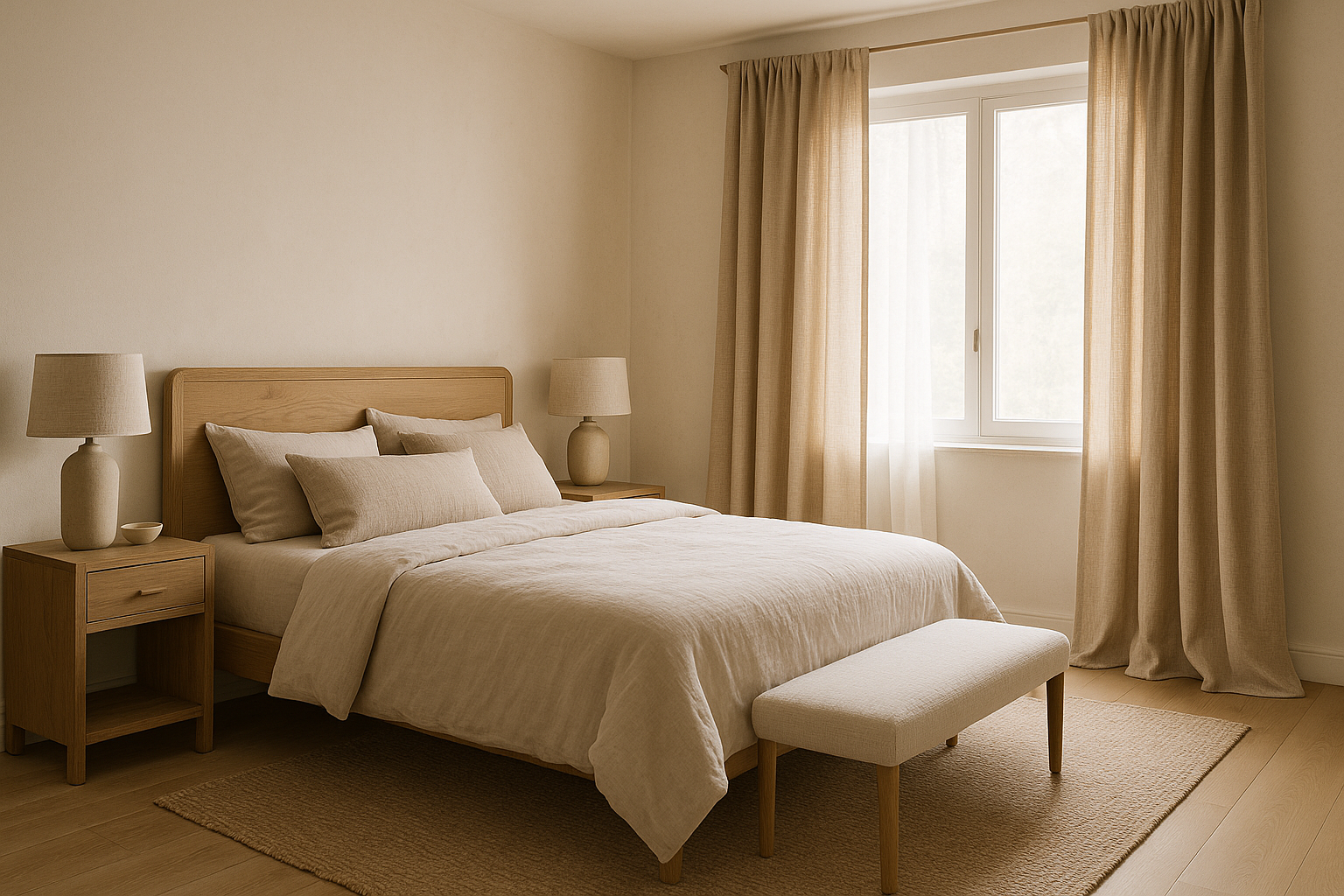
Getting bedroom curtains right can feel deceptively simple. But often, even well-intentioned styling choices can unintentionally limit natural light, disrupt the flow of texture, or unbalance a room’s visual harmony. The best curtain styling for bedroom achieves an effortless balance between function and atmosphere, layering soft textures while optimizing window proportions to let the light gently wash over natural materials. Unfortunately, a few common mistakes might be holding your space back from that calm, refined feel.
This guide will walk you through five frequent bedroom curtain styling pitfalls, explaining why they don’t work and how to easily fix them. Each fix draws on timeless-modern principles: using natural linen, oak accents, soft earthy neutrals, and thoughtful layering to create visual balance and enhance the room’s light flow. By applying these practical tips, you’ll avoid styling headaches and create a bedroom that feels both serene and polished every day.
Mistake 1: Hanging Curtains Too Low and Masking Window Frame
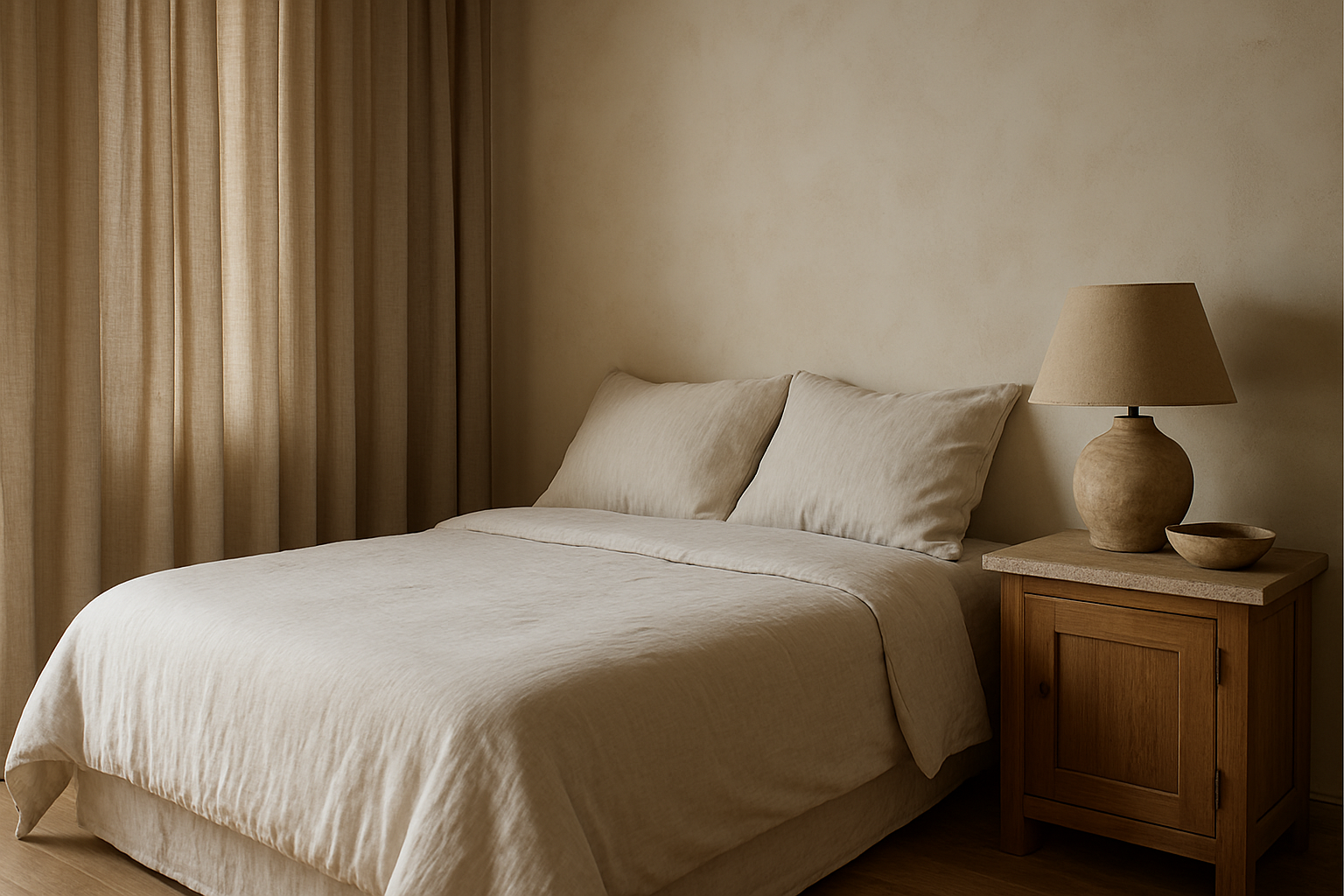
One of the most common bedroom curtain styling mistakes is hanging the rod too low, causing curtains to cover the window frame and even part of the wall beneath. While this might seem welcoming or cozy, it often reduces the window’s perceived size and blocks natural daylight from filling the room fully. Lower curtains also interrupt the clean vertical lines that make a space feel open and airy.
Fix: Install your curtain rod 4 to 6 inches above the window frame or even closer to the ceiling if possible. This trick visually elongates the window and ceiling height, welcoming more light and drawing the eye upward. Choose lightweight, natural linen panels which softly filter the daylight but won’t feel heavy or overpower the space.
Practically, use an extendable rod that allows the curtains to stack back neatly on either side without covering any glass. The uncovered window enhances the room’s light flow and highlights architectural details like oak window sills or stone window trims, reinforcing the calming natural palette.
Mistake 2: Curtains That Stop Short of the Floor
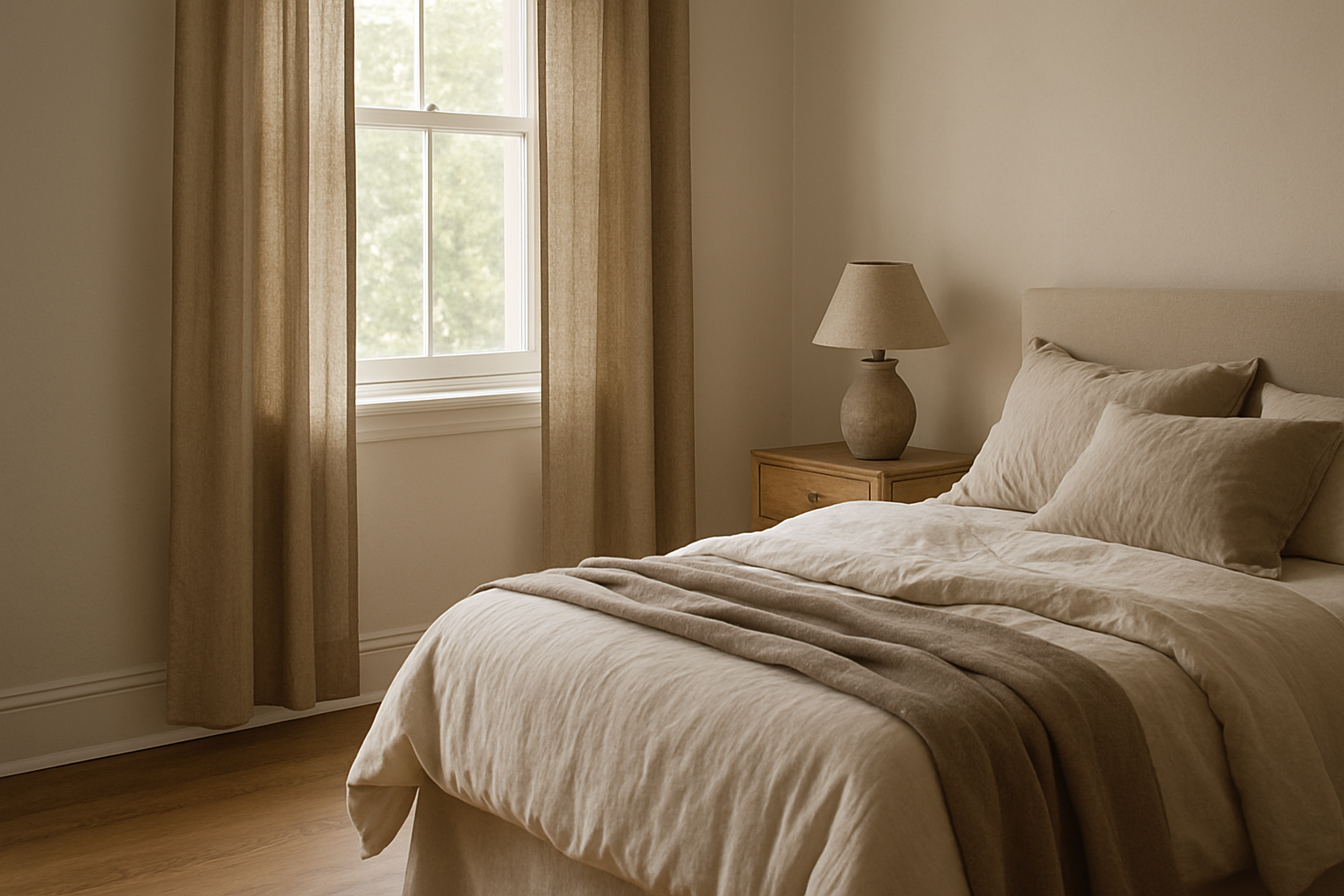
Short curtains that end inches above the floor create a gap that often disrupts visual flow. In bedrooms where texture layering is essential, this incomplete look can feel unfinished or overly casual, especially alongside plush rugs or wooden flooring. The missing vertical line at the bottom breaks the feeling of calm cohesion.
Fix: Opt for full-length curtains that just brush the floor. This grounding touch lends softness and symmetry, enhancing the layered texture that is so vital in a bedroom decorated with linens, oak furniture, and soft neutrals.
Measure carefully before buying or hanging curtains: too long invites damage and messy pooling, too short breaks flow. When dealing with uneven floors (common in older homes), consider a slight break—just enough to touch lightly without bunching. This ensures the curtain complements layered textiles like a jute rug or linen bedding instead of competing or seeming incomplete.
Mistake 3: Choosing Colors or Materials That Clatter Visually
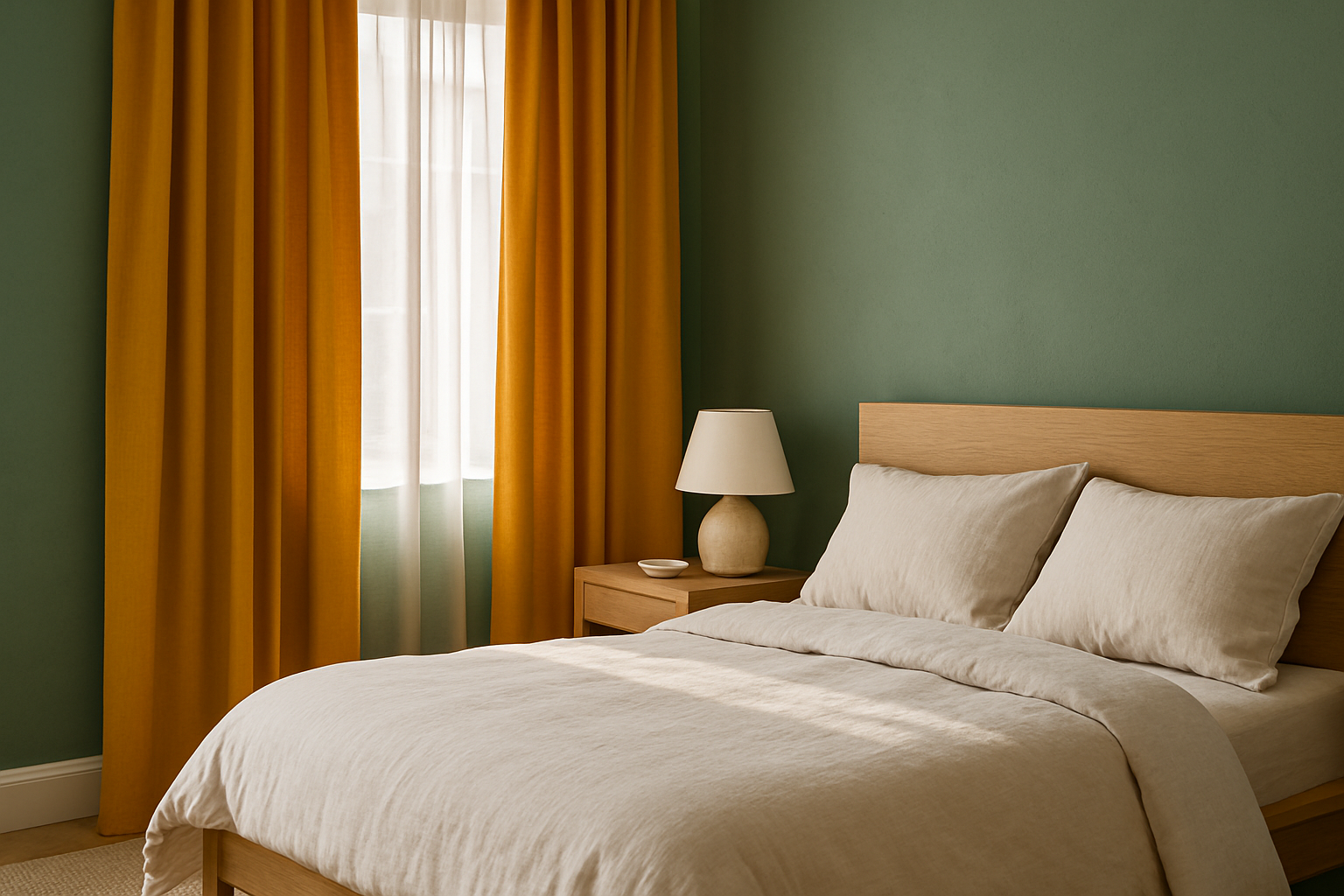
Bedroom curtain styling is often about subtlety and understated elegance, but many go wrong by picking curtains in synthetic fabrics or colors that clash with the room’s palette. Bright or saturated curtain hues can fight with soft linens and oak tones, jarring the calm atmosphere. Likewise, synthetic materials look less refined and interfere with the natural-texture layering that helps soften the space.
Fix: Stick to natural fabrics like linen, cotton, or softly woven hemp in soft earthy neutrals: think warm beige, stone grey, or a quiet ivory. These shades complement wood grains and bedding textures while gently enhancing the natural light filtering in.
Buying linen curtains in undyed or gently washed shades creates a subtle play of texture without overwhelming walls or furniture. This also avoids visual competition and keeps the bedroom’s mood calm and relaxing—a sanctuary where color feels balanced.
Mistake 4: Ignoring Curtain Rod Width and Panel Layering
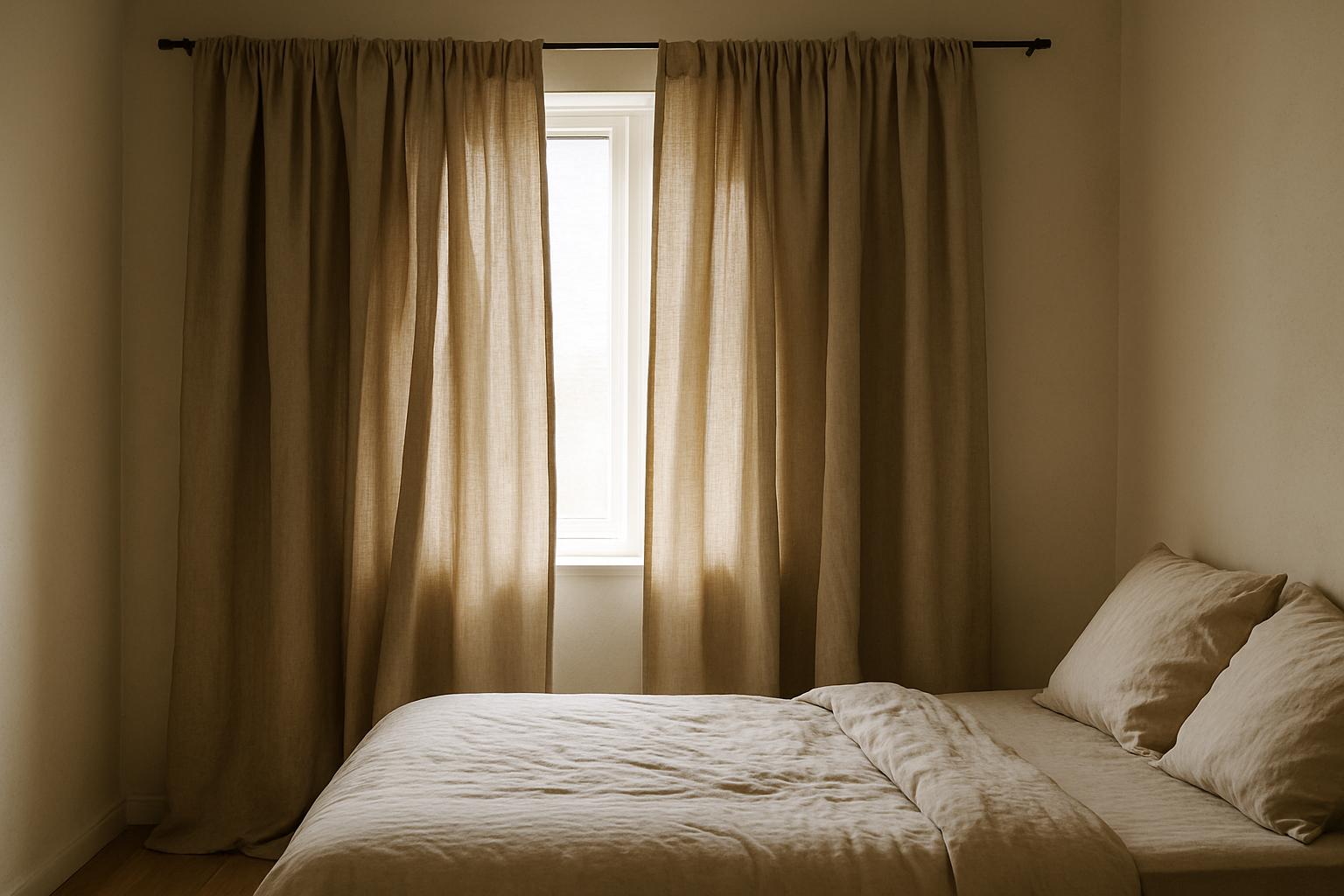
Poorly chosen curtain rods or insufficient panel width is a styling flaw that may seem small but disrupts bedroom curtain flow significantly. Thin rods paired with narrow panels create uneven gathers, causing fabric bunching and blocking light unevenly. This interrupts natural daylight patterns and leaves the viewer with an unbalanced aesthetic.
Fix: Invest in a curtain rod at least 1.5 to 2 times the width of your window frame. This allows the curtains to be drawn fully back to the walls without blocking glass. When buying panels, aim for a width 2 to 2.5 times the window width combined, so fabric folds softly and evenly when closed.
Layering multiple panels also helps: a sheer linen underlayer filters light gently, while a heavier outer panel adds privacy and coziness at night. This combo promotes versatility—daylight is controlled without sacrificing balance or texture. This tailored layering invites soft shadows and highlights the room’s natural hues and oak furnishings beautifully.
Mistake 5: Using Oversized or Heavy Hardware That Overpowers the Curtains
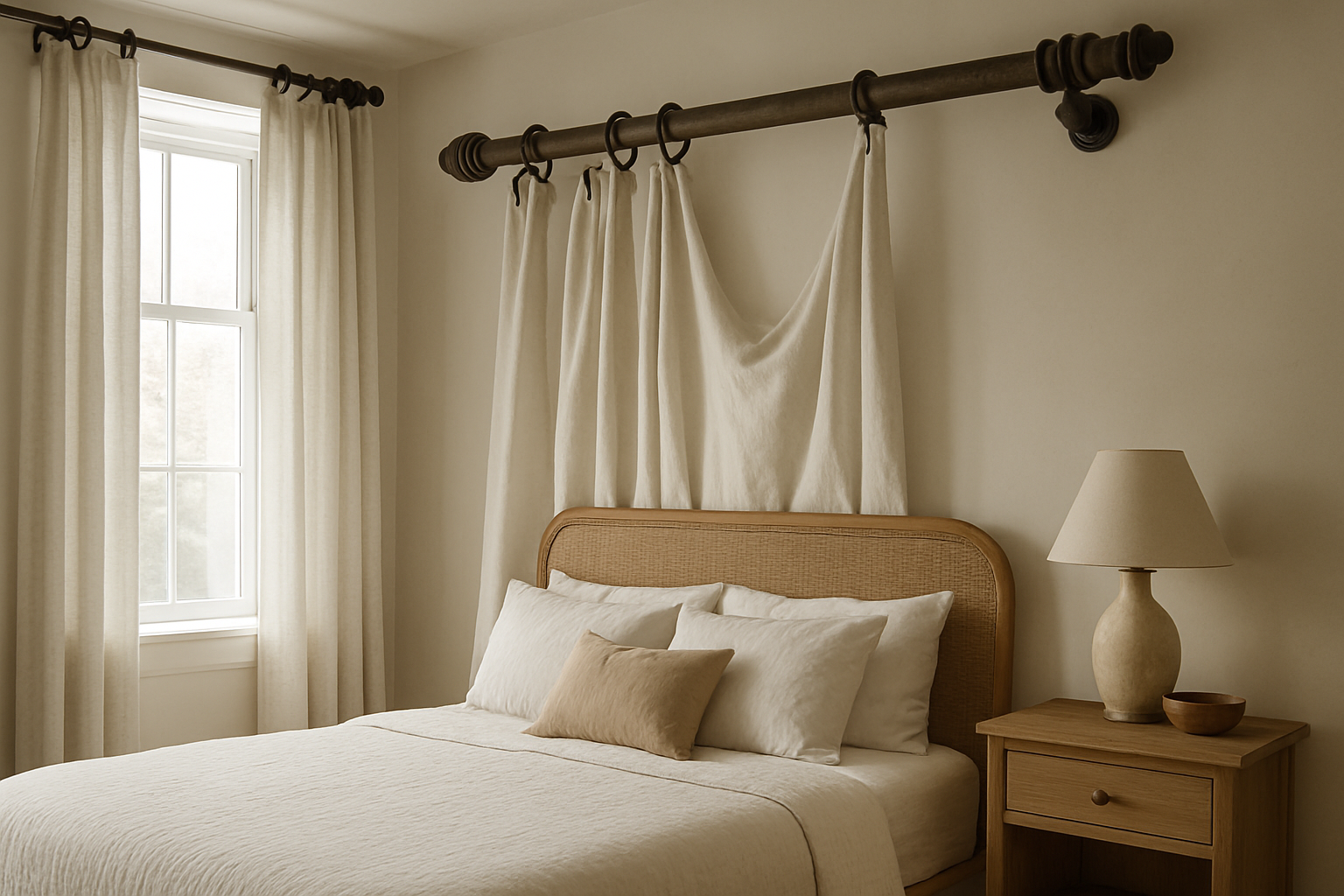
Oversized curtain rods and chunky hardware are often chosen out of concern for durability or impact but can visually overwhelm delicate linen panels typical in bedroom decor. This creates a kind of visual imbalance where the hardware dominates, rather than supporting, the curtains and room.
Fix: Select hardware with slim profiles and finishes in matte blacks, brushed brass, or muted bronze to blend with natural materials. Lightweight rods with minimal finials work best when paired with soft linen curtains in muted tones.
For proportion, the rod diameter should feel balanced against panel thickness: thin linen panels look graceful with rods 1 to 1.25 inches in diameter. Anchoring the rod securely is important, but avoid chunky brackets that add visual weight unnecessarily. This creates an elegant frame that supports the bedroom’s atmosphere of refined calm without distraction.
FAQ
How high above the window frame should curtains be hung in a bedroom?
Aim for 4 to 6 inches above the window frame or just below the ceiling line for taller windows to visually elongate the space.
What curtain length is best for bedrooms?
Floor-length curtains that lightly touch or just slightly break on the floor create the most polished, layered texture.
Which fabrics are ideal for bedroom curtains?
Natural, breathable fabrics like linen or cotton in soft neutral tones complement modern timeless bedrooms best.
How wide should my curtain rod be?
Choose a rod 1.5 to 2 times the window width to allow curtains to be pulled fully aside, maximizing light.
What curtain hardware finishes work well with natural bedroom decor?
Matte black, brushed brass, and muted bronze finishes blend beautifully with natural materials like oak and linen.
Conclusion
Styling bedroom curtains beautifully is all about careful balance and thoughtful layering. Avoiding the common mistakes of hanging curtains too low or short, choosing overpowering colors or fabrics, ignoring proportion in rod and panel width, or overdoing hardware weight helps preserve natural light flow and highlight your room’s texture palette. By installing curtain rods high with full-length natural linen panels and slender, subtle hardware, you support the room’s layered softness, warmth, and balance.
These fixes are simple but transformative, guiding you toward bedroom curtain styling that enhances your natural materials and keeps your sanctuary calm, airy, and refined.