
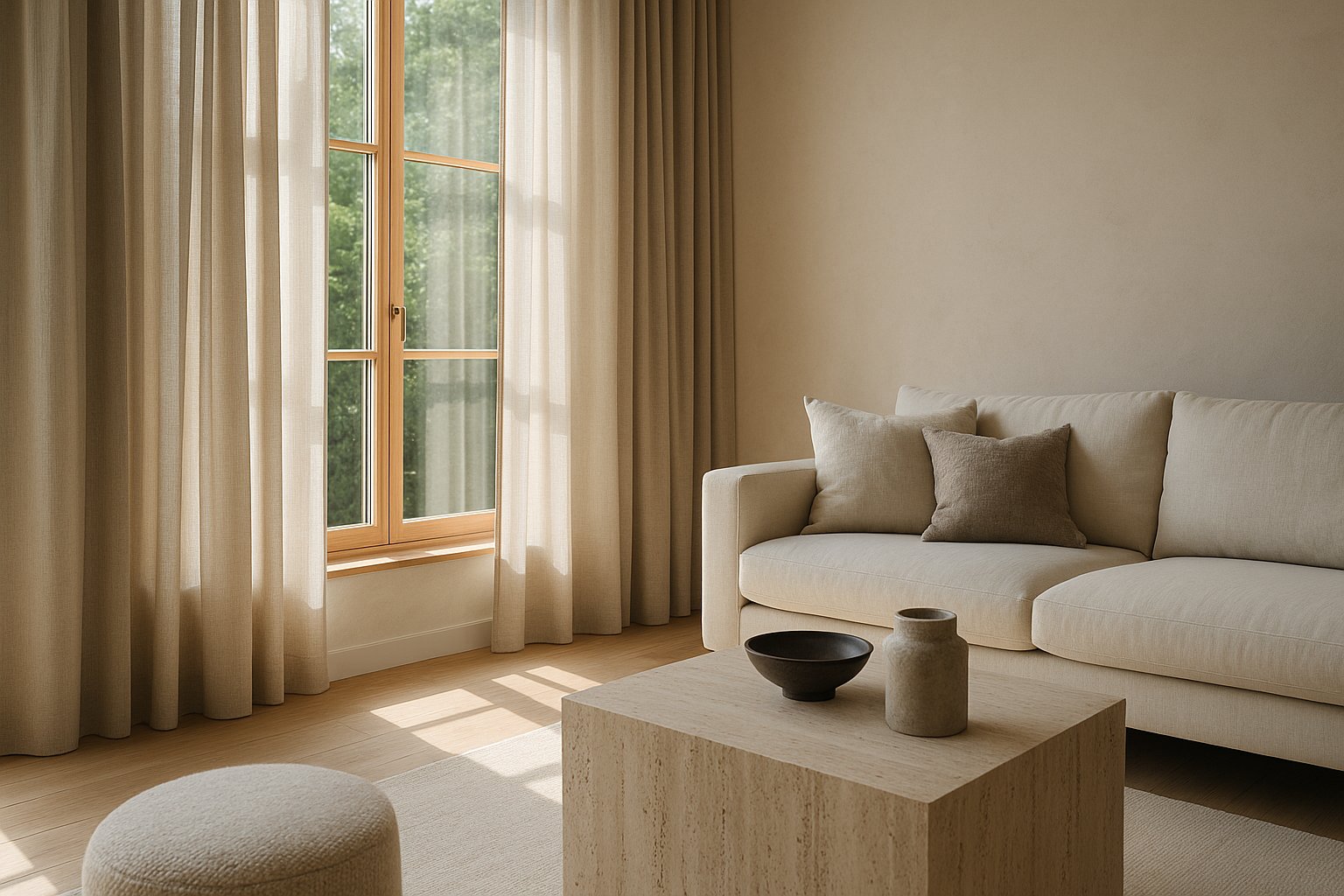
Finding the best curtain styling for living room spaces often feels like balancing a finely tuned equation: the right colors, the perfect textures, and well-considered proportions all come together to frame your view and subtly influence the room’s mood. Curtains do more than just block light—they shape visual flow, soften architecture, and add warmth to the home’s heart. Still, many of us struggle with the specifics of how to style curtains in a living room: What length feels generous yet unobtrusive? Should curtains layer sheer and opaque fabrics? How high above the window should the rod sit to create an elegant, balanced look?
In this article, we’ll explore five refined and practical curtain styling ideas tailored specifically for living rooms. Drawing on timeless-modern interiors with natural materials as inspiration, these tips focus on harmonious layering, scale and placement, and the right mix of texture and light. Whether you’re starting fresh or updating existing window treatments, these accessible strategies will help you achieve a living room that feels gracefully curated and inviting.
Layer Linen and Lightweight Fabrics for Depth and Softness
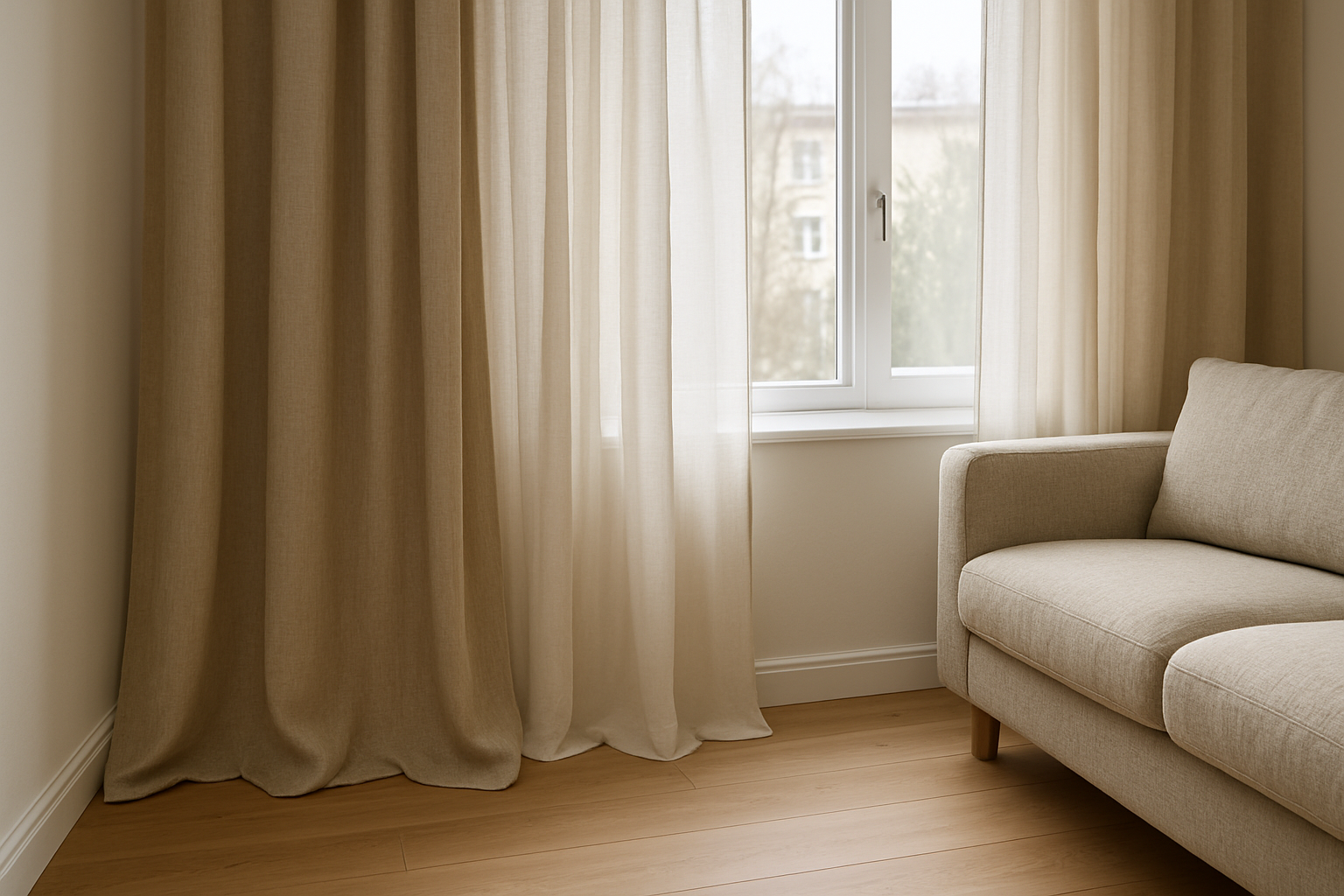
Layering curtains is an understated way to add texture and dimension to living rooms. Opt for natural linen as your primary curtain fabric—it’s lightweight, breathable, and imparts a tactile softness that is both timeless and effortlessly elegant. Pair linen panels with sheer cotton or silk voile behind, allowing light to filter gently through while maintaining privacy.
Why this works: Combining heavier linen with lighter sheers offers visual layering that softly diffuses the strong daylight that many living rooms receive, enhancing the ambient glow and preventing harsh shadows. The natural fibers complement each other—linen’s weaving structure contrasts subtly with the sheer’s delicate translucence, adding depth to the window treatment without overwhelming the space.
Practical tip: Hang your linen curtains as the outermost layer and choose a separate track or rod behind for the sheers. This separation enables you to adapt the light and privacy levels throughout the day. Opt for soft, warm neutrals for both—such as an oatmeal linen with semi-sheer creams—to keep your palette soothing yet rich in texture. This works especially well against oak window trims or soft stone walls that echo the earthiness of the fabrics.
Scale Curtains to Windows and Room Height for Visual Harmony
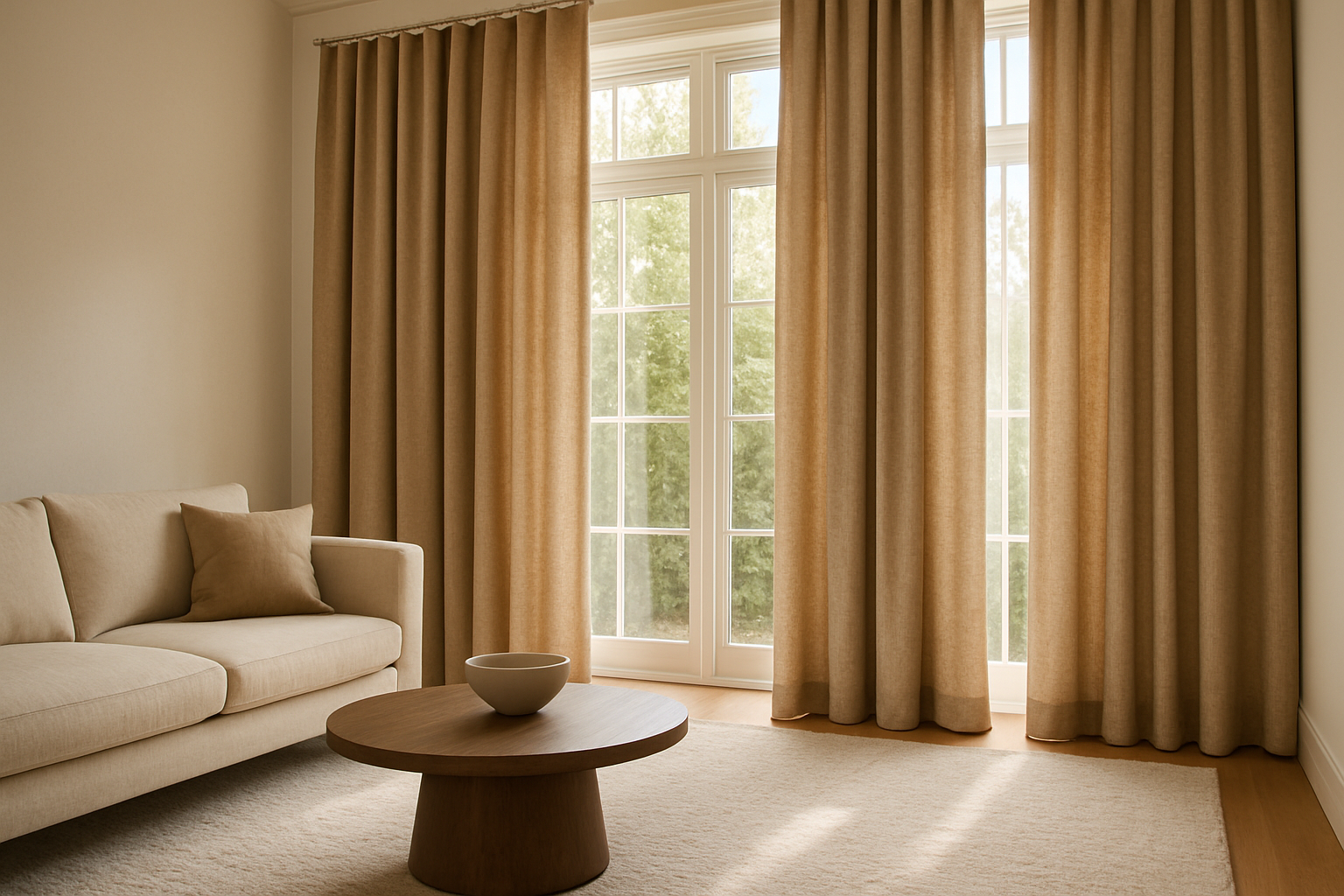
Curtain sizing can transform a room’s perceived scale, especially in living spaces where windows vary. The best curtain styling for living room windows embraces generous width and length: extend rods well beyond the window frame (eight to twelve inches on each side) to allow curtains to be drawn fully open, revealing the entire glass area. This framing effect broadens the window visually and maximizes natural light.
Length-wise, floor-grazing curtains bring height and fluidity. Hanging curtains so they just touch or slightly puddle on the floor creates an elegant feel that anchors the room without cluttering it. Avoid curtains that stop mid-calf or hover awkwardly above the floor—they can feel disjointed and diminish the window’s impact.
For tall ceilings, place curtain rods closer to the ceiling line or at least 4-6 inches above the window frame to elongate the walls. This simple adjustment shifts visual focus upward, enhancing a sense of openness.
Practical tip: Measure carefully and err on the side of wider curtains to support rich folds when closed. Select heavier-weight linen or stone-colored fabrics with a soft drape so they gather luxuriously and maintain their shape. Proportionally, scale curtain width roughly twice the window’s glass width when fully spread.
Position Curtain Rods to Enhance Window Architecture
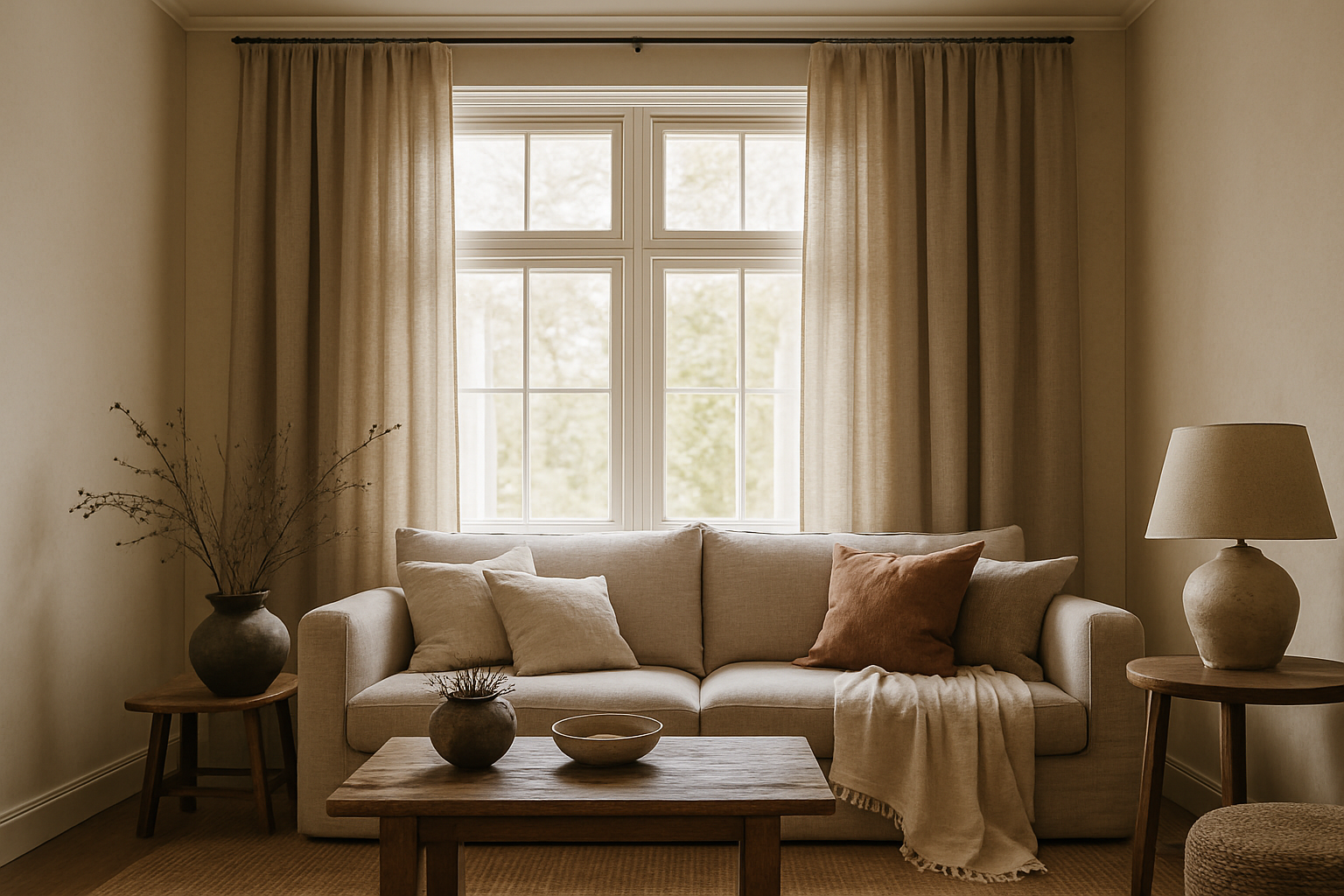
Positioning curtain rods correctly is a subtle art that profoundly influences the finished look of living room windows. Rather than mounting the rod directly flush with the window frame, lift the rod several inches above and push it out beyond the window trim. This placement visually enlarges the window and gives curtains room to stack neatly when open.
Why it works: Curtains mounted higher and wider create vertical and horizontal expansions. The eye is drawn upward to the ceiling, emphasizing volume, while the side extension frames the view without obscuring the architectural details. This approach also prevents curtains from crowding furniture or radiators below the sill.
Practical tip: Aim to install the rod about 6-10 inches above the window and extend the rod at least 6-8 inches wider on each side of the trim, depending on your window size and wall space. For wide windows, a continuous curtain panel works better than multiple small panels, avoiding a choppy effect. For layered curtains, install two rods—one higher and deeper for sheers, one slightly below and in front for heavier panels.
Use Neutral Earth Tones to Create Warmth and Versatility
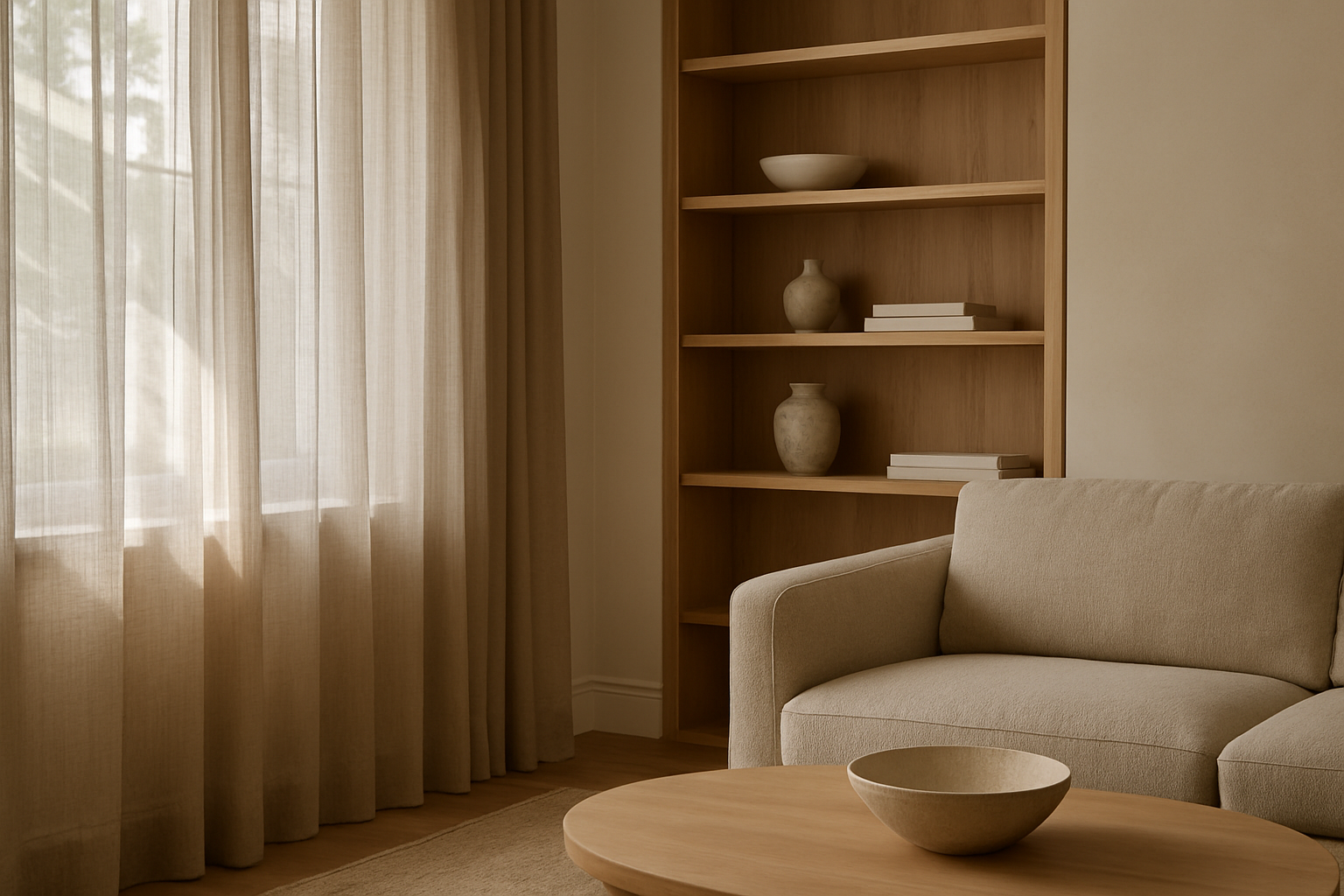
When considering the best curtain styling for living room schemes, color and tone are as important as texture. Natural, soft earth tones—like warm beiges, muted greys, sandy taupes, and cream—function beautifully to harmonize with wood, stone, and natural fibers common in timeless-modern interiors. These hues enhance the diffuse light that filters through curtains, creating inviting cozy atmospheres.
Why choose earth tones? Neutral curtains act as a quiet yet rich backdrop that unifies the room’s design elements. They also adapt well over time; as your accessories or upholstery shift seasonally, the curtain color remains a steady calming palette.
Practical tip: Select curtain fabrics dyed in gentle shades derived from natural pigments or mineral tones, avoiding anything too stark or synthetic. Linen, cotton, or blended textiles in soft tones encourage light reflection and lend an organic, layered effect. This color choice works especially well in living rooms with oak furniture and stone accents, where the curtains echo the surrounding materials rather than compete with them.
Balance Light Control with Layered Curtain Hardware
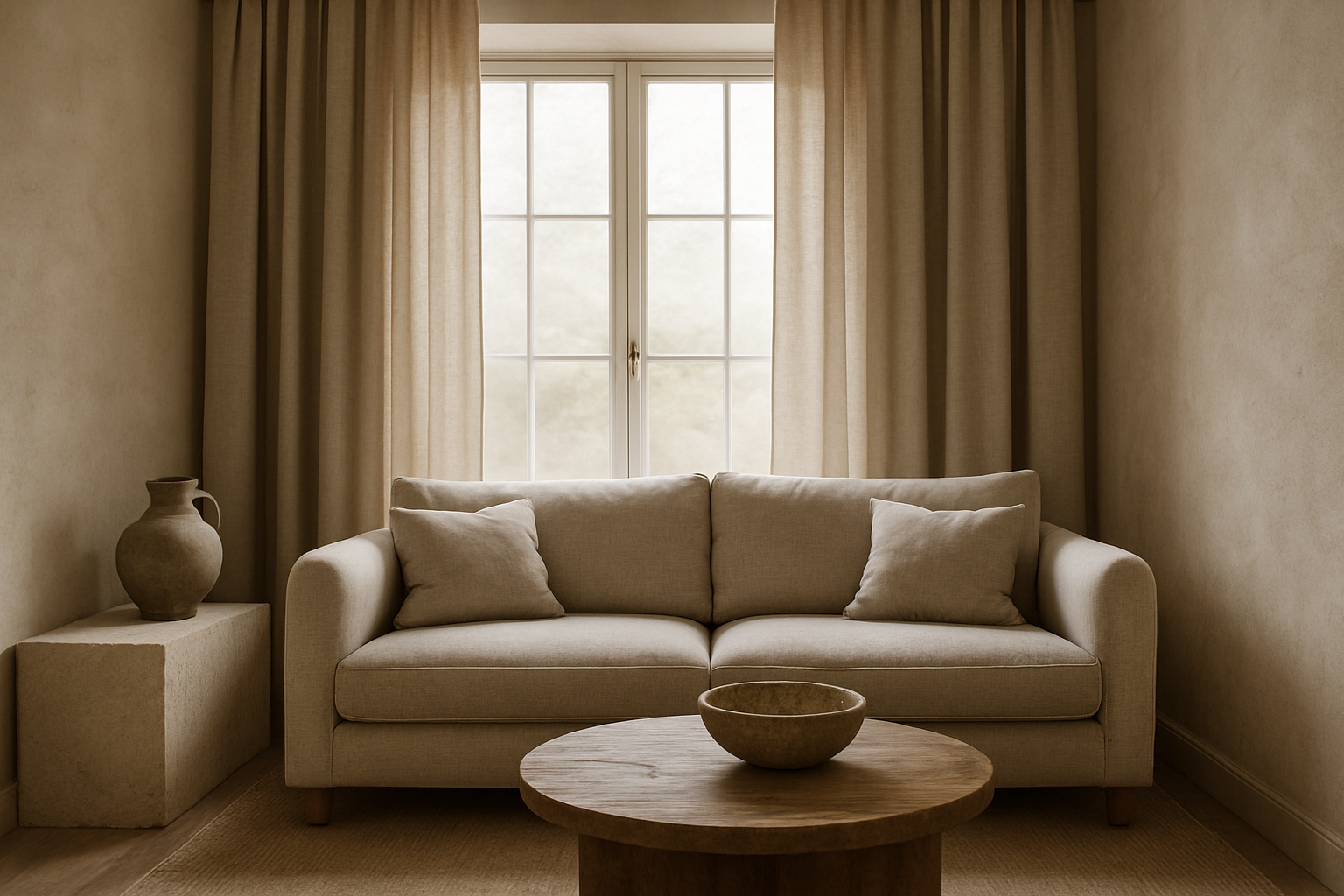
Beyond aesthetics, managing light in a living room is a core reason for curtain styling. Excessive brightness can disrupt comfort, while poor control can clutter the space with heavy drapery. Using layered curtain hardware solutions such as double rods or track systems enables flexible light management without compromising the room’s airy flow.
Why layering hardware? Separating sheer and opaque panels allows you to adapt your window coverings to different times of day and moods — sheer curtains filter glare during sunlit mornings, while heavier panels provide privacy and warmth for evenings.
Practical tip: Install a sleek, understated double-rod system that accommodates both sheer and linen or velvet curtains. Use lightweight yet textured fabrics for sheers and heavier, lined curtains for the outer layer to maximize insulation and sound dampening. Choose rod styles with minimal profiles in natural metals or matte finishes to complement, not distract from, your curtain materials and surrounding wood or stone details.
FAQ
How high should living room curtains be hung?
Curtains should be hung 6 to 10 inches above the window frame or closer to the ceiling to create a sense of height and openness.
Can I mix fabric types for living room curtains?
Yes, layering linen or cotton panels with sheer fabrics provides depth, control over light, and adds texture.
What curtain colors work best with natural wood finishes?
Soft, earth-toned neutrals like warm beige, taupe, or cream blend beautifully with oak and stone, enhancing warmth and balance.
How do I avoid curtains making my room feel smaller?
Hang curtains wider and higher than the window frame, select lighter fabrics in soft tones, and avoid stopping curtains above the floor.
Should curtain rods be visible or hidden?
Visible rods with simple and elegant finishes add character and frame the window, but keep them minimal to not compete with your curtains.
Conclusion
The best curtain styling for living rooms arises from a thoughtful balance of texture, scale, color, and light management. Natural linen layered with sheers softens daylight and adds depth. Generous width and floor-grazing length create airy, elegant proportions. Correct rod placement expands the spatial perception, while earthy neutrals unify the room’s natural materials. Finally, layered hardware provides essential flexibility to fine-tune light and privacy.
Apply these principles step by step: measure carefully, opt for natural fabrics in soft neutrals, install rods higher and wider than the window frame, and layer curtains with light sheers and heavier panels. This checklist offers a reliable foundation for crafting living room windows that feel serene, inviting, and beautifully balanced every day.