
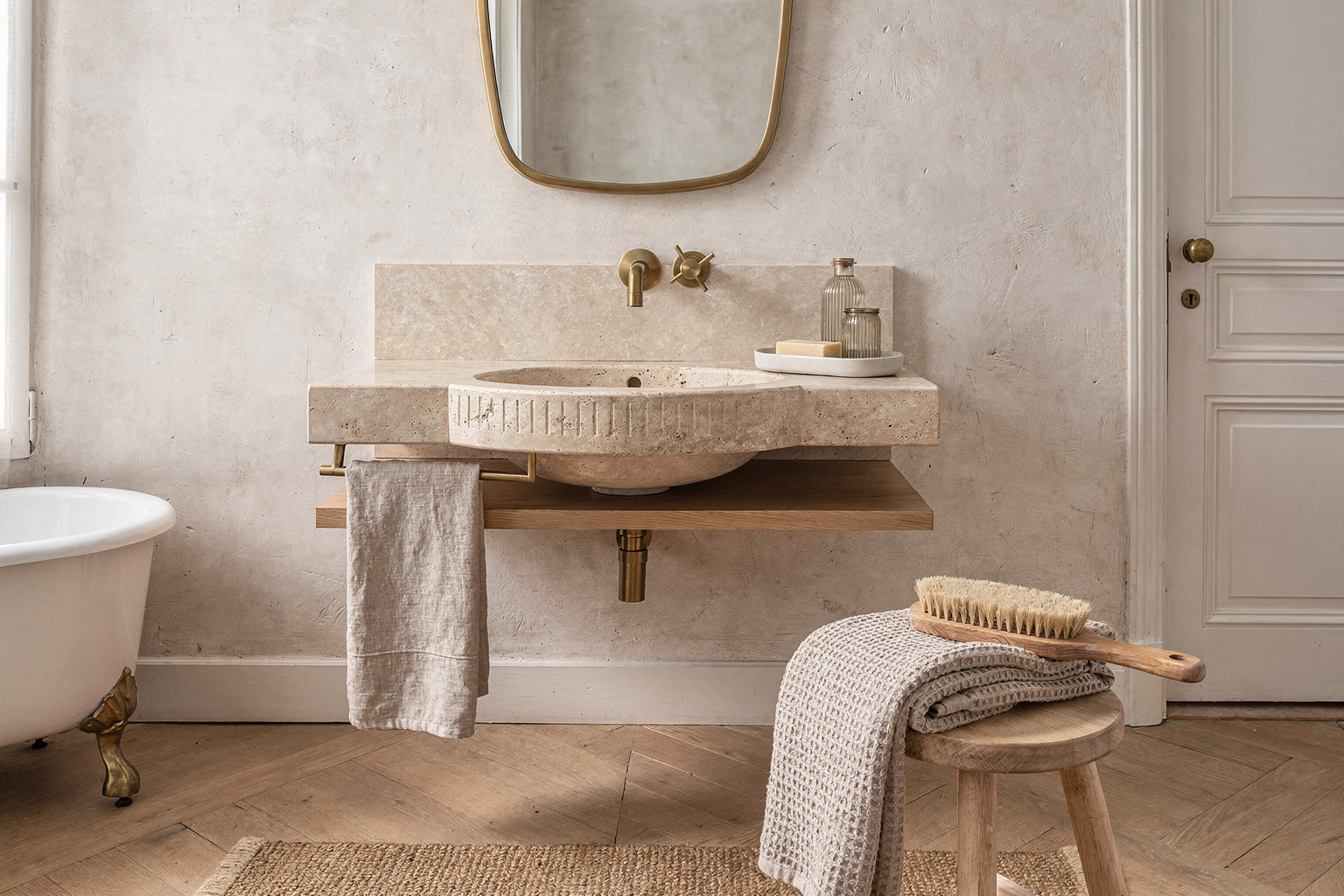
Creating a Parisian bathroom is a beloved design goal—its understated elegance, soft earthy tones, and mix of natural materials promise a serene and timeless space. However, this look often stumbles when texture and layering decisions miss the mark. Because texture plays a crucial role in shaping the room’s tactile comfort and visual balance, any misstep can throw off the entire mood. Too much gloss, cold contrasts, or an overabundance of a single material can make the space feel either sterile or chaotic.
In this article, we’ll explore common texture mistakes in Parisian bathroom decor and suggest practical fixes rooted in natural materials, proportion, and layering. These insights will help you create a bathroom that feels quietly luxurious, grounded, and very much alive.
When Too Much Shine Steals the Subtlety
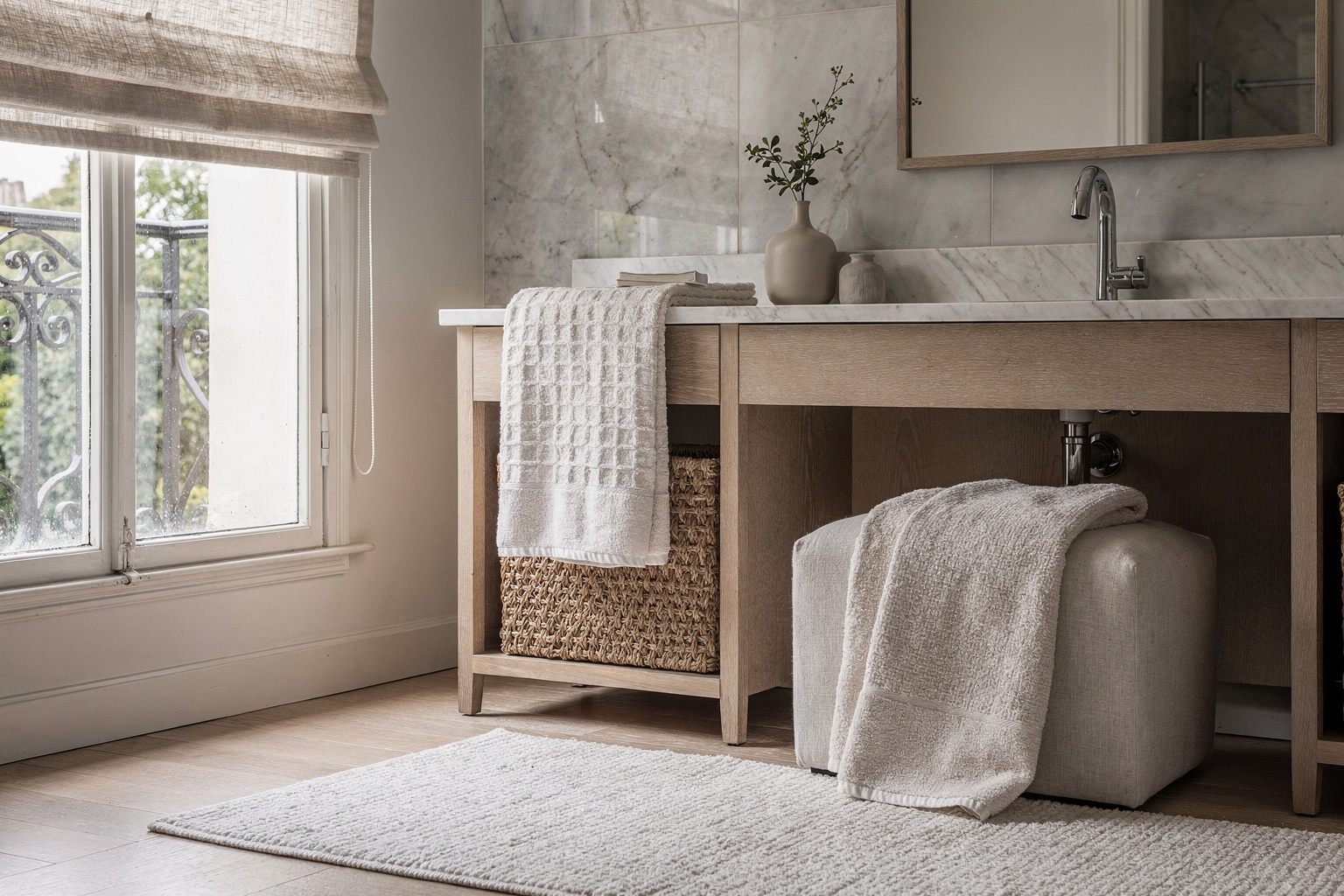
Glossy tiles and shiny chrome fixtures are tempting choices for a bathroom due to their water resistance and clean look. But in a Parisian bathroom that thrives on softness and layered textures, excessive shine can dominate and disrupt the desired balance. Highly reflective surfaces draw attention and flatten the nuanced interplay of materials, which ideally includes matte stone, linen, and warm wood.
To counter this, introduce matte or honed stone tiles such as limestone or travertine for walls and floors. These surfaces provide understated texture without glare, allowing natural light to diffuse gently across the room. Pair this with linen or cotton shower curtains, or a softly woven bath mat to ground the reflective elements. To maintain necessary chrome or brass fixtures, opt for those with muted finishes like brushed nickel or antique brass to complement rather than compete.
This fix softens the overall ambiance and preserves the Parisian bathroom’s signature calm, layered feel by balancing shine with tactile warmth.
Avoiding Textural Overload by Choosing a Cohesive Palette
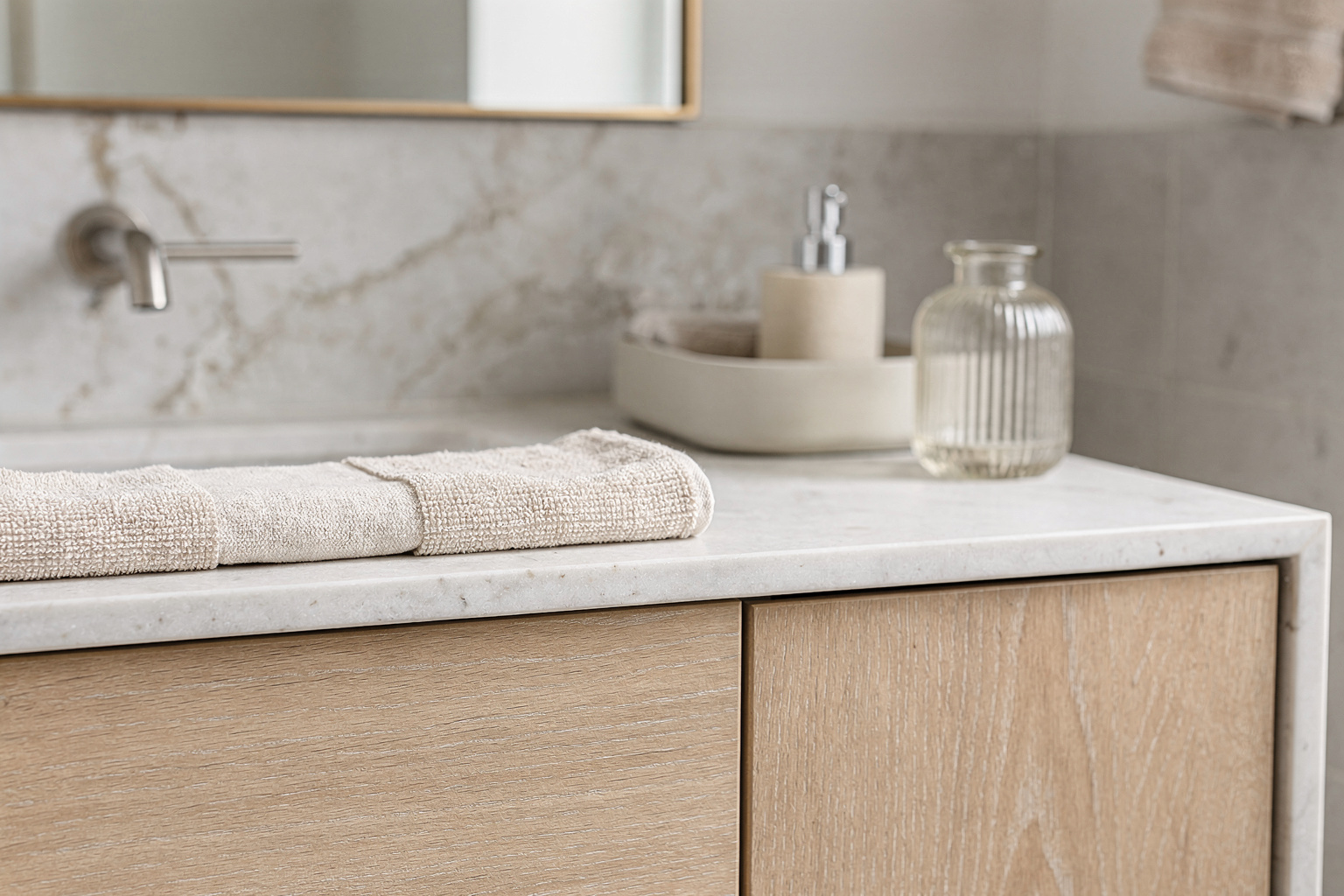
A frequent mistake is combining too many disparate textures that don’t harmonize—say, pairing rough concrete with polished chrome and coarse woven baskets without a unifying thread. This mishmash creates visual noise, confusing the eye and breaking the understated elegance typical of a Parisian bathroom.
The solution lies in selecting materials with a shared tonal or textural family. For example, pairing natural oak shelves with honed stone and soft linen fabrics creates a coherent, layered effect. These materials share a quiet warmth and subtle texture that work together rather than compete.
Be deliberate with accents like metal; choose one tone—whether warm brushed brass or muted black iron—and limit its use to avoid fragmenting the palette. This approach crafts a calm, collected look, where each texture contributes to a composed atmosphere reminiscent of Parisian style.
Overlooking Layered Texture Harmonics
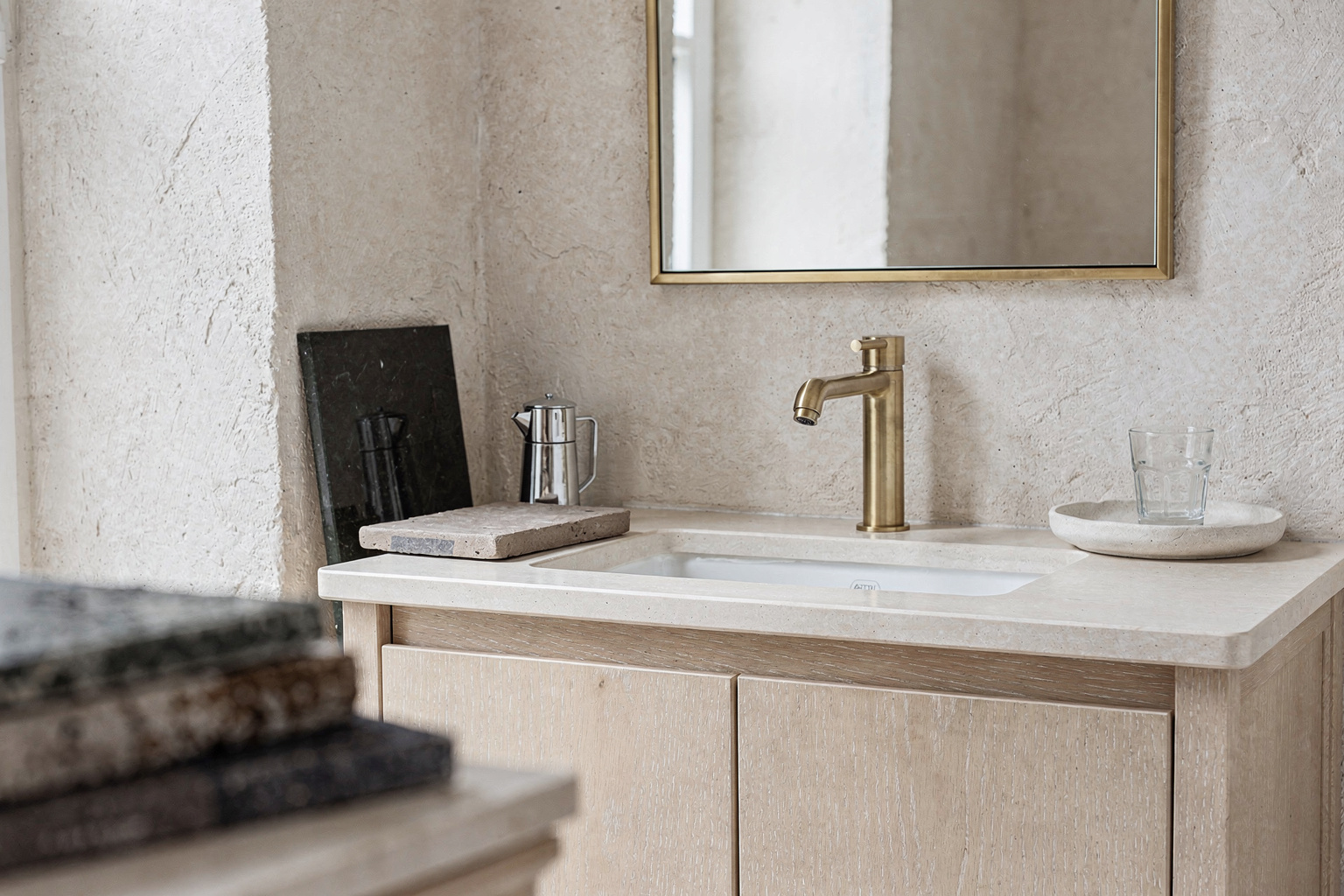
Parisian bathrooms excel when textures feel layered yet cohesive. That subtle layering is easy to overlook, especially when patterns or materials clash—such as pairing bold geometric tile with heavily textured stone or overly rustic wood.
The fix is to think like a stylist: start with a neutral base of smooth, matte surfaces and gradually introduce gentle textures through textiles and carefully selected finishes. A soft linen hand towel, a basket with restrained weave, or a warm stone soap dish bring subtle tactile interest without overwhelming the senses.
This delicate layering invites the eye to rest and explore, which is key in how the Parisian bathroom registers as comfortable and timeless, not busy or forced.
Portraying Texture in Proportion to Space and Light
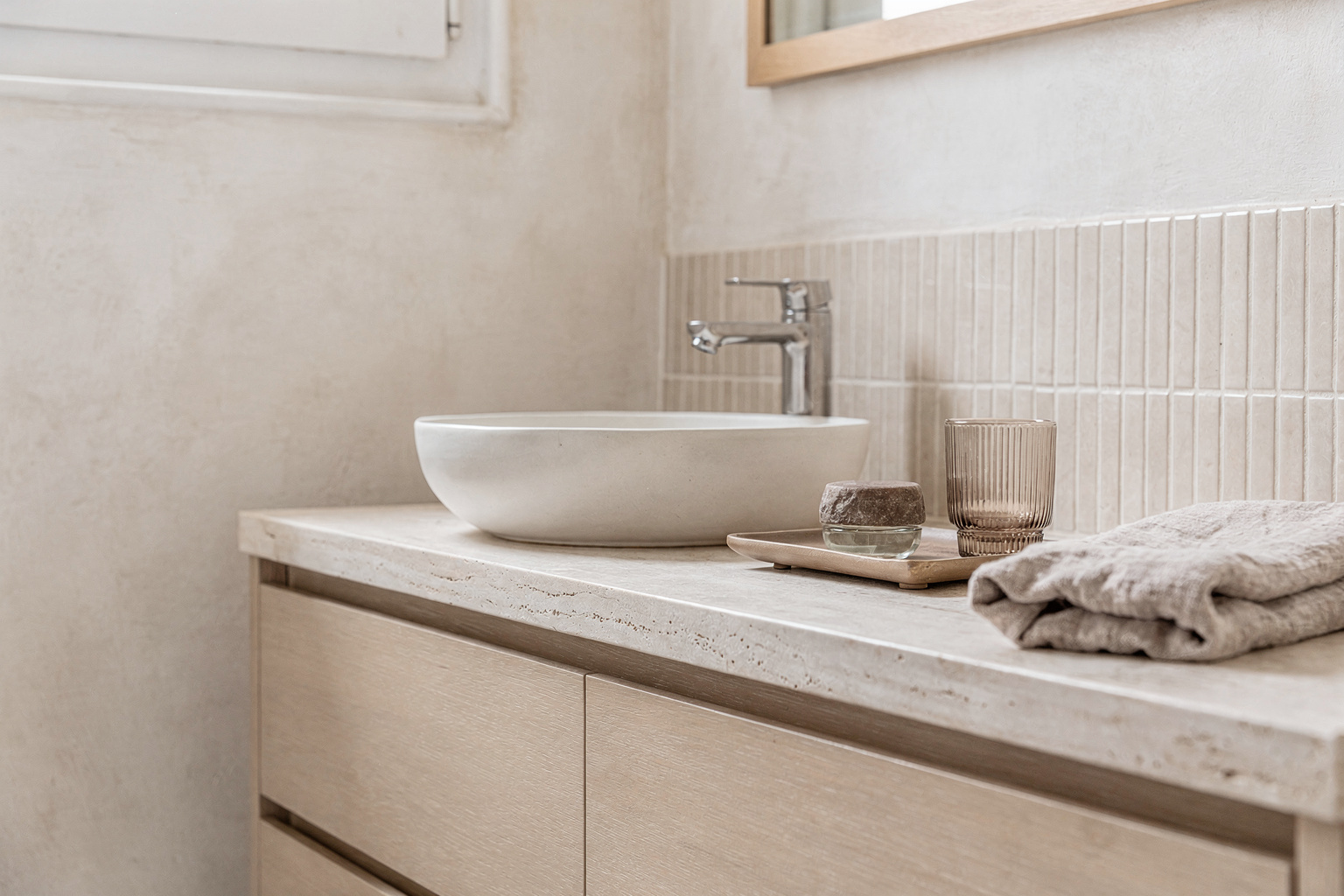
Many fall into the trap of over-texturing a small Parisian bathroom, which can feel cramped or visually heavy. Rough stone beneath delicate fittings in tight quarters often blocks light flow and disrupts spatial harmony.
To correct this, scale textures thoughtfully: use larger-format smooth stone tiles on floors and walls to open the space visually, reserving smaller areas for more textured pieces, like an oak vanity or softly woven rugs. This balance enhances light reflection and promotes a sense of airiness.
Natural daylight should be allowed to flow without obstruction, so avoid heavy curtains or textured wall treatments that dull this effect. Instead, light, semi-sheer linen window coverings can soften brightness while maintaining privacy and texture balance.
This proportional approach grounds texture in the room’s reality, making the layered look feel natural and spacious.
Losing the Intimate Warmth: When Natural Textures Are Forgotten
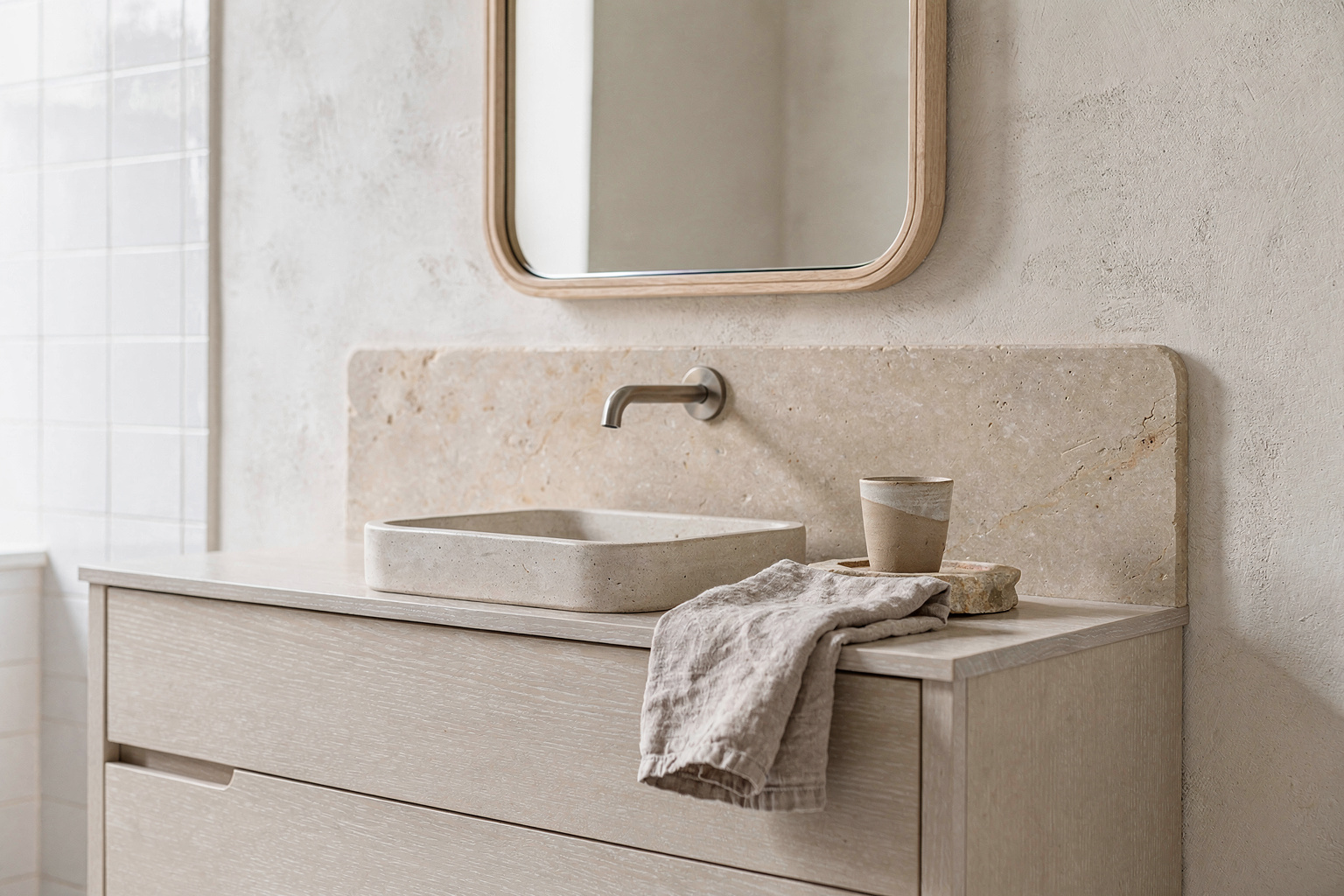
One of the biggest missteps is relying too heavily on cold, polished surfaces without layering in warm natural materials. Marble or porcelain tiles alone can create an elegant but sterile feel, devoid of the inviting, lived-in quality that Parisian bathrooms are known for.
The remedy is an intentional reintroduction of soft textiles, wood, and unpolished stone elements. A modest oak bench, linen shower curtains, or a stone vessel sink add the necessary tactile warmth. Ensure these natural materials have a presence sufficient enough to counterbalance the smoother, cooler surfaces.
This layering prevents the space from feeling overly clinical, restoring the quiet warmth and visual balance that make Parisian bathrooms genuinely comfortable daily retreats.
FAQ
What’s the best material to pair with matte stone tiles?
Soft natural fabrics like linen or cotton are excellent companions, as they contrast subtly without clashing, adding tactile dimension.
Can polished chrome work in a Parisian bathroom?
Yes, but opt for muted, brushed finishes that blend softly rather than high-shine chrome, which can overpower the space.
How do I prevent my small bathroom from feeling cramped with textured surfaces?
Use larger-format tiles on floors and walls for visual openness, and concentrate texture in smaller accessory pieces.
Is it okay to mix wood and stone in the Parisian bathroom?
Absolutely—when the wood has a warm, natural finish like oak and is used sparingly to balance the stone, it enhances layered texture.
How important is light for layered textures to work?
Very important. Natural daylight softens materials and unifies textures, so keep window treatments light and airy.
In building a Parisian bathroom with the right textures, avoid overly shiny surfaces, mismatched textures, and proportion mistakes. Layer soft, natural materials thoughtfully, respecting scale and light flow. This approach doesn’t just recreate a look—it crafts a space that feels calm, lived-in, and quietly elegant. Start with one key element like swapping glossy tiles for honed stone or introducing linen textiles, and watch your bathroom find its inviting Parisian rhythm.