
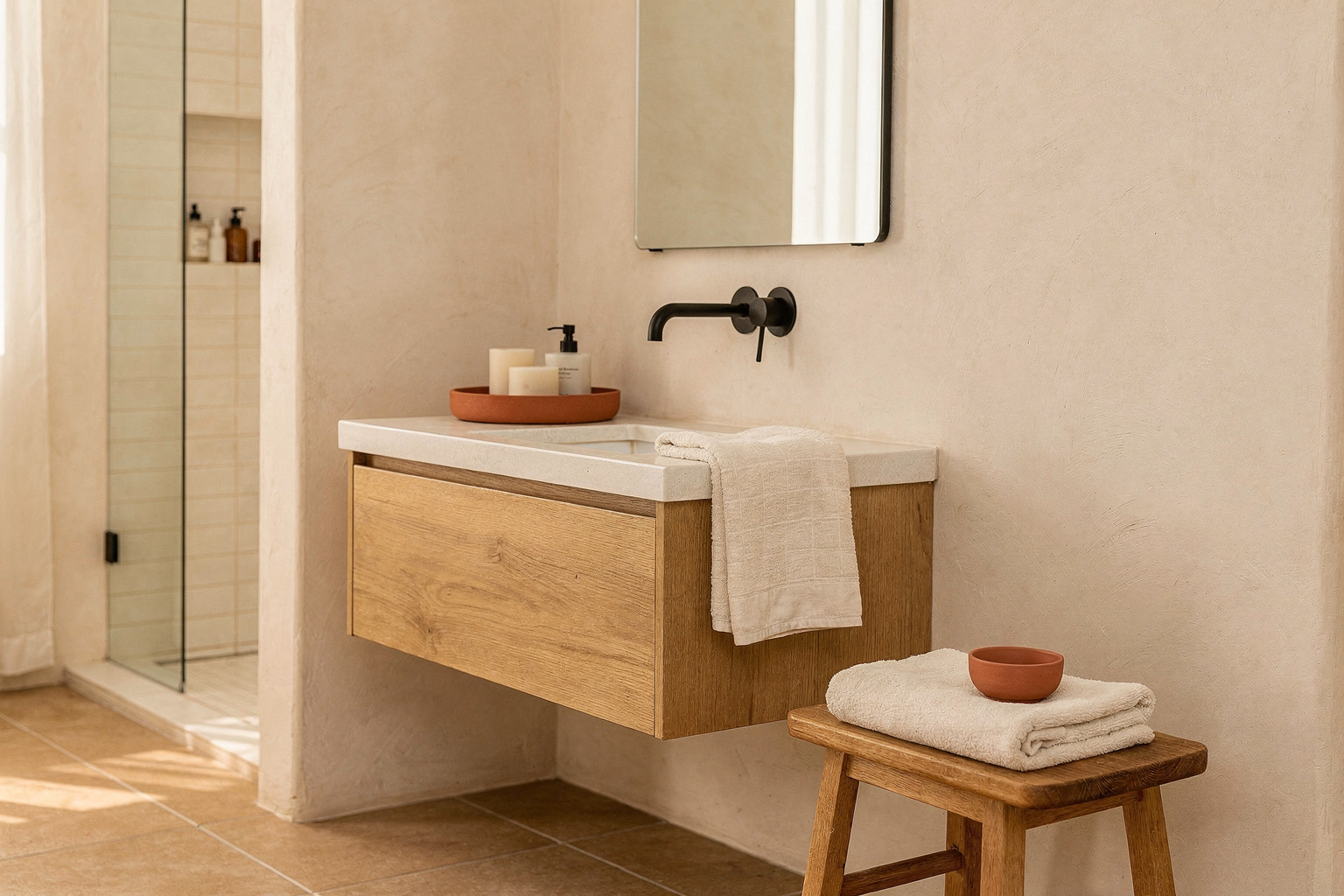
Japandi design finds its strength in quiet balance: blending the clean lines and simplicity of Japanese style with the cozy warmth and natural materials of Scandinavian interiors. But this calm, layered bathroom look often trips up on texture. A slip here can make the space feel cold and clinical, or too busy and disconnected.
Getting texture right isn’t about piling on more materials but choosing the right mix and scale, then letting them speak softly together. For a Japandi bathroom, where space and light can be limited, texture choices are even more crucial to achieve visual comfort without clutter.
Here, we’ll explore five texture mistakes that commonly throw off a Japandi bathroom’s harmony — and practical fixes you can apply, whether you’re starting fresh or tweaking an existing space. Understanding these will help you create that lived-in, grounded vibe that’s both functional and quietly inviting.
Mistake 1: Overloading with Contrasting Textures
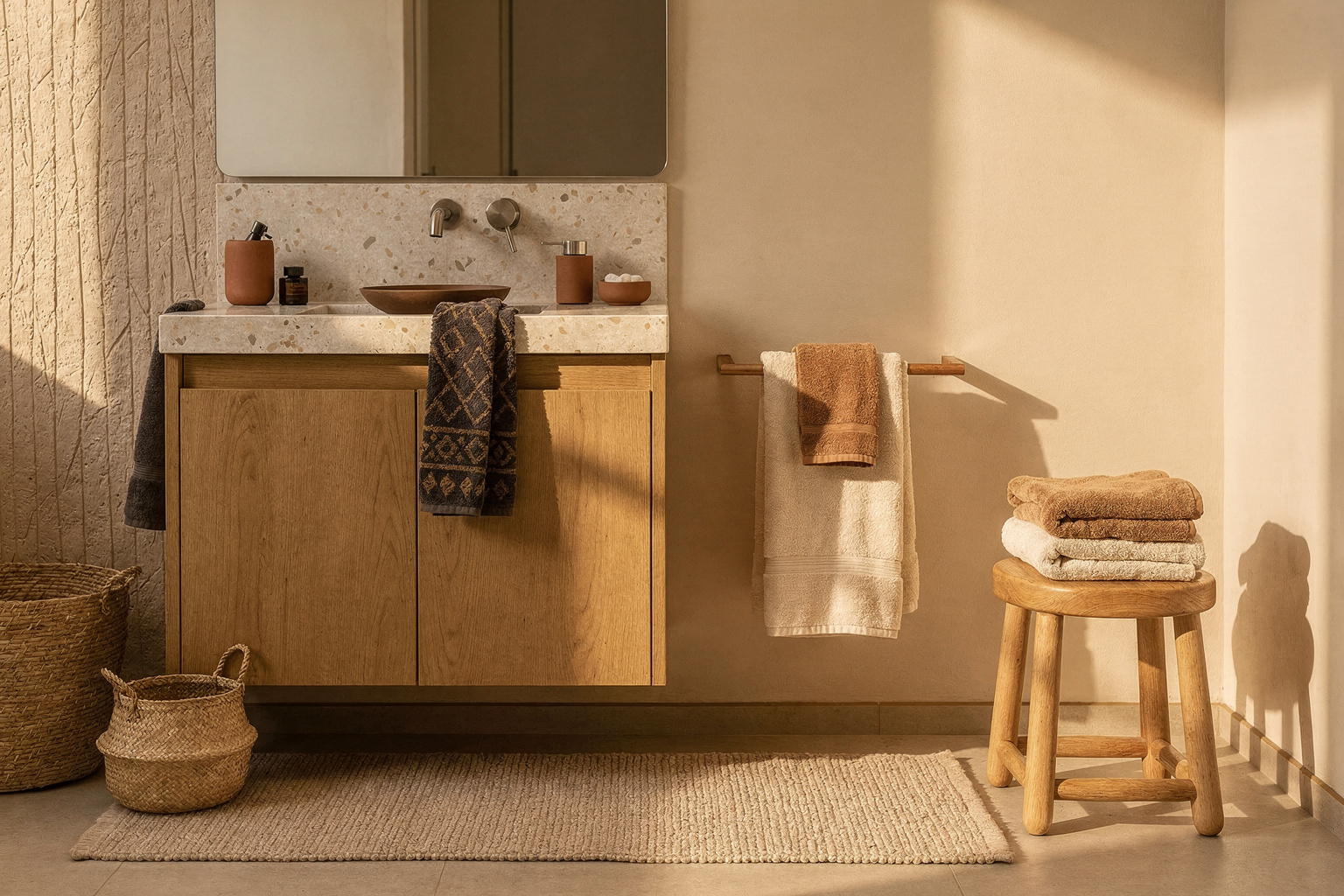
One common misstep is introducing too many bold, contrasting textures in the same small bathroom. Imagine rough stone tile next to high-gloss ceramics alongside thick shaggy rugs. This mix can overwhelm your already intimate space and break the smooth visual flow Japandi relies on.
Why This Matters
Japandi is all about soft contrasts and gentle layering, not stark texture clashes. Abrupt changes can fragment the space, distracting from the tranquil atmosphere.
Practical Fix
Limit your texture palette to three to four complementary materials with varying but subtle tactile qualities. For example, pair a matte stone vanity top with light, warm wood cabinetry and soft cotton towels. Use natural fibers like linen or hemp for bath mats rather than synthetic shag.
Keep rougher textures contained to smaller accent areas—such as a pebble detail in the shower floor—to add interest without shouting. This careful curation lets texture unify the room instead of fragmenting it.
Mistake 2: Neglecting the Warmth of Wood Grain
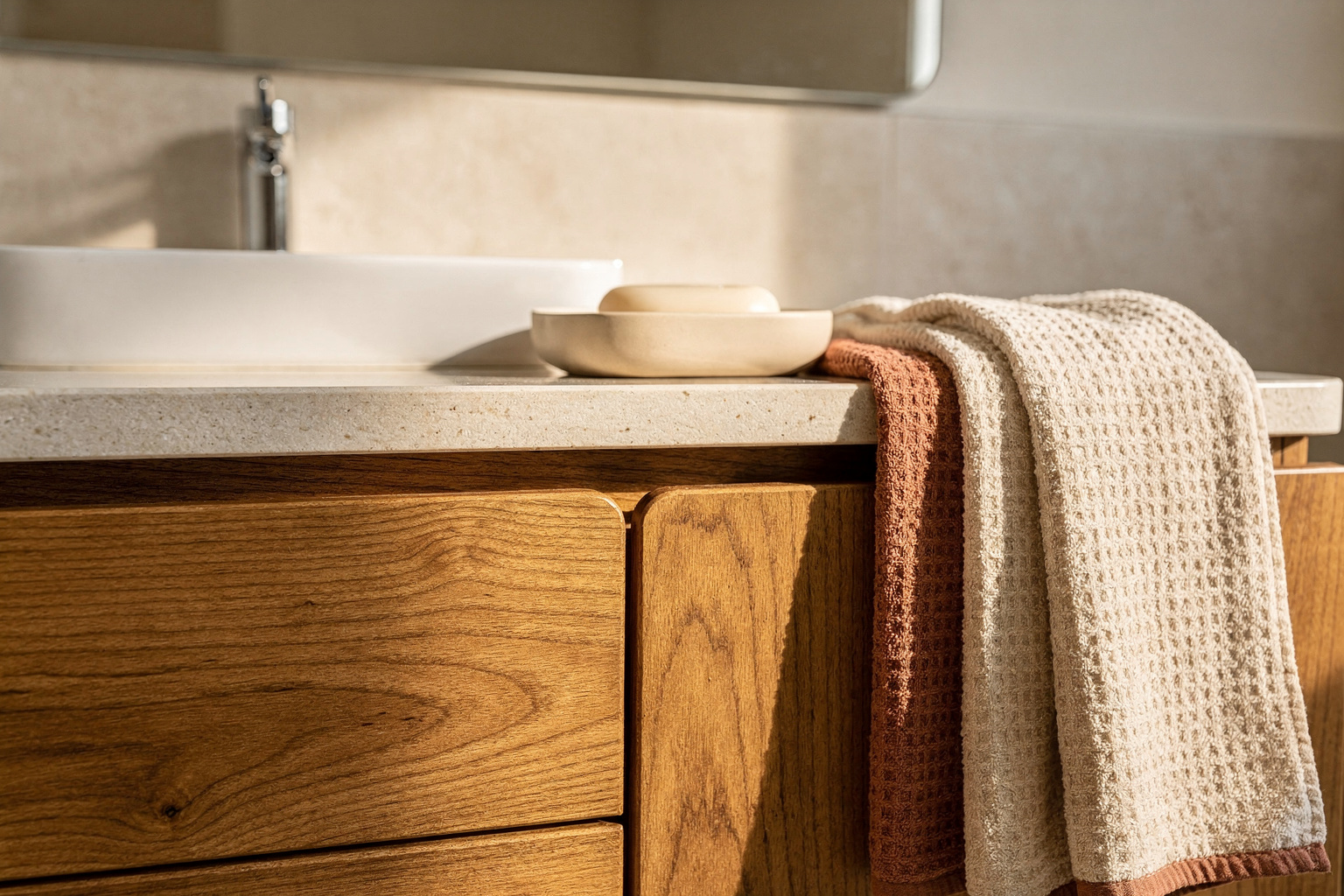
Some Japandi bathrooms get too minimal with smooth surfaces and forget the tactile warmth wood grain brings. Opting exclusively for cold stone, concrete, or porcelain tiles without natural wood accents can make the space feel stark.
Why This Matters
Wood’s subtle grain pattern adds a soft organic texture that balances cooler materials. It introduces warmth that keeps the room from feeling like a sterile showroom.
Practical Fix
Introduce natural or lightly finished wood elements—think slim wooden vanity units, teak shelving, or a bamboo stool. Even wooden toothbrush holders or trays can soften the sterile feel.
Choose wood finishes with visible grain but a matte or softly polished look rather than shiny veneers to maintain the Japandi understated aesthetic. The contrast between wood’s texture and smooth stone creates that much-loved balancing act.
Mistake 3: Using Glossy Tiles Without Matte Counterparts
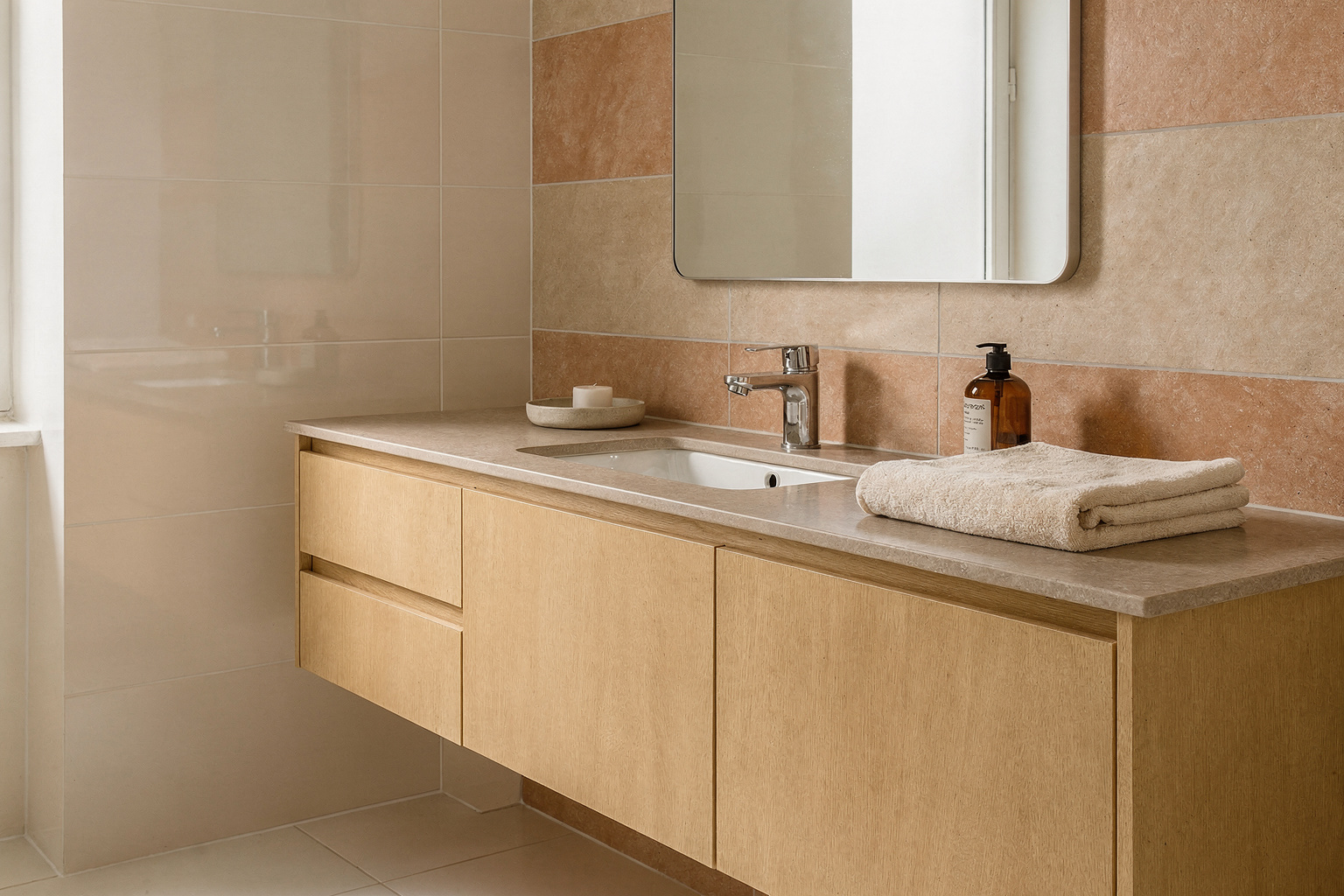
Too much shine in a Japandi bathroom disrupts its typical matte, soft focus. High-gloss tiles reflect a lot of light, which can feel out of sync with the calm, natural intent.
Why This Matters
Shiny surfaces jump out visually. Since Japandi spaces aim for an even, balanced color and texture flow, too much gloss breaks that visual calm.
Practical Fix
Choose matte or satin-finished tiles for your main surfaces—walls and floors. Reserve any glossy tiles for small accents, such as a single backsplash strip or niche.
Matte tiles diffuse light softly, supporting the layering of textures around them (like linen towels or wooden shelves). This helps the whole bathroom feel warm and inviting, yet clean and simple.
Mistake 4: Ignoring Scale and Proportion in Texture Layers
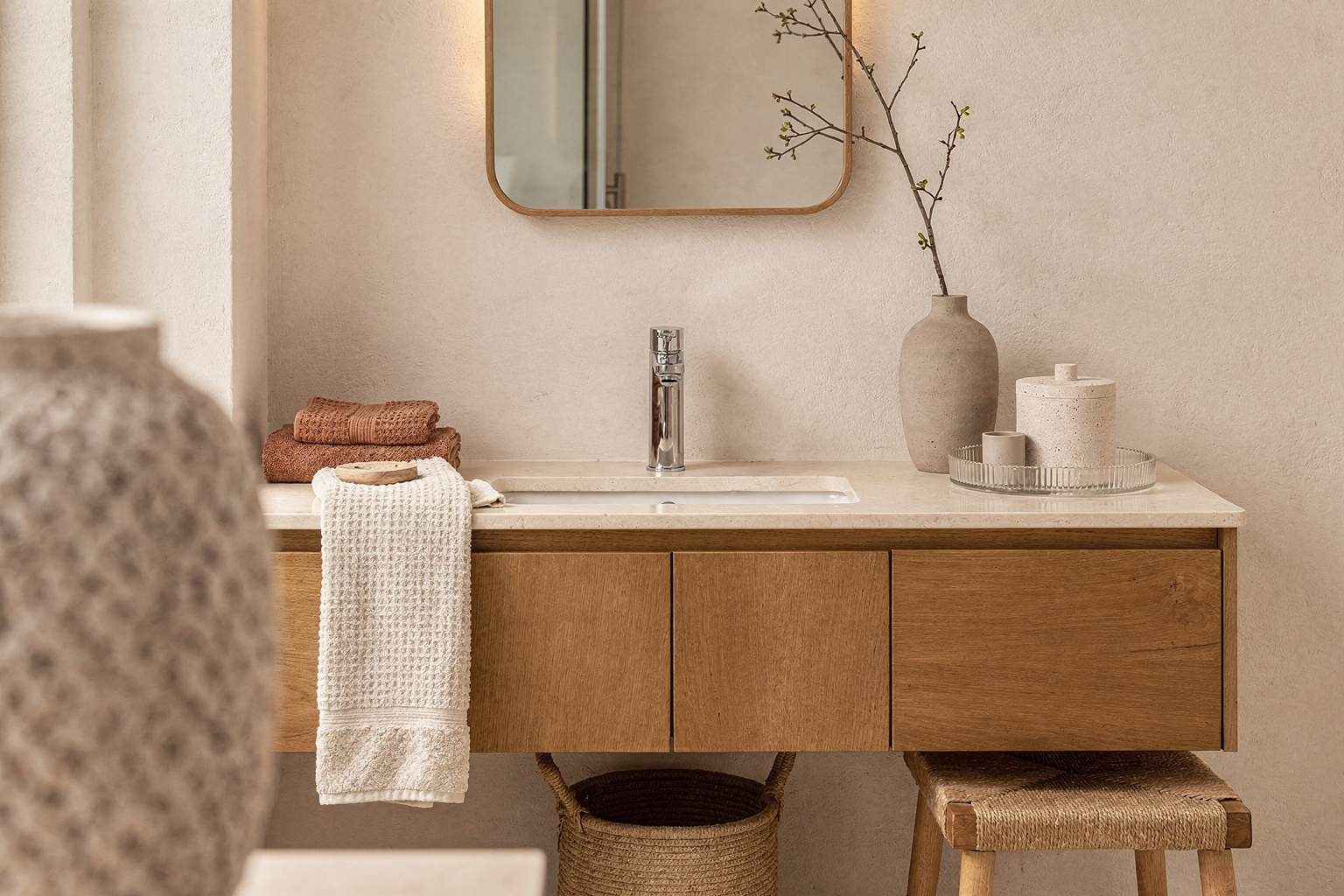
In tight bathrooms, texture scale is paramount. Using large-scale textures like wide plank wood or oversized tiles can overpower the space and throw off the subtle layering Japandi strives for.
Why This Matters
Oversized textures make the room feel fragmented and unbalanced because they don’t break up the space visually.
Practical Fix
In small bathrooms, select smaller, finely textured materials. Medium-width wood planks or small-format matte tiles create a composed, intimate feel. Incorporate layered textiles like thin cotton bath mats and soft linen shower curtains with light weave.
Aim to keep texture layers close in scale to maintain unity. The repeated size patterns guide the eye gently through the room, reinforcing the calming flow.
Mistake 5: Overlooking How Light Interacts with Texture
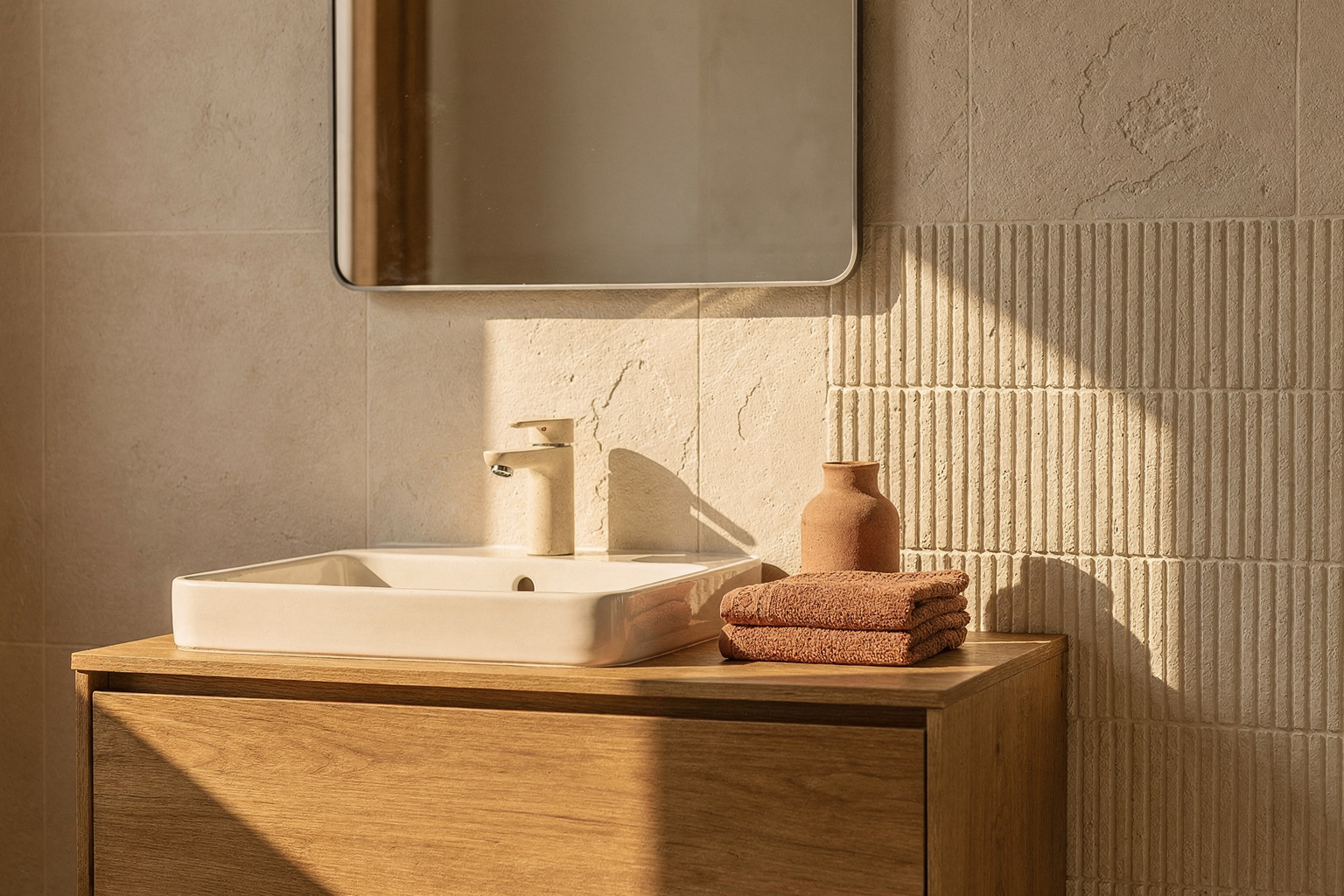
A Japandi bathroom feels best when natural and artificial light play across layered textures, creating subtle shadows and warmth. Overlooking this interplay can flatten textures, dulling the room’s mood.
Why This Matters
Texture under the right light becomes tactile and inviting. Without mindful lighting, even well-chosen materials can seem lifeless.
Practical Fix
Maximize natural daylight by using translucent window treatments and light colors on walls and ceilings. Position task lighting, such as sconces or recessed lighting, to create soft shadows on textured surfaces like wood grain or stone tiles.
Matte finishes work better in these conditions by catching light evenly. Avoid harsh direct light that flattens textures or overly reflective spots that create glare and visual noise.
FAQ
What are the best textures to combine in a Japandi bathroom?
Stick to natural, tactile textures like matte stone tiles, light wood grain with soft matte finishes, linen or cotton textiles, and subtle woven mats or baskets.
Can I use patterned tiles in Japandi bathrooms?
Yes, but choose simple, subtle patterns with natural tones and matte finishes that complement other textures without dominating the space.
How important is soft fabric in Japandi bathrooms?
Very. Soft textiles like linen towels or cotton bath mats add warmth and comfort, contrasting smooth surfaces while keeping the look relaxed.
Is it okay to mix wood tones?
Mixing wood tones is fine if they are in the same tonal family and have a similar finish to avoid visual clash and maintain harmony.
How do I keep a Japandi bathroom from feeling too cold?
Introduce warm wood textures, soft textiles in natural fibers, and balanced lighting to add warmth and avoid a sterile atmosphere.
Creating a Japandi bathroom that feels both serene and richly layered demands attention to texture that respects scale, warmth, and light. Avoiding heavy clashes, excessive gloss, or cold minimalism helps you capture that natural flow and quiet balance. Start by auditing your textures with fresh eyes—are they gentle allies in your space, or silent saboteurs? From there, layering natural woods, matte tiles, and soft linens with thoughtful lighting adjustments delivers a refreshingly approachable, perfectly composed bathroom that invites calm daily use.
Focus on subtle shifts rather than wholesale changes and remember: texture is dialogue, not noise. This approach guides you smoothly to Japandi’s quiet warmth without fuss or overkill.