
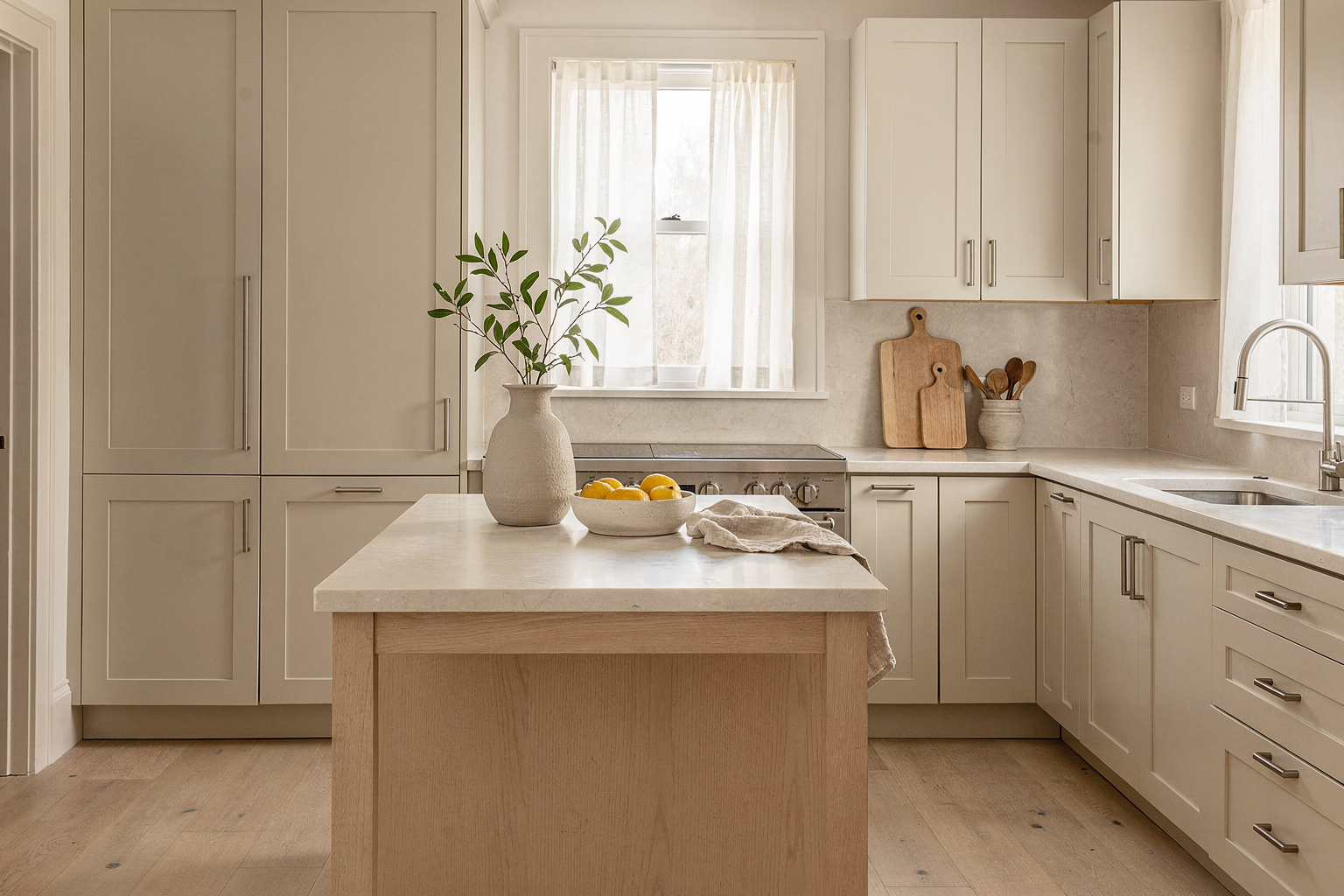
Styling a neutral kitchen can sometimes feel like walking a fine line between understated and bland. But with the right approach, a kitchen filled with soft creams, beiges, and subtle grays can be anything but boring. A well-styled neutral kitchen welcomes warmth, texture, and layers of personality — all while supporting everyday function and easy seasonal shifts.
By the time you finish this guide, you’ll have a clear plan for choosing your kitchen’s foundation, layering materials that speak quietly but impactfully, and balancing details that prevent your space from feeling flat. Plus, we’ll cover those overlooked tweaks that make all the difference in making a neutral kitchen feel collected and comfortable, not cold or clinical.
Choose a Thoughtful Neutral Palette with a Clear Foundation
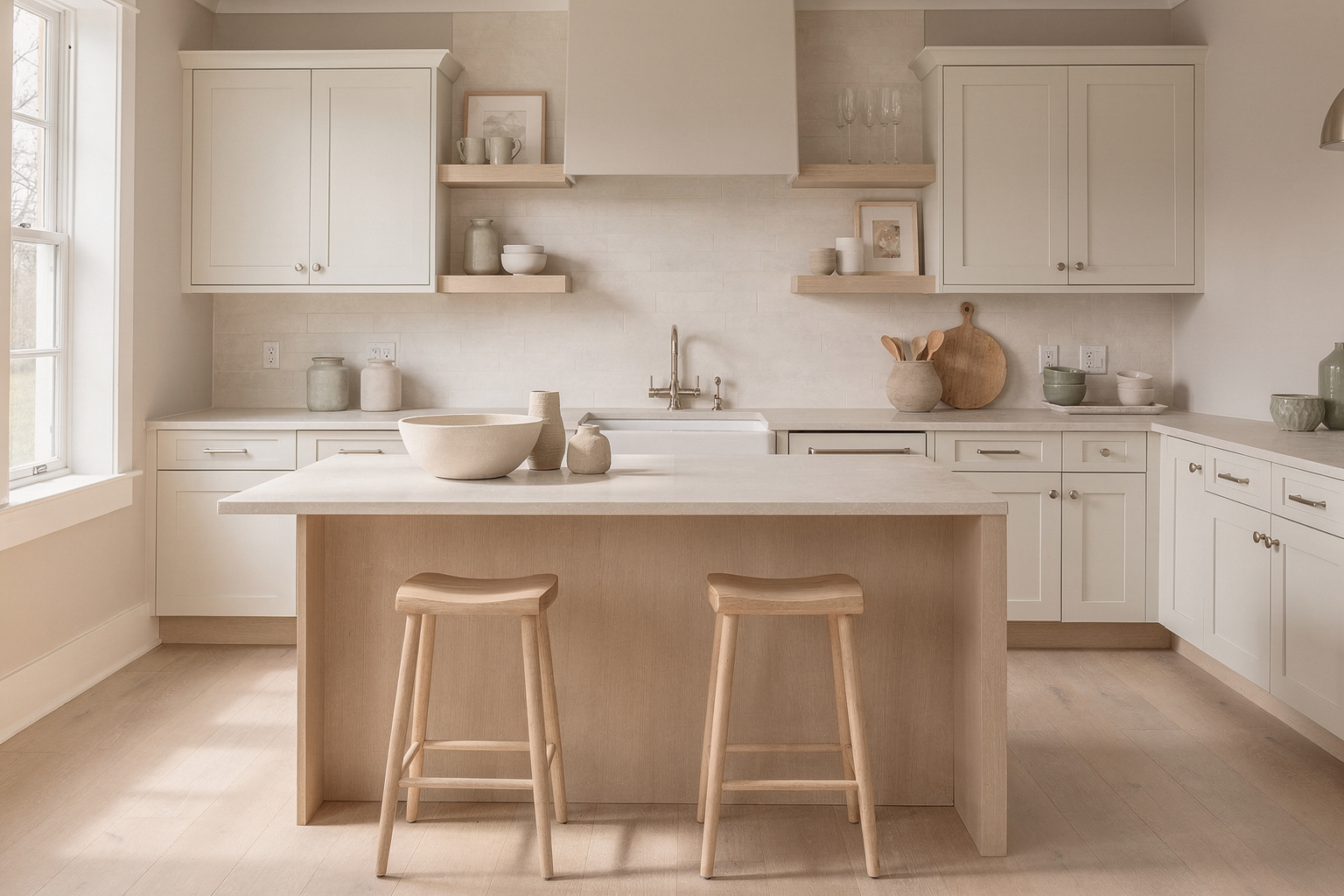
The first step in styling your neutral kitchen is dialing in a foundation with a palette that feels warm, layered, and versatile. Instead of defaulting to all-white, think about mixing gentle shades like soft greige, warm taupe, or creamy beige. These tones create a welcoming backdrop without overwhelming light or appearing sterile.
Think about the undertones of your chosen neutrals. Warmer hues with yellow or pink undertones add a cozy atmosphere, while cooler grays with blue hints create calm but can sometimes feel a bit stark if not balanced with other textures. A nuanced palette anchored in a mix of warm neutrals helps set the mood for the whole kitchen.
When it comes to cabinetry, consider finishes that offer subtle texture—like a matte or satin rather than high gloss. Paired with natural wood flooring or shelving, your base palette will feel grounded and harmonious. This approach opens up countless styling possibilities because it’s flexible and timeless.
Layer Natural Materials and Tactile Textures to Add Visual Interest
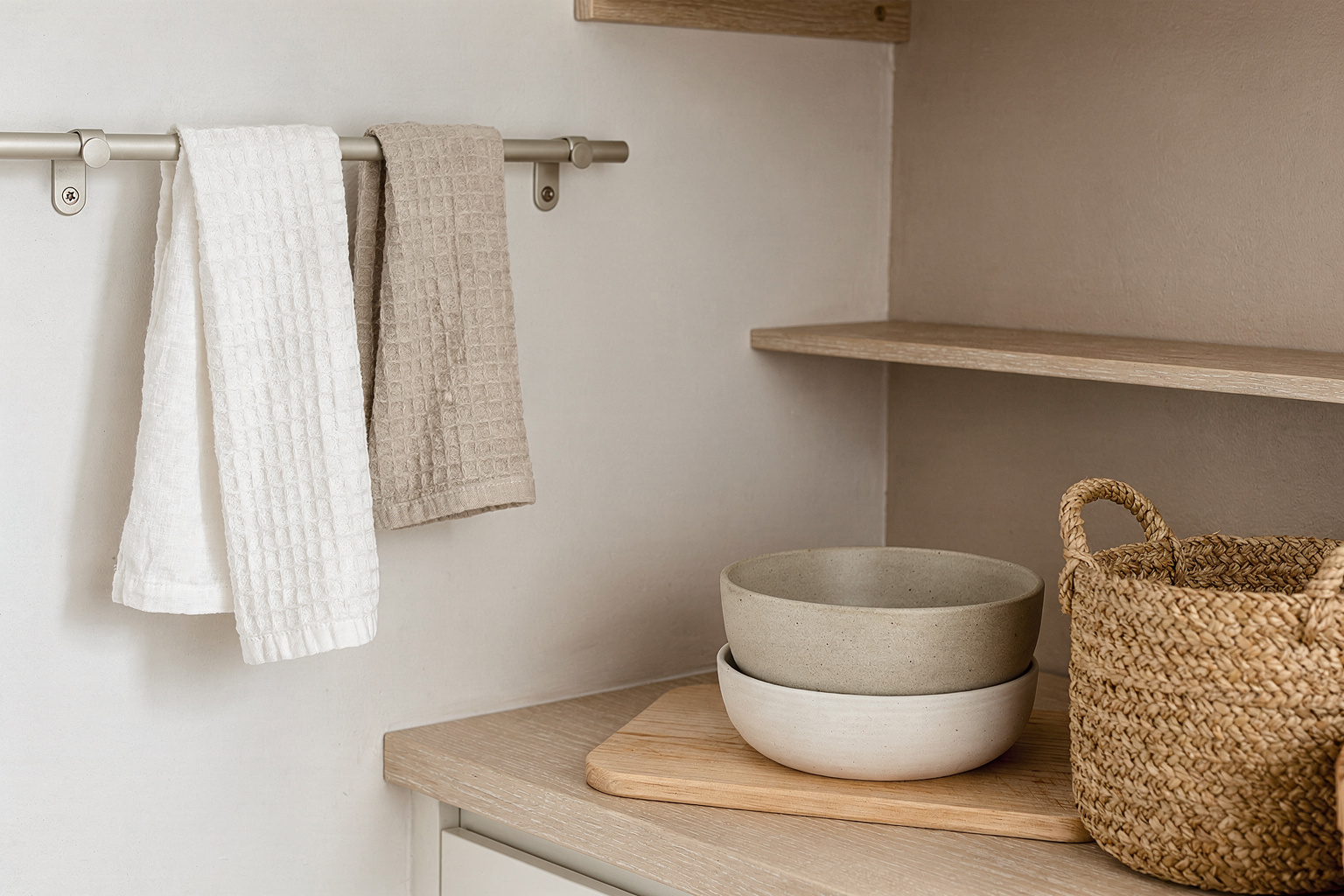
Once your foundational palette is set, bring in elements that build visual warmth and a lived-in feel. Layering textures is your secret weapon here — think the cool hardness of stone countertops softened by woven baskets and airy linen towels. Natural materials feel effortless yet intentional.
For example, a marble or quartz countertop pairs beautifully with wooden cutting boards, giving you both contrast and practicality. Clay or ceramic vases and dishes scattered around the kitchen give depth and personality without adding unnecessary color that could clash or overwhelm.
Textiles like linen or loosely woven cotton spritzed around as tea towels or chair cushions bring softness without crowding the space. The tactile interplay between smooth stone, rough handwoven baskets, and soft linens invites you in, creating a kitchen that feels relaxed but thoughtfully composed.
Use Hardware and Fixtures to Introduce Subtle But Impactful Contrast
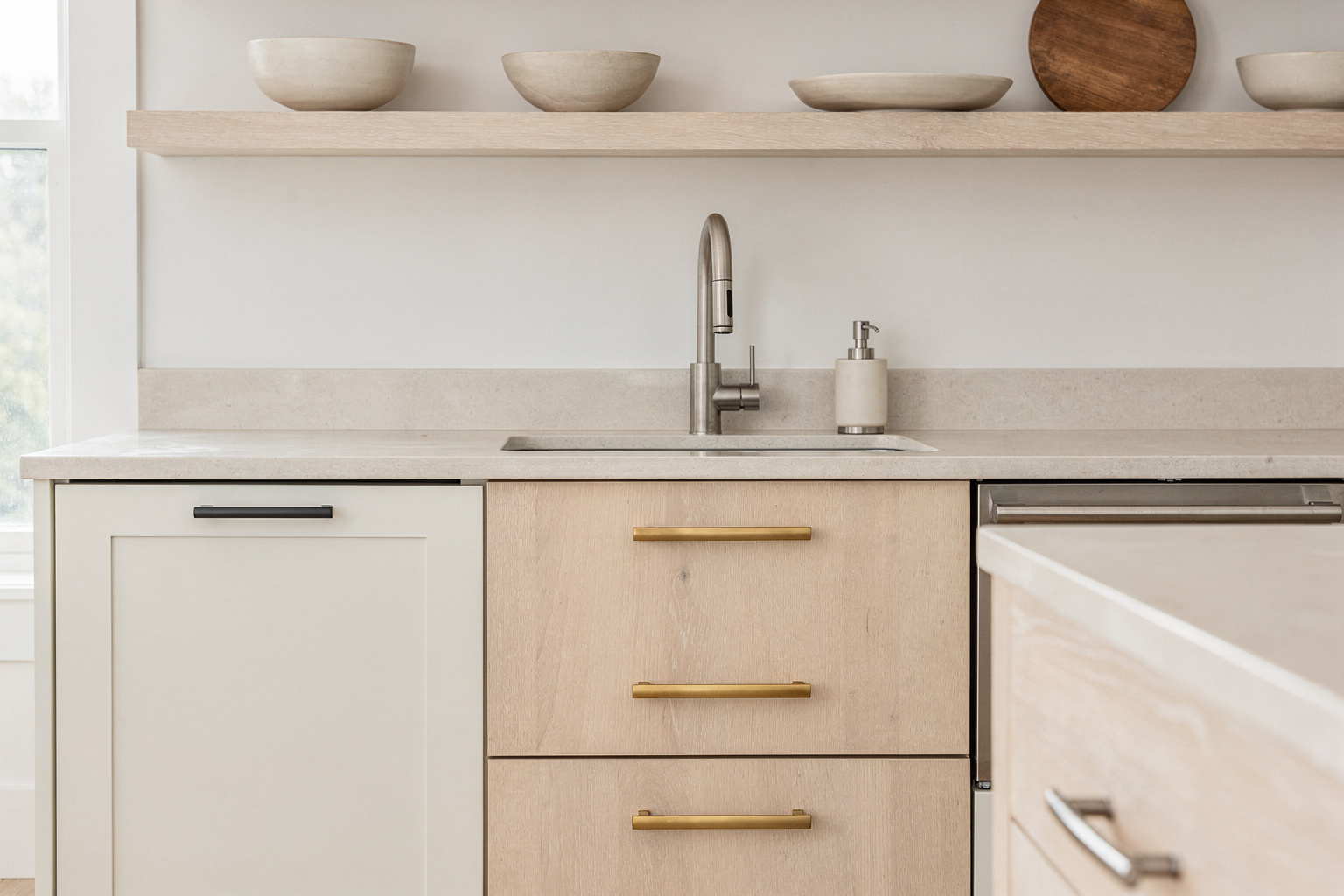
Small styling decisions often have outsized impact. Hardware and fixtures are the perfect place to add contrast that feels fresh and intentional without disrupting your neutral palette.
Matte black or aged brass knobs, pulls, and faucets can frame cream or greige cabinetry with quiet sophistication. Black hardware gives a modern edge and graphic punch, while warm metals like brass introduce a hint of glow and an artisanal touch.
These finishes break up expanses of neutral surfaces, guiding the eye and giving your kitchen detail and dimension. Integrating fixtures with finishes present elsewhere — like black pendant lighting or brass accents in seating — reinforces cohesiveness, but you want to avoid overuse to keep the subtle balance.
Choosing the right scale and shape of handles is also important. Slim, streamlined shapes offer a modern contrast, while gently rounded or vintage-inspired pulls can reinforce a soft, timeless vibe.
Balance Open Shelves with a Curated Mix of Neutrals and Greenery
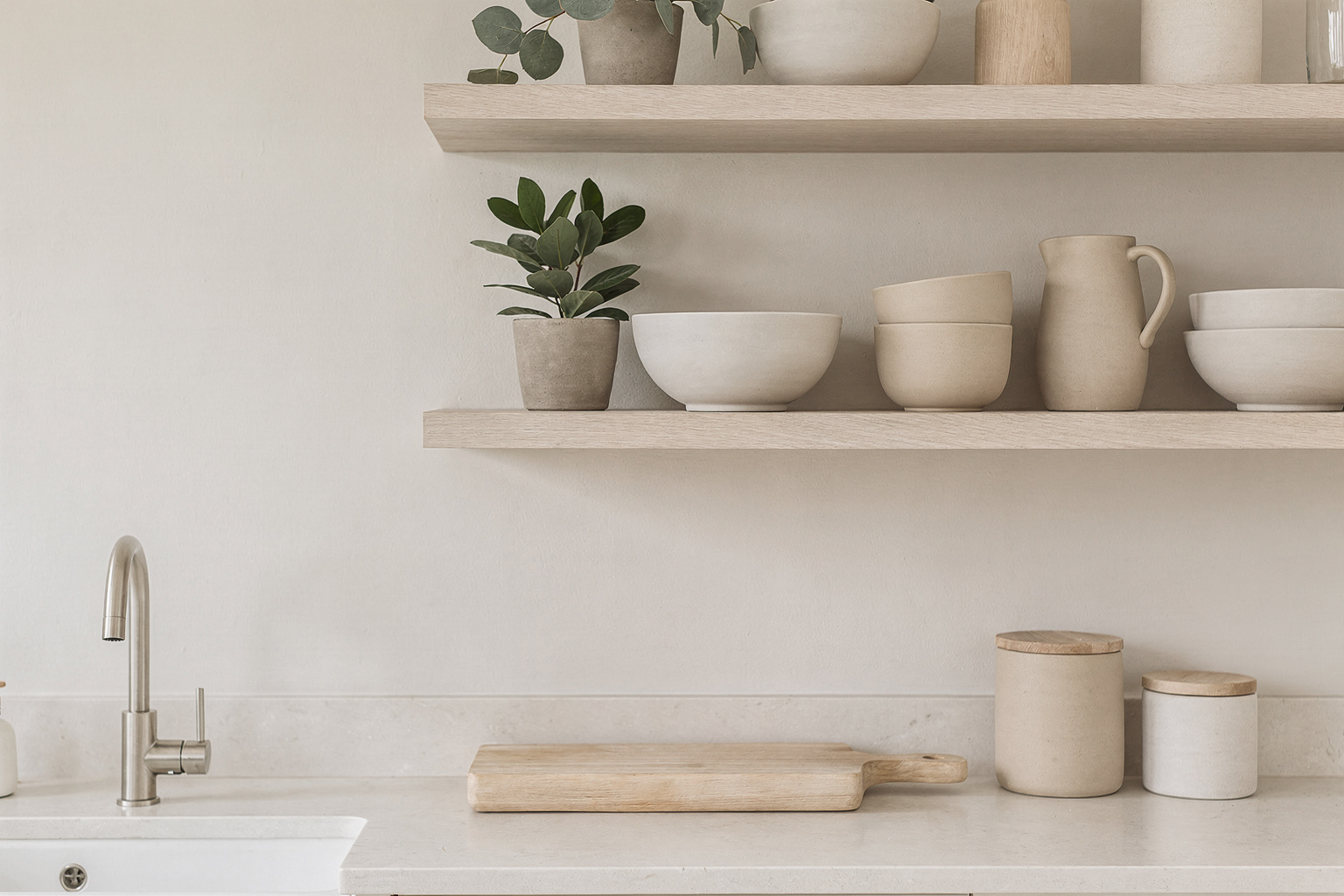
Open shelving has become a natural part of neutral kitchen styling because it creates opportunity for personalization without clutter. The key is to style shelves with a curated edit — think about grouping natural ceramics, wood items, woven baskets, and a touch of greenery.
Keeping objects in a similar neutral spectrum amplifies a serene mood, but add plants with soft green leaves or herbs in simple pots to introduce life and color that feels organic and quietly energetic.
Grouping items in odd numbers and varying heights avoids rigidity and creates a soft visual rhythm that feels intentional, not thrown together. This curated layering invites you to swap items out seasonally, like swapping out a heavier ceramic pitcher in winter for a light glass carafe in summer.
Avoid overfilling—open shelves work best when they breathe. The goal is a display that feels balanced, functional, and approachable.
Style Finishing Touches That Offer Practicality and Personality
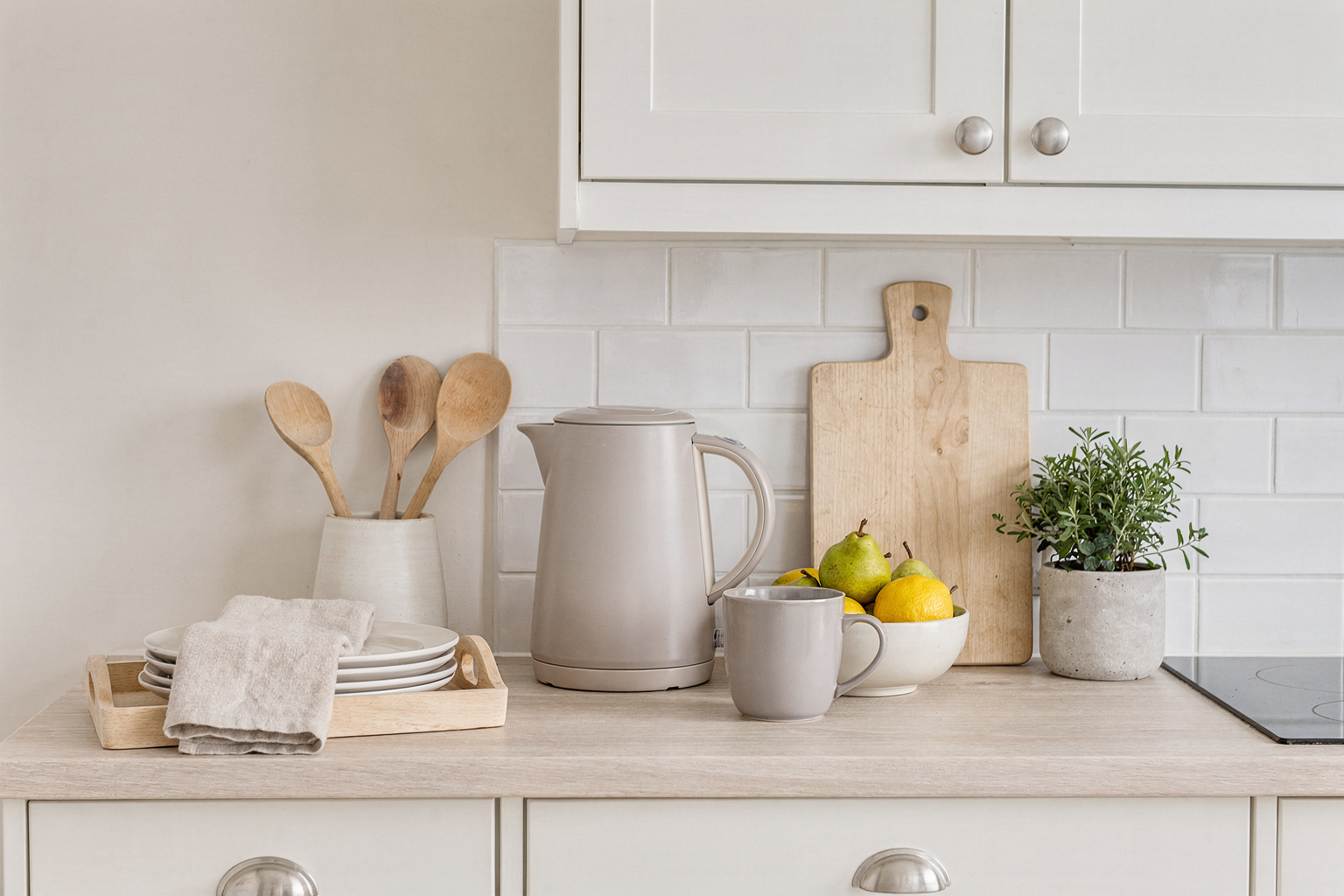
When your kitchen’s palette, materials, hardware, and open shelves are in place, it’s time to focus on finishing touches that unite style with function. This includes elements like woven baskets to corral everyday items, stoneware jars for utensils, or simple linen napkins that soften hard surfaces.
These details help avoid a sterile look by inviting tactility and warmth, while also making your kitchen work better for daily life. Choosing multipurpose accessories in natural hues that complement your palette means less visual clutter and more cohesion.
Consider also practical layout decisions: group everyday utensils in attractive containers near prep zones or style a wooden tray with frequently used oil and vinegar bottles to keep counters tidy. These little edits punctuate your neutral kitchen with approachable personality that doesn’t feel forced.
Frequently Asked Questions
How can I prevent a neutral kitchen from looking cold?
Layer warm shades of neutrals, plenty of texture, and introduce touches of natural wood and soft textiles to add inviting depth.
What’s the best way to add color in a neutral kitchen?
Keep large surfaces neutral and add color through small accents like plants, ceramics, or textiles that can be updated easily.
Should I mix metal finishes in a neutral kitchen?
Mixing can work if done thoughtfully—pairing black hardware with warm brass accents offers subtle interest without clashing.
How do I style open shelving without clutter?
Curate a balanced mix of functional items and decor in similar neutral tones, leaving space to let shelves breathe.
Can neutral kitchens work in small spaces?
Absolutely. Neutral palettes can make small kitchens feel open and bright, especially if paired with thoughtful layout and layered textures.
Styling a neutral kitchen isn’t about stripping back to basics—it’s about selecting and combining the right foundation, materials, and details to create a room that feels quietly collected and comforting. Balancing warm tones, layered textures, and subtle contrasts gives your kitchen a timeless personality that’s inviting to live in every day.
Start by anchoring your palette with nuanced neutrals, then work through layering materials and practical accents step-by-step. This thoughtful sequence helps you avoid common neutral kitchen layout mistakes like flatness or too much monotony. With patience and a clear plan, you’ll find your neutral kitchen can feel fresh, functional, and filled with quiet warmth for years to come.