
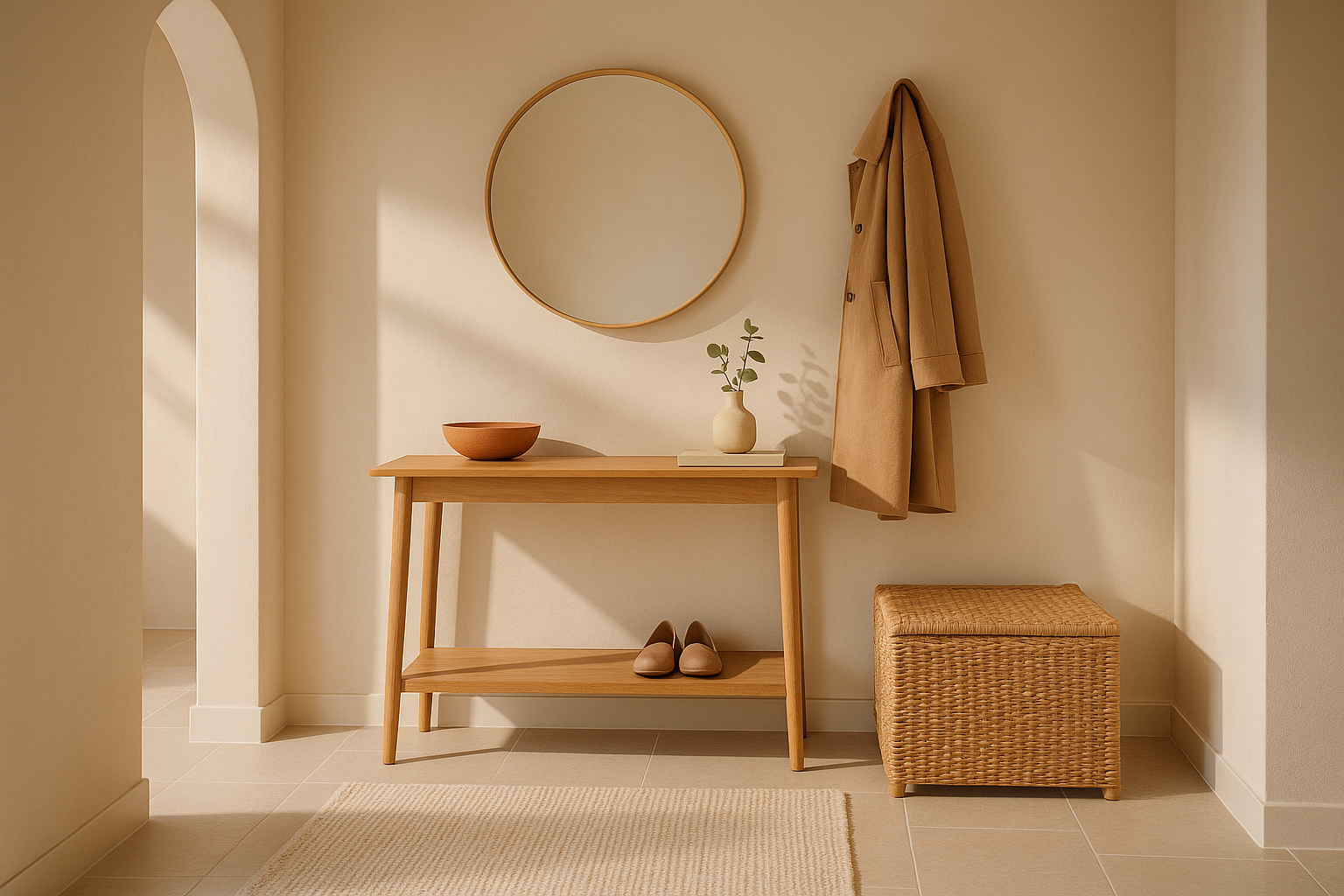
Choosing the right furniture for a minimalist entryway can feel trickier than it looks. Unlike rooms where you can pile on personality, an entryway needs to be pared back, balanced, and ready for daily comings and goings without overwhelmed surfaces or awkward bulk. The challenge isn’t just about keeping things simple — it’s about selecting pieces that work hard visually and functionally while supporting a clean, open feel.
The best furniture for a minimalist entryway prioritizes scale, material, and multi-function over excess. Light-reflecting surfaces, natural textures, and thoughtful proportions help keep the space grounded without fuss. And when the furniture feels deliberate yet adaptable, you can add or change seasonal accents quickly without altering the core arrangement. This article breaks down how to evaluate your options, from the most important baseline standards to smart material choices, size considerations, and final buying advice to help you build an entryway that works like a charm.
Start with Proportions and Practicality: What Your Minimalist Entryway Really Needs
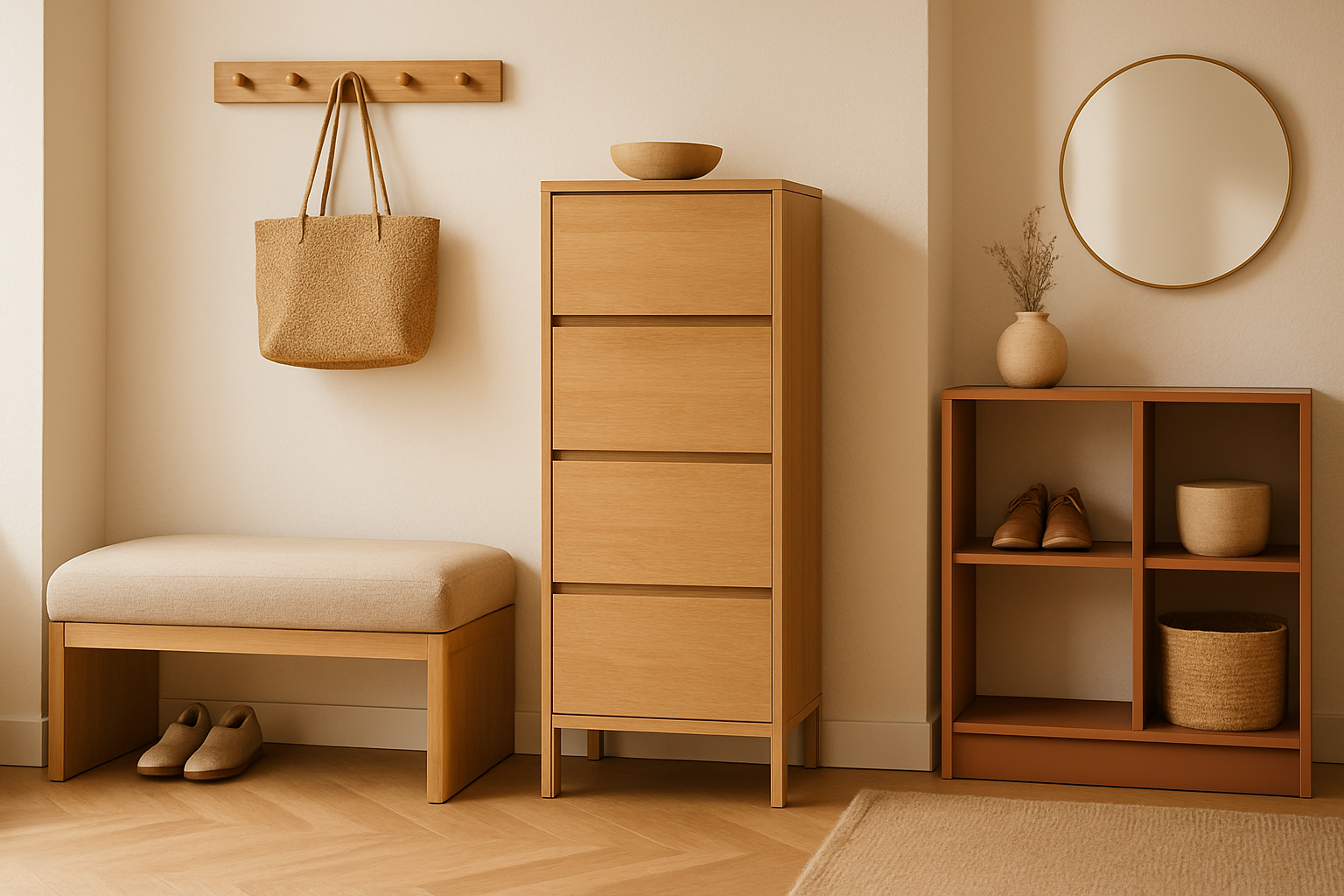
Minimalism is often misunderstood as merely a sparse look. What’s more important is the right scale and balance. For entryway furniture, this means choosing pieces that fit your specific wall length and ceiling height without creating dead zones or overcrowding. Think of entryway furniture as an anchor: it should define the space subtly without boxing it in.
Low-profile benches or slim console tables generally suit most minimalist entryways because they sit close to the wall, freeing up floor space. When selecting, factor in daily habits: do you need seating for putting on shoes? Space for a bag to drop? The pieces should support how you live rather than just look pretty.
Materials like light woods, matte metal frames, or soft-woven textiles in neutral or warm hues add texture without visual noise. Avoid bulky or overly ornamental items that disrupt flow or make the space feel heavy. The goal is a furniture baseline that encourages easy movement and a crisp, calm entry.
Natural Wood and Woven Textures: A Minimalist’s Warm Anchor
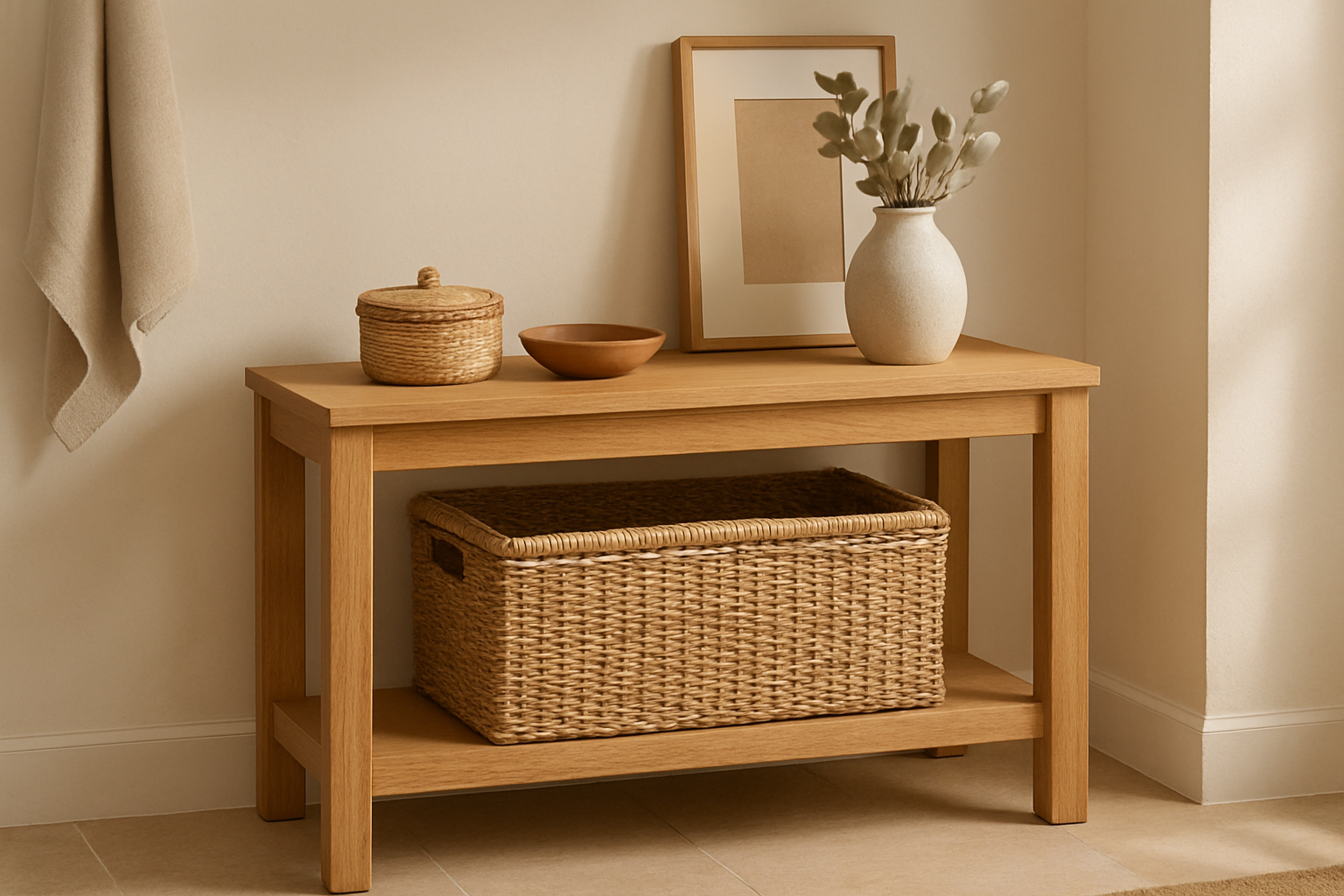
When you think of furniture for minimalist entryways, raw natural fibers and wood surfaces often strike the perfect balance between simplicity and warmth. A solid wood bench with clean lines and a woven seat cushion adds both visual interest and comfort without distracting from the pared-back look.
This material mix works because it introduces gentle texture — vital for tactile depth in a minimalist scheme. Using warm woods like oak or ash in lighter finishes keeps the space feeling airy, especially when paired with off-white or soft beige walls. Add a subtle accent pillow in muted greens or dusty blues for a quick seasonal refresh, and your furniture feels rooted yet flexible.
Plus, a wooden bench is nicely functional. It’s a surface for guests or family to sit and drop keys or mail. The woven seat brings softness and invites use, contrasting beautifully with harder flooring types like tile or polished concrete.
Exploring Slim Console Tables and Mirrors for a Sleek Minimalist Statement
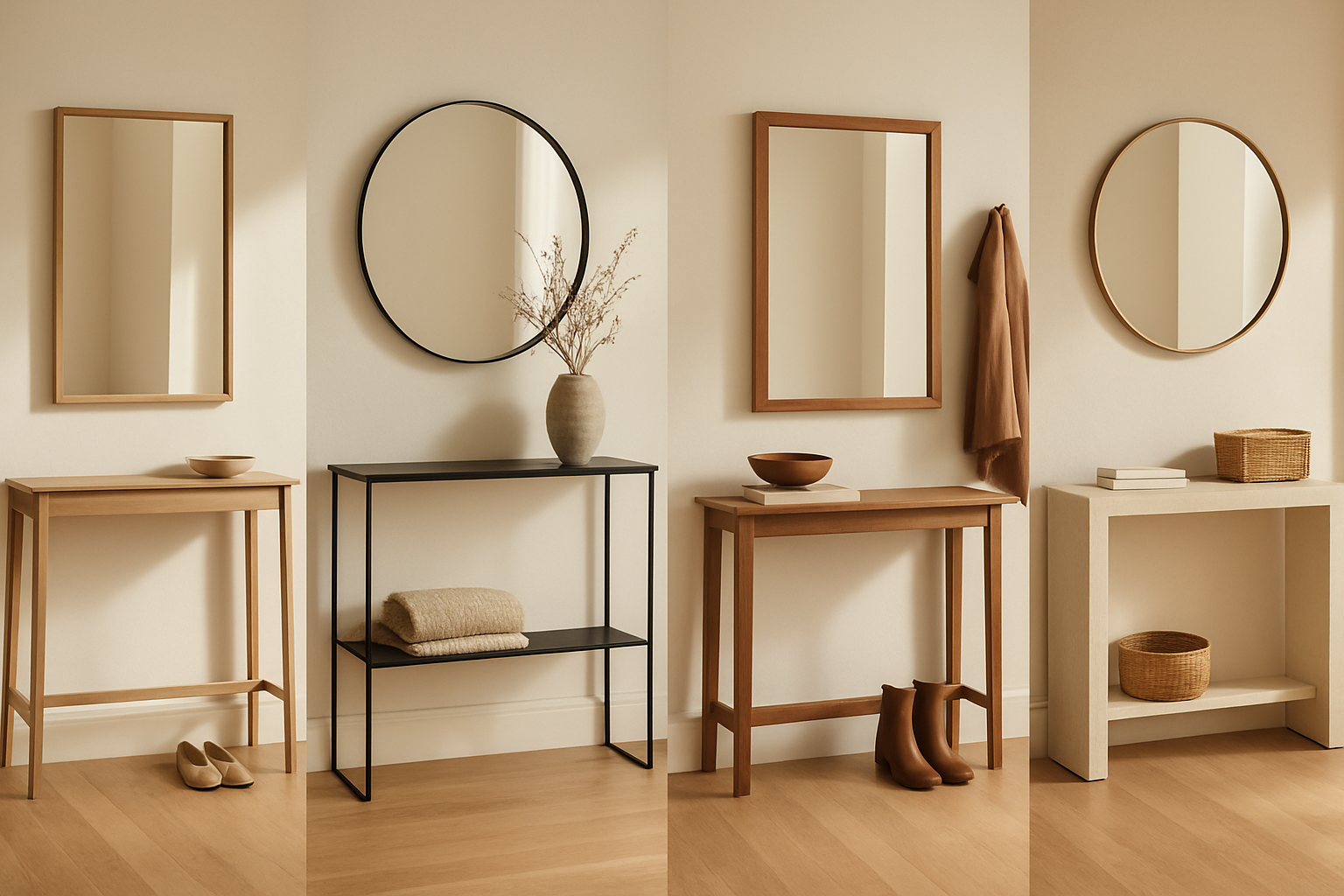
A slim console table paired with a round mirror is a classic solution that channels minimalist ease with a touch of polish. Look for tables with thin metal frames in matte black, brass, or brushed nickel combined with glass or light wood tops for a fresh, layered look.
The visual lightness of this combo keeps entryways feeling spacious and uncluttered. A round mirror complements the linear console table by softening edges and bouncing light back into the room, improving both function and mood.
Styling advice: choose a console no wider than two-thirds of your entryway’s width to preserve walk flow. Use the top surface sparingly — a small tray for mail or keys and a ceramic vase with fresh branches is enough. Leave space underneath for a slim shoe basket or storage basket to keep smaller items out of sight.
Tailoring Furniture Choice to Your Entryway’s Size and Lifestyle
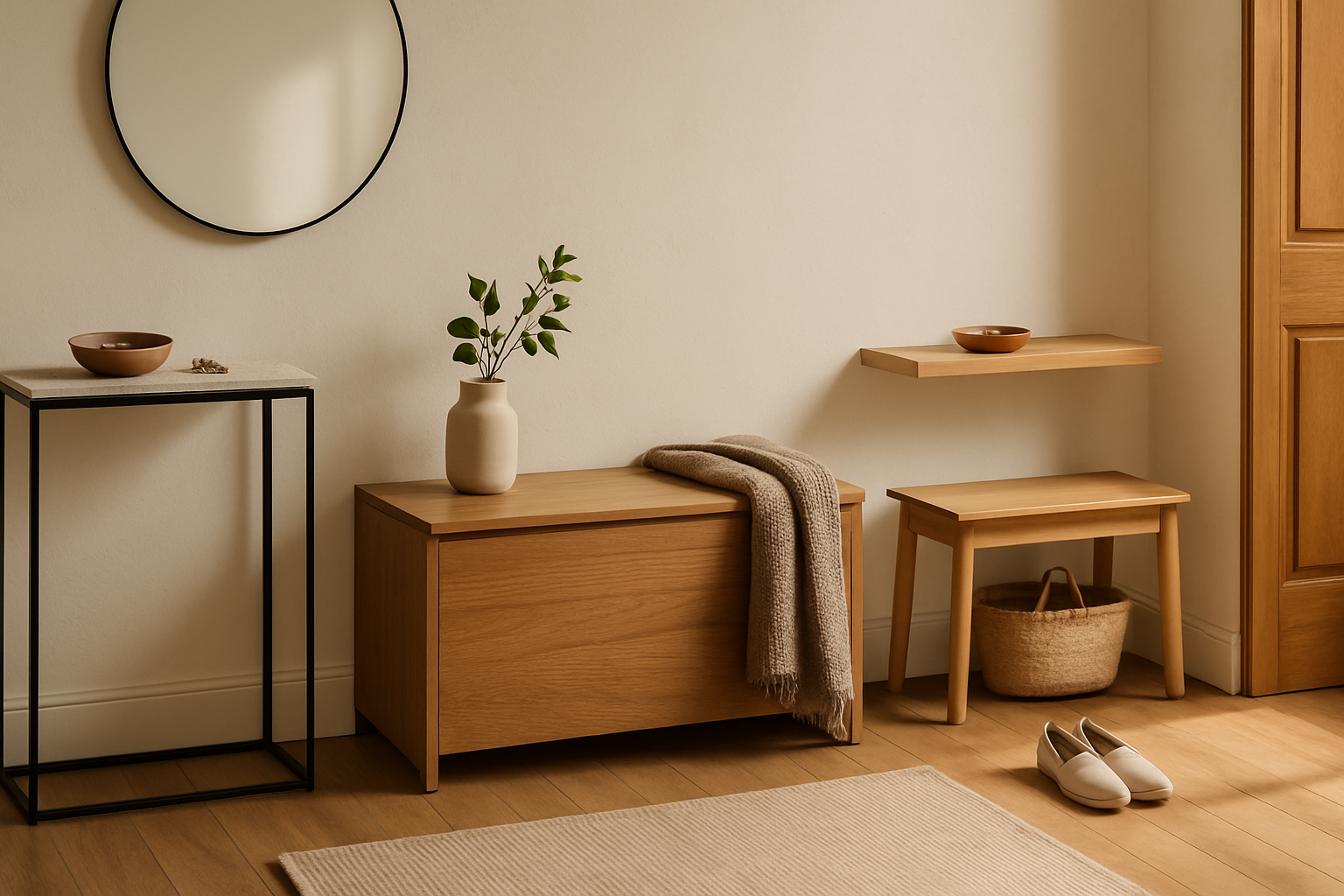
Urban apartments and tight layouts demand furniture that works harder and smarter. Multifunctional pieces like storage ottomans or benches with cubbies can maximize the minimal footprint without sacrificing visual calm.
If your entryway shares space with other functions — maybe it’s part of a hallway or adjacent to a kitchen — look for stackable or lightweight pieces you can move easily. Neutral tones and low-sheen finishes prevent these pieces from dominating the sightlines.
In larger homes, you have more flexibility to layer several minimalist pieces, such as a bench with built-in hooks or a small credenza for seasonal gear. But even in open spaces, keep the number of furniture elements kept to a deliberate handful for a coherent, uncluttered feel.
Consider budget too: mixing a simple but well-made high wood bench with an affordable metal shelf frame can balance cost without feeling mismatched. The focus is on durability and utility first, then looks.
Confidently Narrowing Your Furniture Choices: What to Prioritize When Buying
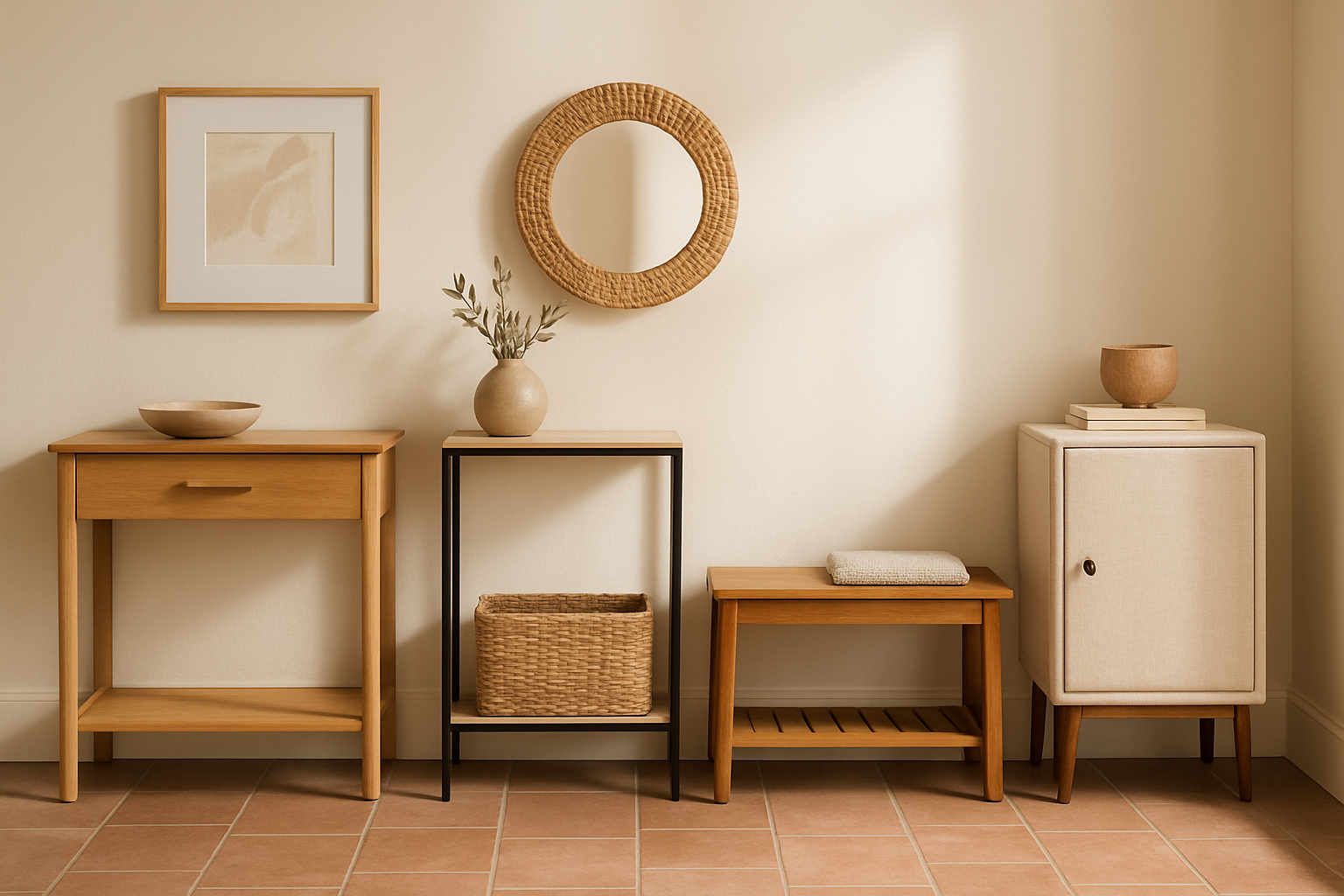
When it comes to final decisions on minimalist entryway furniture, confidence comes from clarity on your needs and visual priorities. Reflect back on daily use (seating, storage, hanging space) and spatial constraints. Narrow options by these criteria before factoring in style details.
Material durability is crucial—entryways are high-traffic zones. Hardwoods over softwoods, or fabrics with stain resistance, help furniture last without looking tired. Choose finishes that camouflage fingerprints or shoe marks if you expect regular wear.
Also, consider furniture that supports seasonal updates without being locked into a look. Light wood and matte metals are timeless bases that allow you to swap soft accents and wall decor easily.
Keep measurements handy, and if possible, use painter’s tape on the floor to visualize the piece’s footprint. This simple step avoids surprises and ensures your minimalist entryway stays balanced and welcoming.
Frequently Asked Questions
What size furniture works best in a minimalist entryway?
Opt for pieces that fill roughly one-third to two-thirds of the wall space without obstructing flow. Slim or low-profile designs maintain openness.
Are multifunctional furniture pieces suitable for a minimalist style?
Yes, as long as their design remains clean and materials are consistent with a simple palette. Functionally smart pieces keep clutter down.
Which materials add warmth without disrupting minimalism?
Natural woods with light finishes, woven textiles, and matte metals introduce tactile interest while keeping the look clean.
How can I prevent my minimalist entryway from feeling cold?
Layer texture through cushions, rugs, and natural fiber baskets. Warm-toned woods and soft neutrals help soften stark spaces.
Can I mix styles in a minimalist entryway if the furniture is simple?
Mixing can work if the pieces share scale, color harmony, and low detail. The minimalist foundation helps blend different influences seamlessly.
Your entryway furniture sets the tone for coming home — simple yet functional items that welcome without weighing things down bring calm and ease to these busy spaces. Start with smart choices around size and materials, match to your lifestyle needs, and lean on flexible, textured pieces that age gracefully. Your best minimalist entryway furniture balances quiet warmth with seamless utility, inviting you and guests in with style that feels natural and thoughtful.