
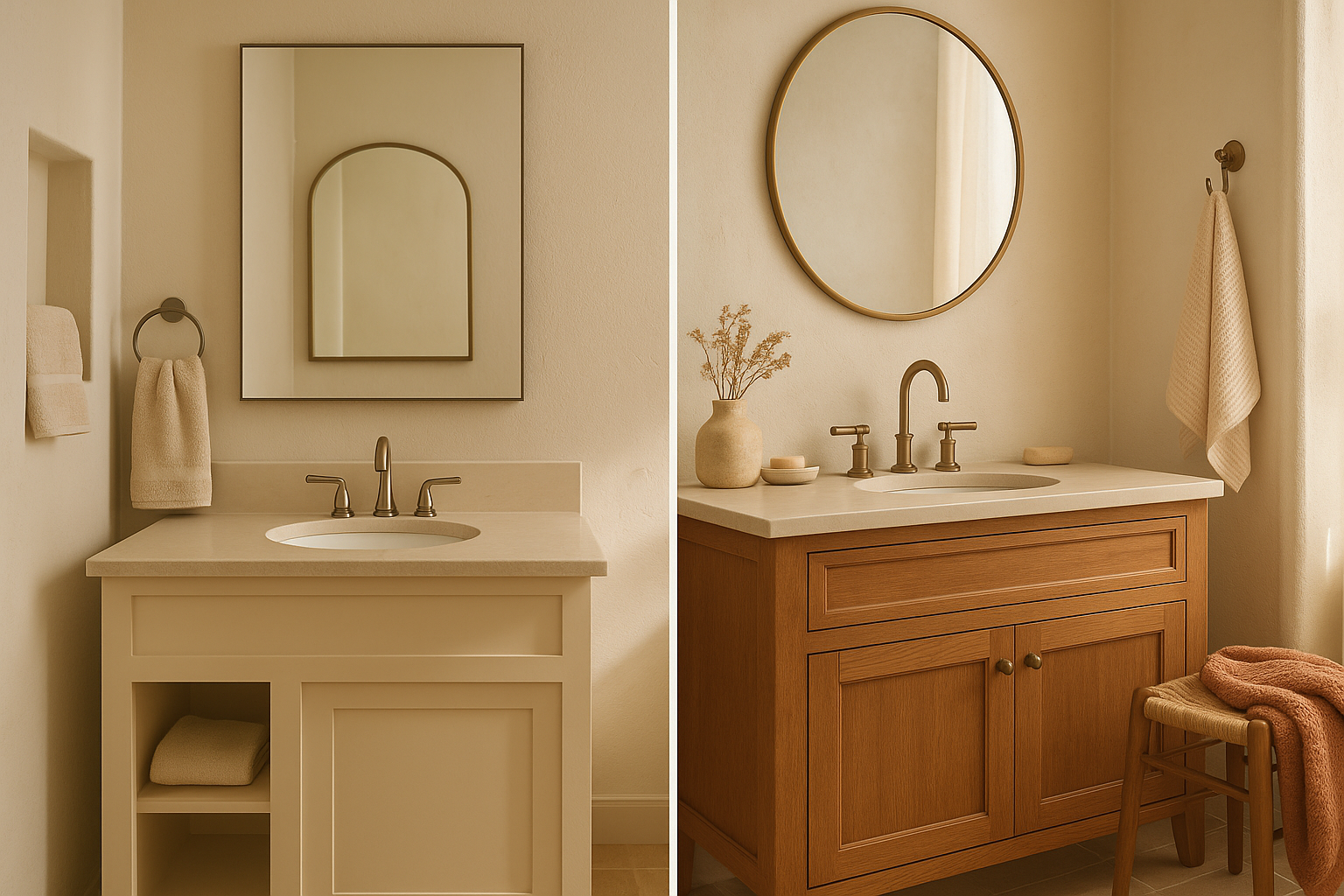
Transitional bathrooms aim to blend classic charm with modern simplicity, but texture mistakes can quickly disrupt this balance. Without careful planning, the layering of surfaces—from tiles to textiles—can feel either flat and lifeless or visually chaotic. When texture is mismatched or misbalanced, it robs the bathroom of its quietly elegant vibe and can make the room feel less comfortable and cohesive.
This article walks through five texture pitfalls frequently seen in transitional bathroom designs and offers clear, approachable fixes you can apply. Whether you’re refreshing an existing space or planning a new bathroom layout, understanding these texture details helps maintain the room’s flow and warmth.
Overwhelming Tile and Countertop Textures
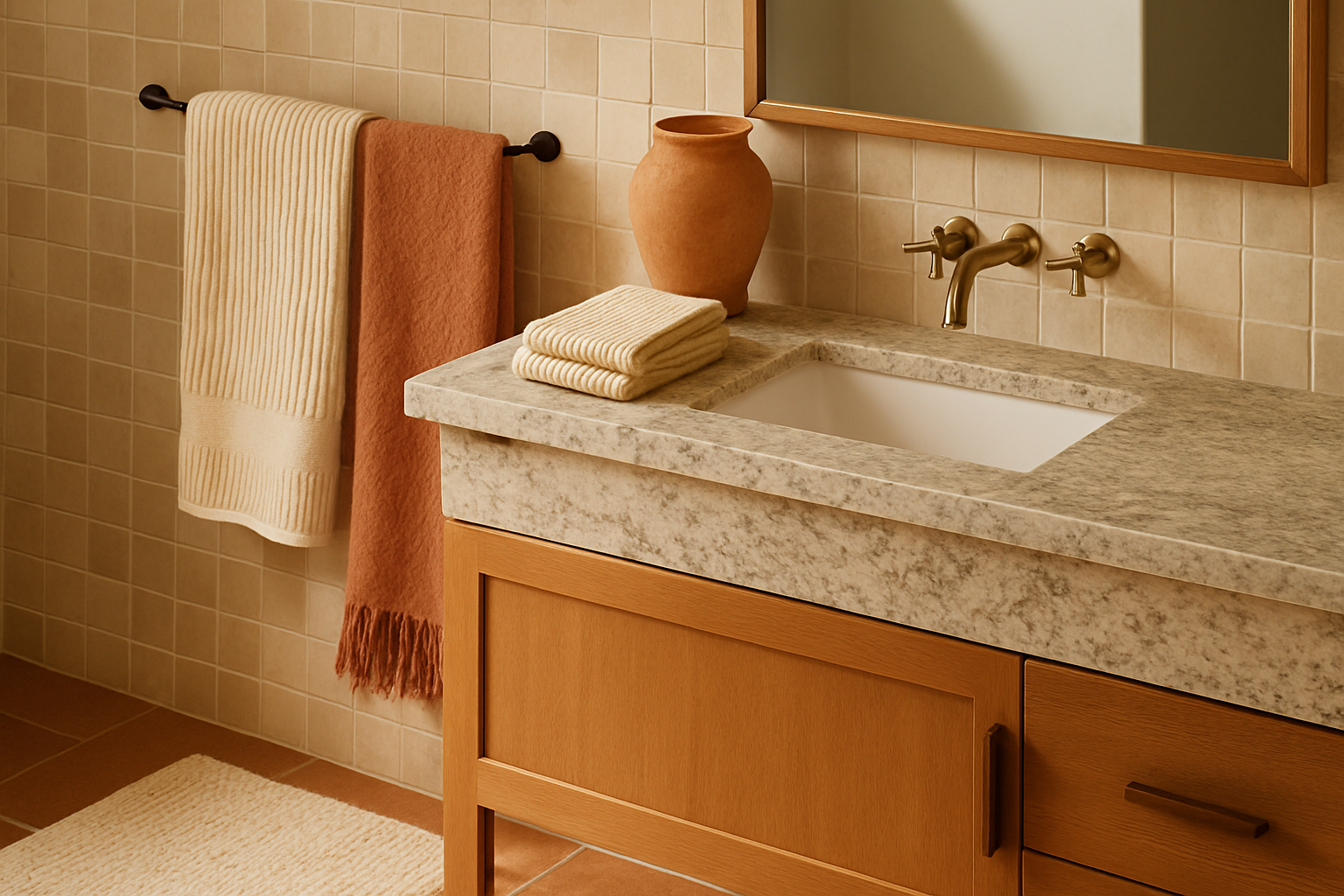
One common mistake is pairing busy or overly textured tiles with equally intricate countertops. For example, a strongly patterned ceramic tile next to a heavily veined marble can fight for attention, leaving the eye without a place to rest.
The fix? Choose one dominant texture surface and simplify the other. If you have a tactile, patterned tile floor or shower wall, opt for a smooth, matte quartz or a subtle honed stone countertop. This creates contrast without competition and keeps the bathroom feeling spacious and calm. For color pairing, lean into neutrals like soft greys, creams, or warm whites, which allow textures to stand out gently instead of clashing.
Practical tip: When sourcing materials, collect physical samples and place them side-by-side in your bathroom’s natural light to see how the surfaces interact before committing.
Too Much Texture Without Enough Contrast
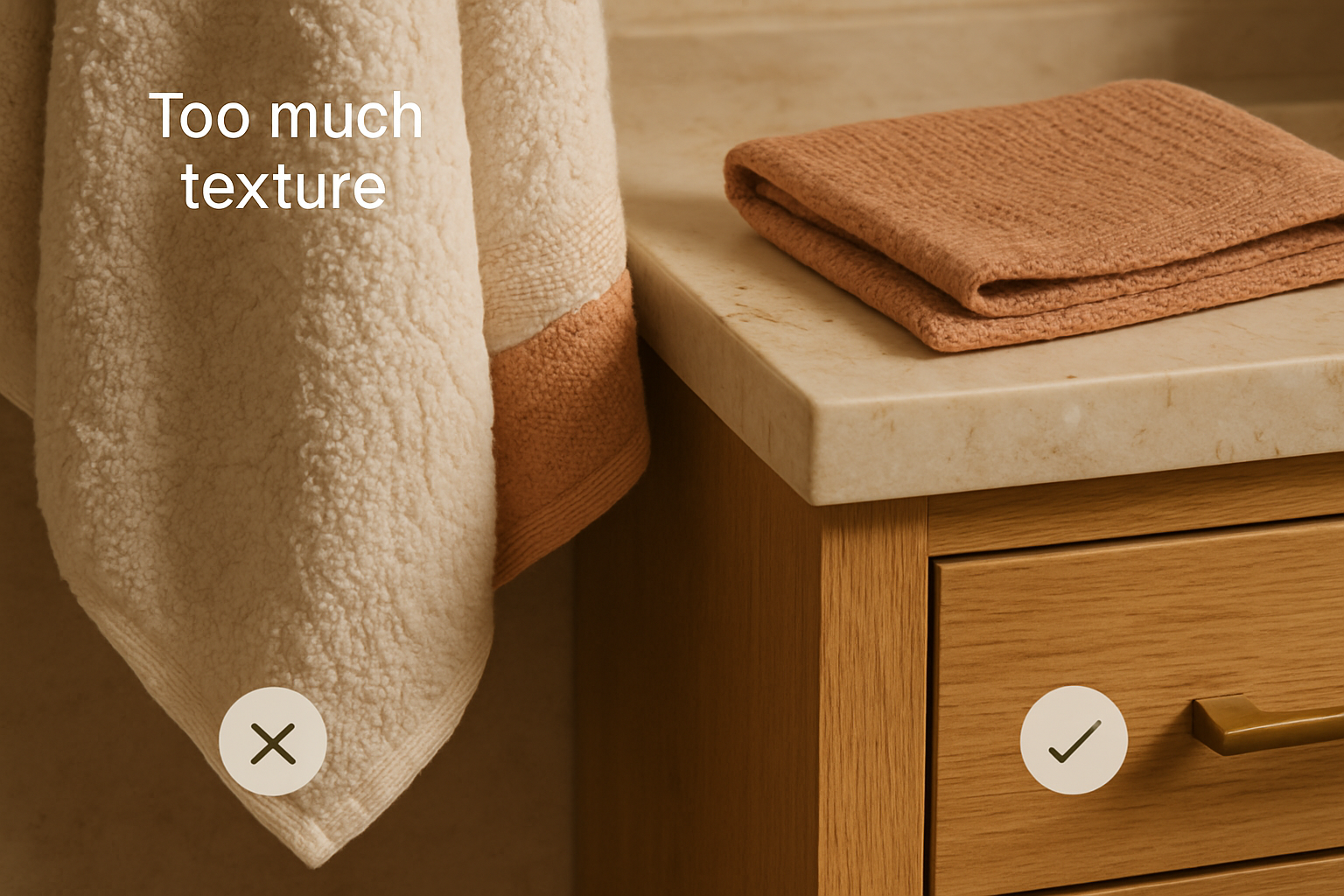
Another pitfall is layering multiple rough or nubby textures without balancing smooth surfaces, which can make the space feel heavy and muddled. For example, rough stone tiles combined with textured wallpaper and braided natural fiber baskets create a visual overload.
Good transitional bathroom decor thrives on the interplay between smooth, sleek finishes and textured elements. If your walls or floors feature texture, introduce soft glass, polished metal fixtures, or smooth lacquered cabinetry to provide relief and lightness.
Try adding a sleek faucet or glossy ceramic accessories to contrast the rougher materials. This results in a layered but still cohesive space that flows easily.
Mixing Bathroom Textiles That Don’t Harmonize
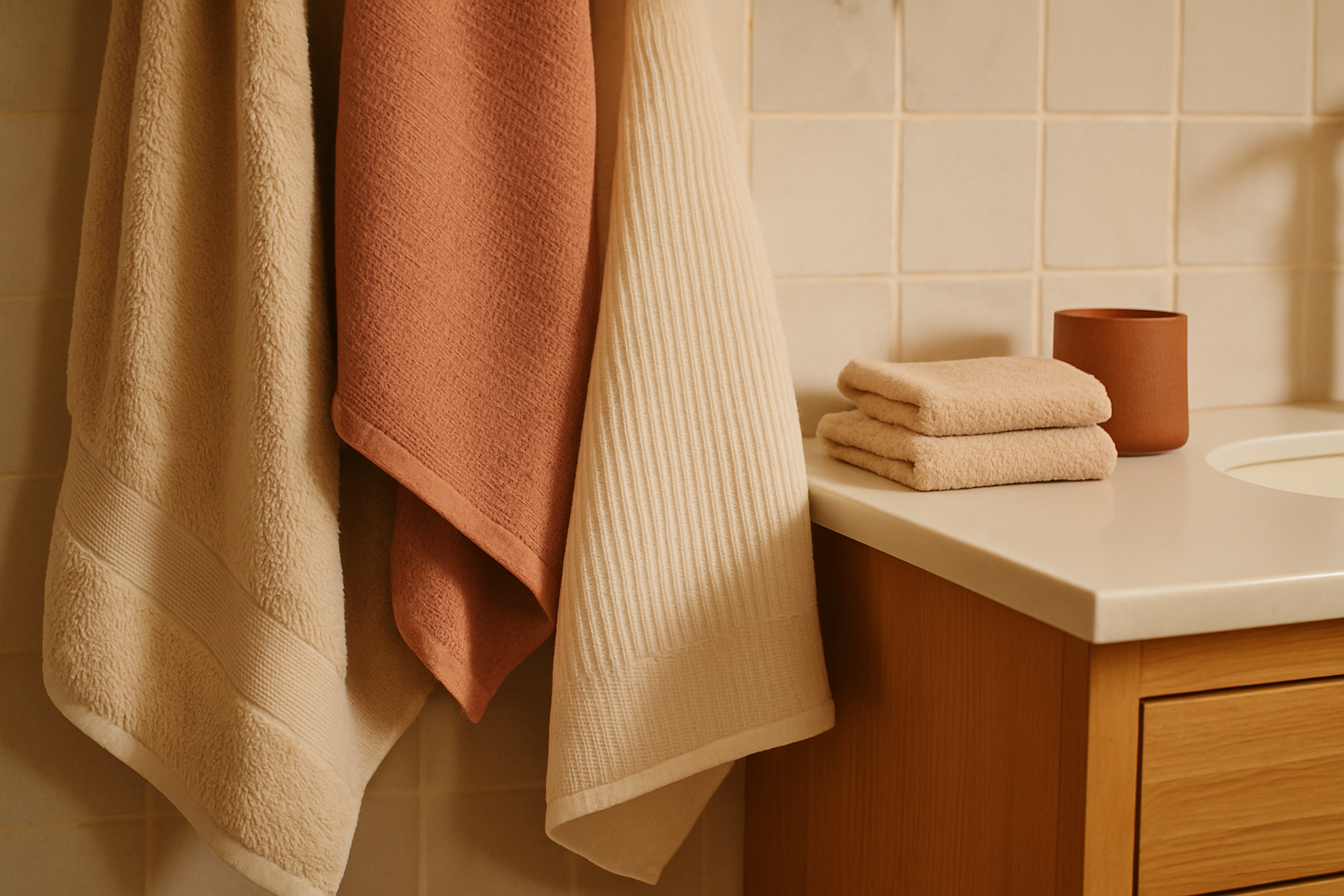
Bath linens and rugs are an often-overlooked texture source that can throw a transitional bathroom off balance. Mixing heavy, plush towels with coarse woven rugs or overly slick shower curtains creates visual friction.
A better approach is to unify textile textures around a flexible palette. For instance, choose Cotton-rich towels with a subtle waffle weave and pair them with a low-pile natural fiber rug in a matching or complementary neutral tone. This keeps the look grounded and tactile but visually connected.
Remember: even subtle differences in texture between textiles matter, so stick to one or two fabric types per bathroom to keep the layering easy on the eye.
Ignoring Texture Scale Relative to Bathroom Size
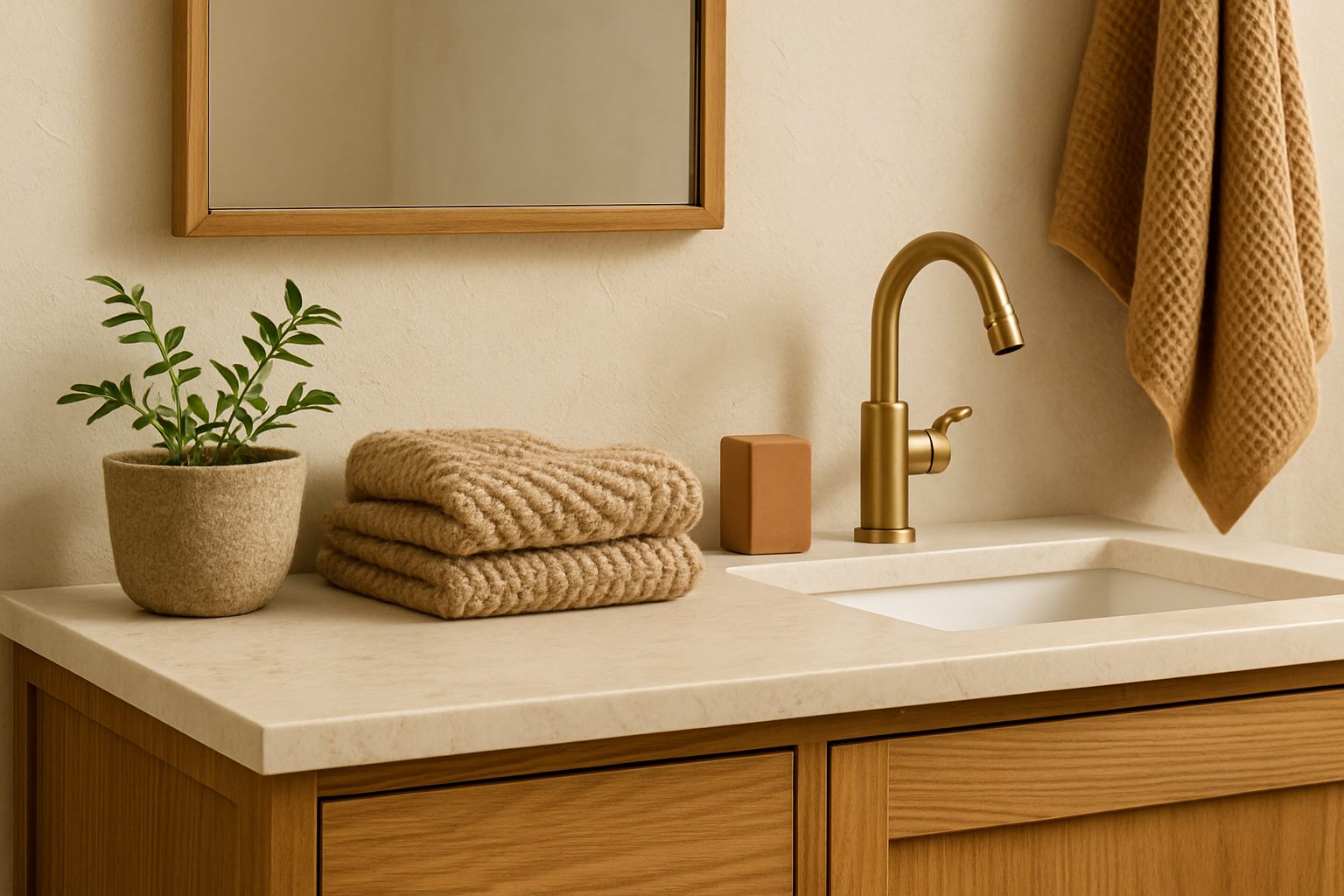
Texture scale can make or break the feel of smaller bathrooms, a key focus in transitional bathroom layout ideas. Oversized, heavy textures can overwhelm compact spaces, while overly fine textures disappear into the background and miss their chance to add interest.
To fix this, consider the bathroom’s size and ceiling height when selecting textures. Large-format tiles with a matte finish or gently veined stone maintain a feeling of space without visual clutter. Smaller textures like a finely woven linen window curtain or a subtly ribbed ceramic soap dispenser add charm without distraction.
Use medium-scale textures in focus areas—like a vanity backsplash or feature wall—to create depth without saturation.
Not Layering Textures for Visual Flow and Comfort
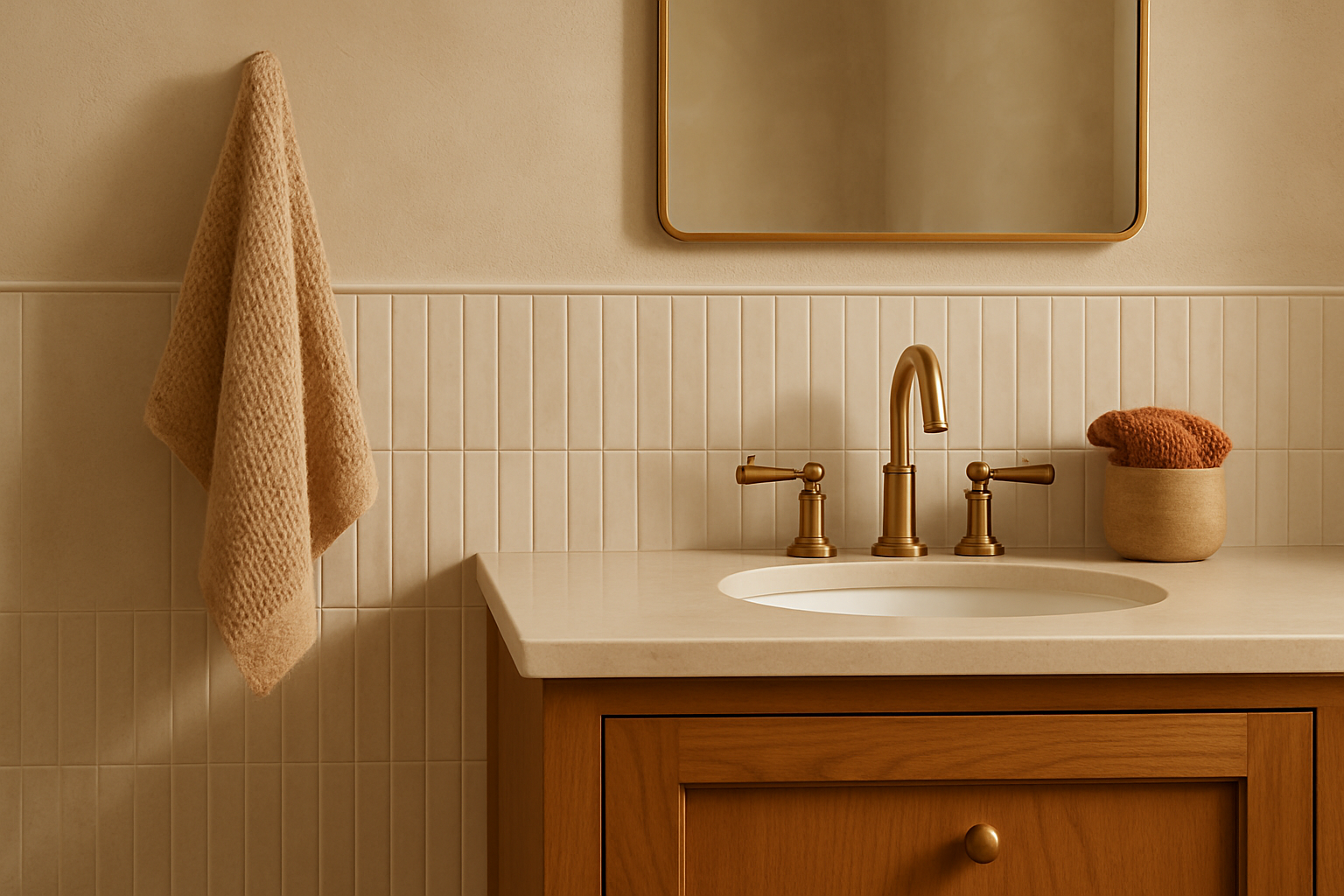
Finally, the most subtle but impactful mistake is failing to layer textures with intent, resulting in a space that feels one-dimensional or cold. Transitional bathrooms thrive on a balance of tactile warmth and smooth sleekness, but without layering these elements thoughtfully, the room can feel incomplete.
Start layering from the largest texture planes—walls, floors, fixtures—then build up with textiles, lighting finishes, and accessories. A wood-framed mirror, a linen curtain, and a soft matte vanity surface can work together to achieve quiet warmth and visual interest.
If you want a concrete jumping-off point, check out our guide on the best furniture for a transitional bathroom to understand how texture and material choices influence overall cohesion and comfort.
FAQ
What textures are best for a transitional bathroom?
Choose a balanced mix of smooth (matte or polished stone, lacquered cabinetry) and tactile elements (natural wood, woven textiles). Avoid extremes and keep textures in a soft neutral or muted color family for cohesion.
How can I soften a bathroom with too much hard texture?
Introduce soft textiles like plush towels, cushioned rugs, or even fabric window treatments. Adding a wood or rattan accessory can also introduce warmth.
What color palettes complement layered textures in transitional bathrooms?
Neutral palettes with warm greys, creams, soft whites, and natural wood tones provide a harmonious backdrop. Accent with subtle darker tones like charcoal or navy for depth.
Can textured wallpaper work in a transitional bathroom?
Yes, but use it sparingly and balance it with smooth surfaces to avoid visual heaviness. Choose wallpaper with subtle texture rather than bold or highly patterned styles.
How important is lighting in balancing textures?
Lighting is crucial. Natural light and warm artificial lighting amplify textures and prevent them from looking flat or overpowering. Layered lighting enhances the room’s depth.
Balancing textures in a transitional bathroom is an art of layering and contrast. Avoiding clashing surfaces or overwhelming roughness keeps the room serene and inviting. Begin by narrowing down your texture focus: simplify tile and countertop choices, mix soft and smooth finishes, coordinate textiles, consider scale relative to space, and finish with intentional layering that supports comfort and visual flow. That way, your bathroom will be a quietly polished, relaxed space you look forward to using every day.
Read Next
- Best Furniture for a Transitional Bathroom: a Clear Design Guide — Adds a complementary angle so the reader can move from one intent to the next.