
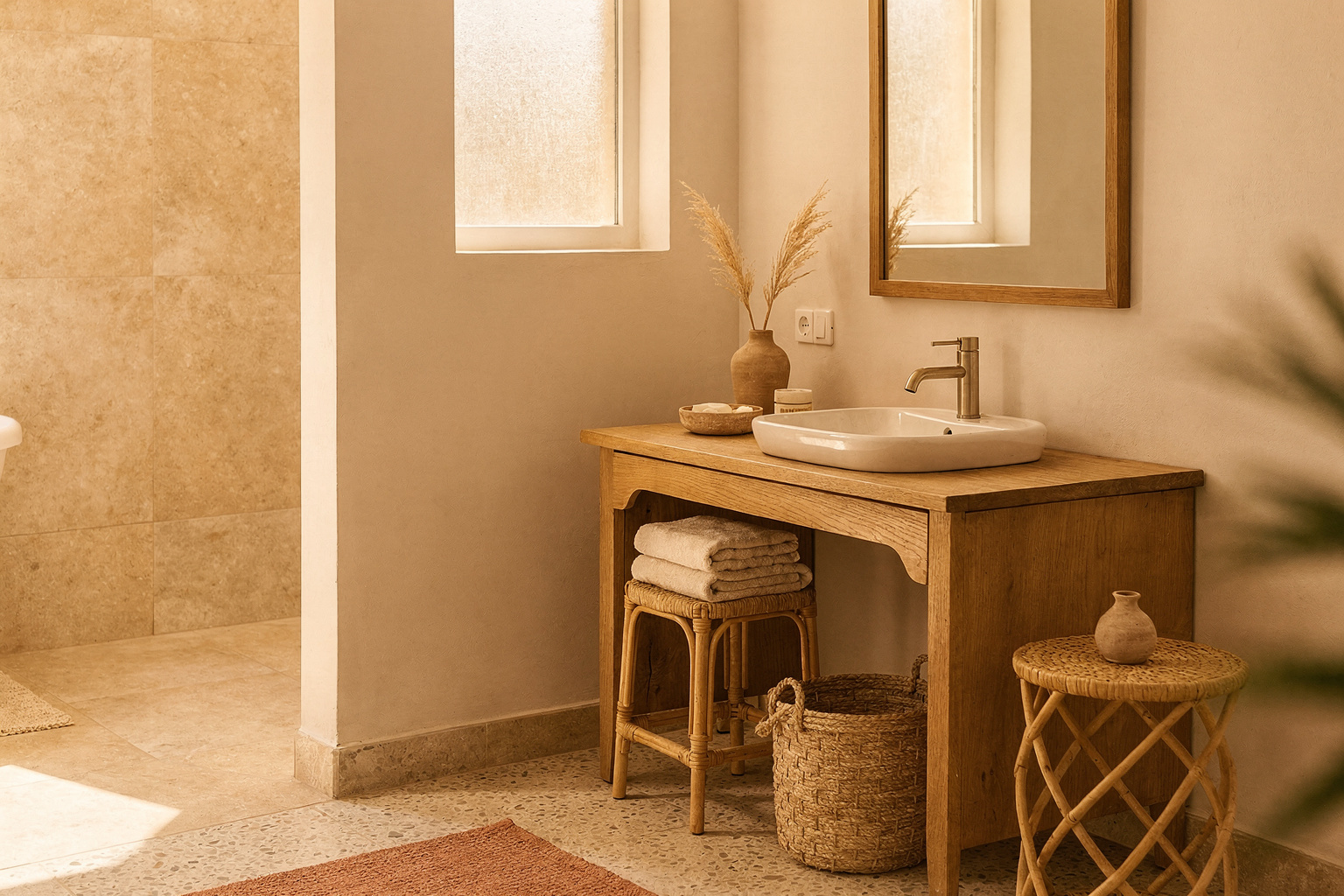
Choosing the best furniture for a coastal bathroom is a task that demands more than just picking pretty pieces. Coastal style conjures images of ocean breezes and sunlit simplicity, but the bathroom requires furniture that can withstand moisture, resist wear, and complement the airy, relaxed mood without sacrificing usability. The challenge lies in balancing materials, scale, and layout to create a composed room that feels collected yet casual.
Finding furniture that visually anchors the space while fitting into the coastal aesthetic hinges on key criteria: material durability against humidity, furniture scale that respects often smaller bathroom footprints, and layers of texture that bring warmth without clutter. This article dissects these criteria and compares strong furniture options so you can identify which fit your coastal bathroom’s scale, style, and functional needs.
Defining Furniture Standards for Coastal Bathrooms: Durability Meets Design
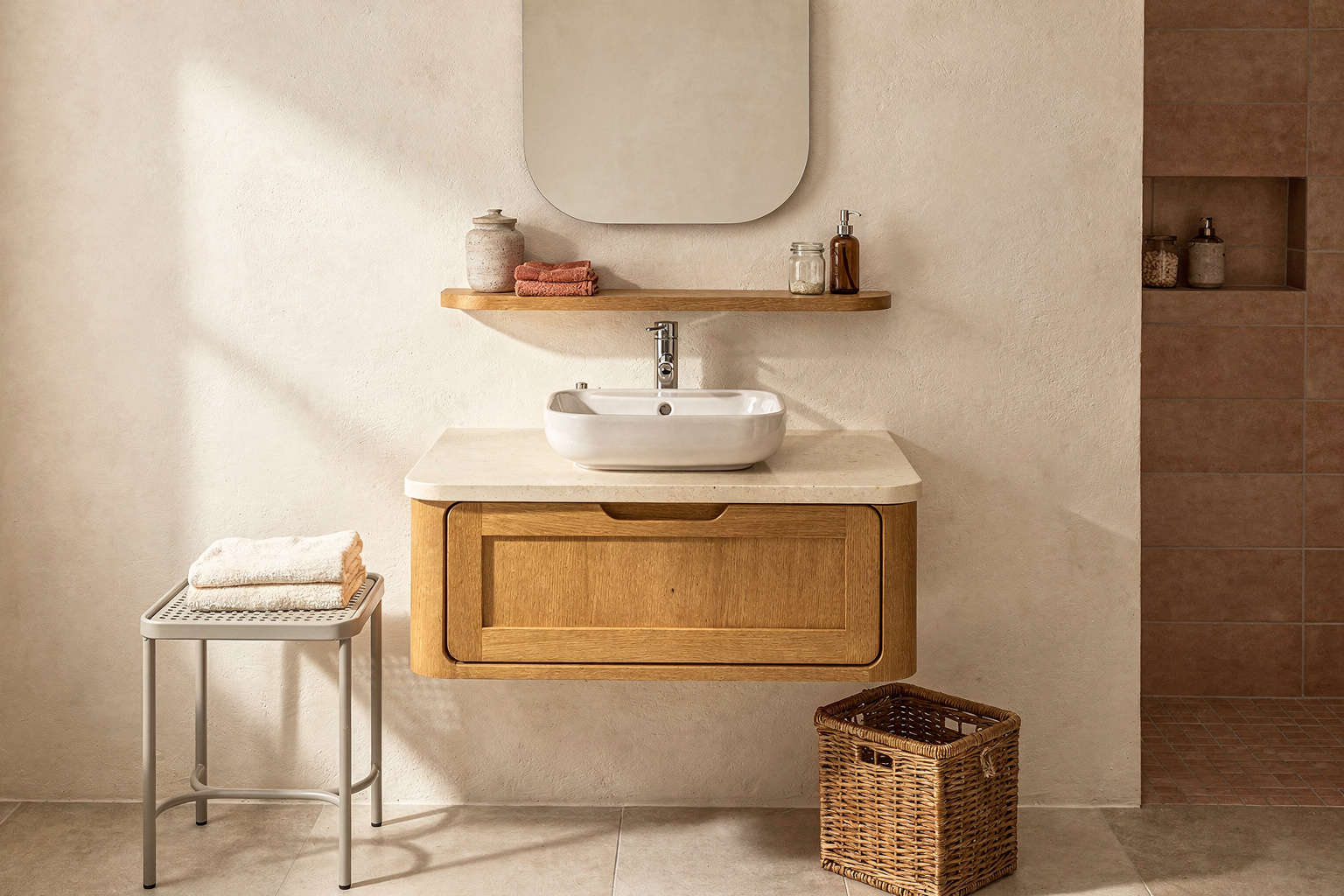
Before settling on specific pieces, establish core standards to guide your selection. Coastal bathrooms expose furniture to higher humidity and frequent water contact, so wood choices must be carefully considered. Opt for hardwoods like teak or cedar, prized for their natural resistance to moisture and decay. These woods maintain structural integrity and develop a gentle patina that complements the casual coastal look.
Beyond wood type, finishes are essential. Matte or satin finishes are preferable since they provide a soft tactile quality that doesn’t show water spots or fingerprints as easily as gloss. Avoid veneers prone to peeling in wet environments. Hardware in aged brass or matte black metal not only offers color contrast but excels in resisting corrosion.
Scale matters profoundly in coastal bathrooms, which are often tight. Choose streamlined furniture with crisp lines and avoid bulky silhouettes. Floating vanities increase floor visibility and simplify cleaning around baseboards — a practical plus in moisture-prone environments. By setting these standards upfront, your furniture choices will naturally combine the durability and understated elegance characteristic of authentic coastal bathroom decor.
Timber Vanities: The Quintessential Coastal Anchor
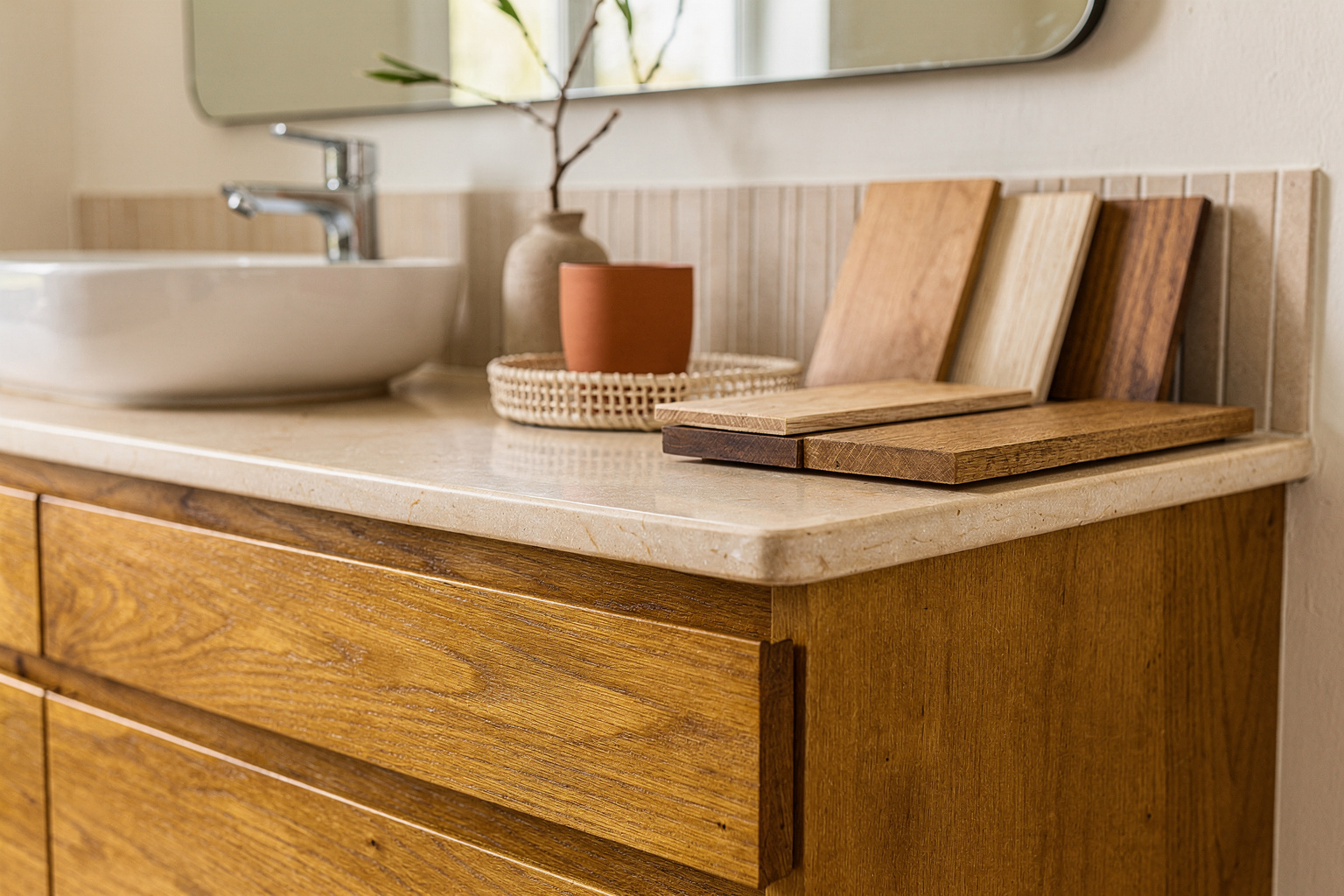
Wood vanities are the unmistakable heart of coastal bathroom furniture. Their inherent warmth and tactile presence ground the room’s airy palette, anchoring white walls and pale plaster finishes with earthy balance. Teak or oiled oak vanities featuring natural grain textures introduce subtle pattern without overwhelming the space.
To apply this idea, prioritize vanities with clean, architectural proportions—flat-panel doors with recessed pulls or slender brass handles. The key is to avoid ornate detailing that could feel out of sync with the coastal simplicity. Consider open shelving beneath to display woven baskets woven from seagrass or rattan, which further enforces the coastal narrative while providing practical dry storage.
Color-wise, natural wood tones range from honey to charcoal that coordinate well with sea-glass greens and muted blues popular in coastal bathrooms. Placement opposite a window maximizes natural light to showcase the wood’s texture and avoid creating heavy visual blocks. This furniture approach keeps sightlines open and frames focal points like beach-inspired artworks or light-reflecting mirrors.
Metal Accents and Framework: Sharp Lines Against Soft Coastals
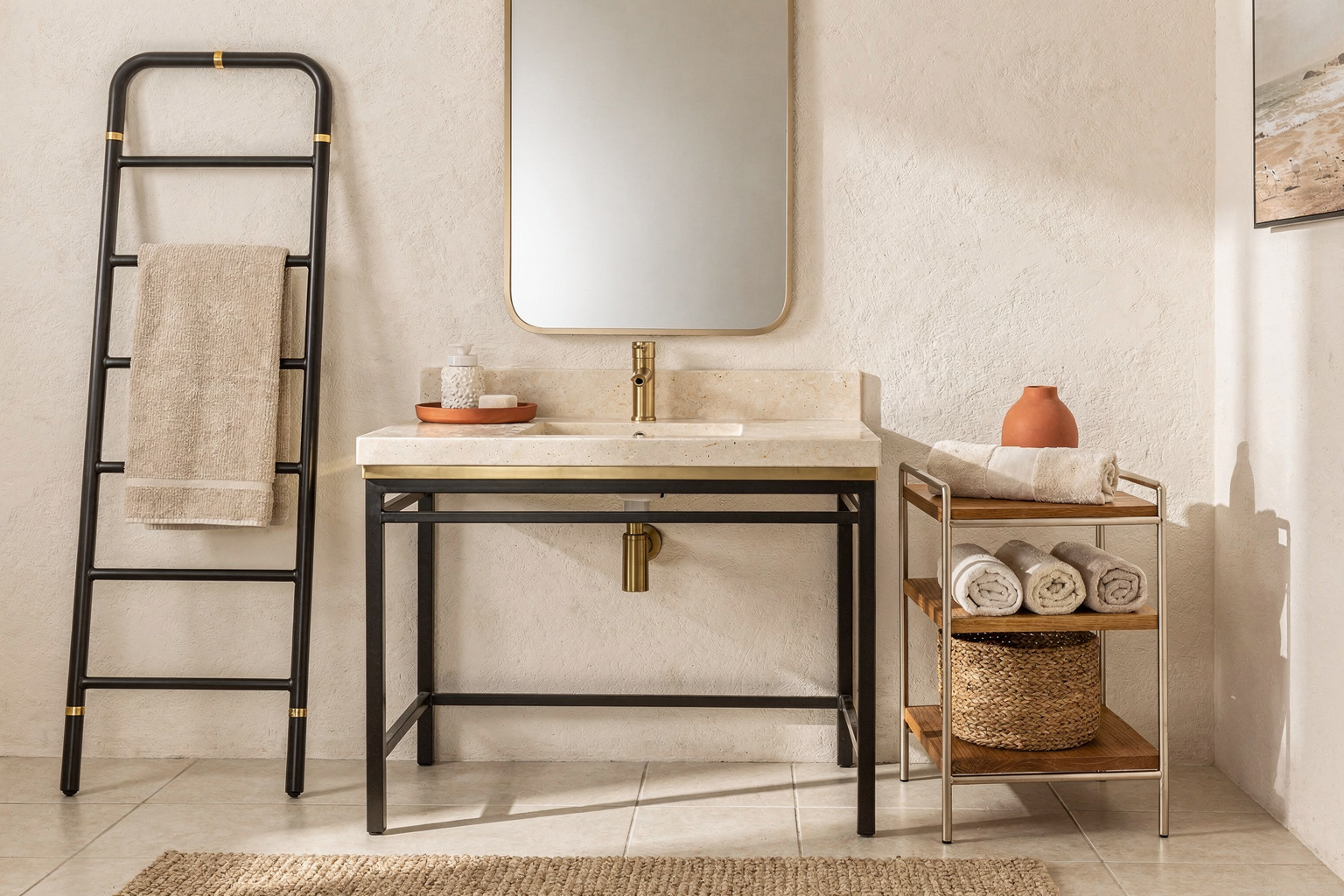
Complementing wood with metal elements adds architectural definition and modern balance. Matte black or antique brass metals offer visual contrast and elevate the furniture’s shape with an industrial edge. Look for metal-framed mirrors, faucet hardware, or even vanity legs that incorporate these finishes to subtly tie the room together.
The choice of metal should also align with function. Durable powder-coated metals stand up better to bathroom humidity than polished chrome, which tarnishes faster. Metal open-shelf frames paired with wooden tops can create lighter furniture forms that preserve spatial lightness without sacrificing storage.
For practical layering, lean on fixtures like floating shelves or towel racks in metal finishes to reinforce cohesion. These details direct movement and draw the eye upward, helping small bathrooms feel taller and more structured. The material contrast provides a tactile richness that enriches the typical coastal white-and-blue palette without overcrowding the scheme.
Matching Furniture to Your Bathroom Size and Layout
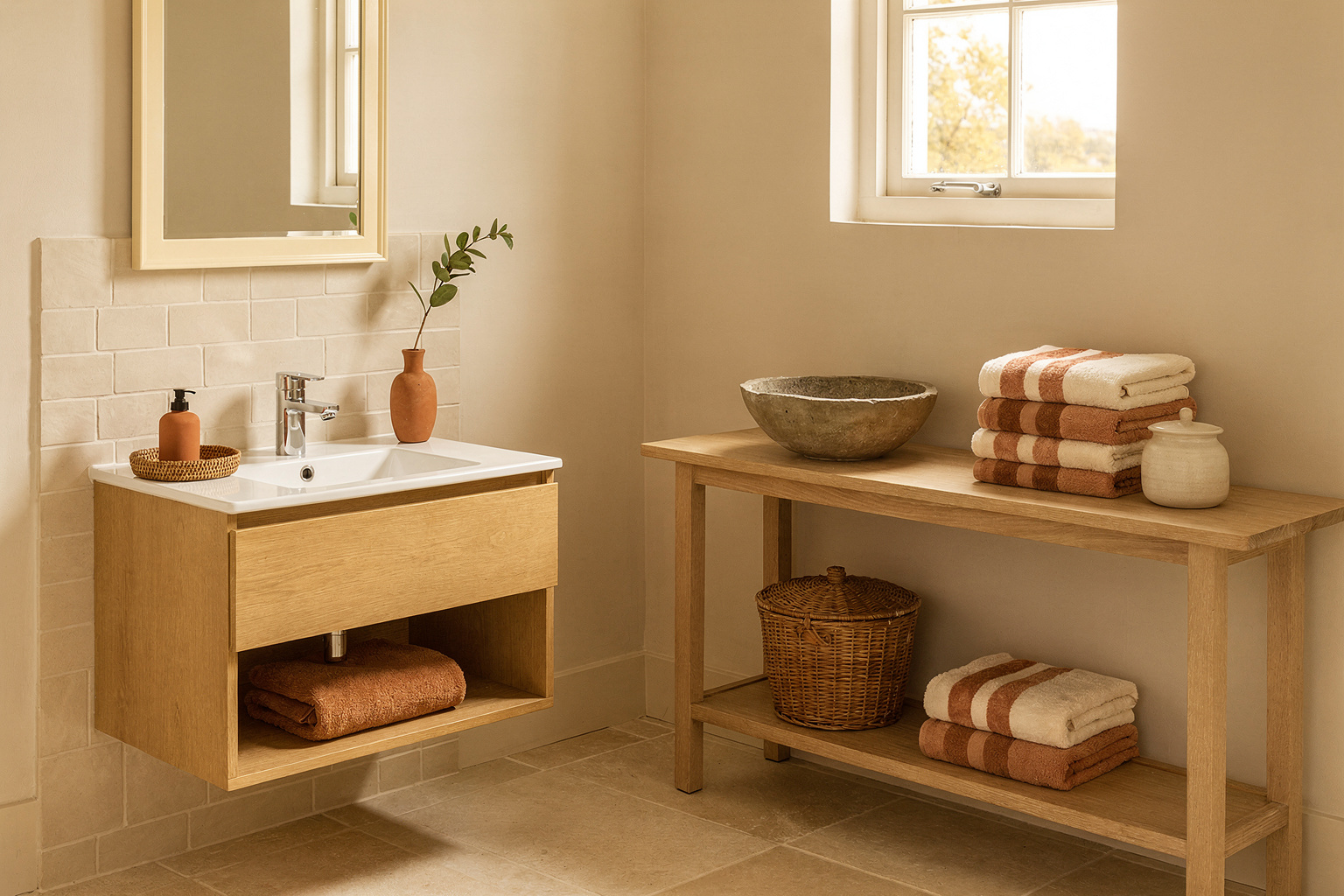
Not every coastal bathroom affords a sprawling footprint. Tailoring furniture choices appropriately is as vital as selecting materials. In compact rooms, favor pieces with open bases or wall-hung installations to maintain a sense of light flow and prevent visual blockage.
Consider narrow vanities with slim profiles or corner sink cabinets to utilize seldom-used spaces efficiently. Compact storage towers stacked vertically avoid cluttering floor space while offering essential organization. Similarly, integrated storage under the sink using baskets or pull-out compartments ensures daily essentials stay out of sight yet easy to access.
On the other hand, larger coastal bathrooms can accommodate statement furniture like freestanding tubs with coordinating wood benches or vanity dressers with layered drawers. Scale these pieces relative to the overall room size and avoid dominating the softer elements—such as natural textiles or light plaster walls—that temper room temperature.
Identifying your bathroom’s layout constraints early informs decisions about furniture depth, footprint, and circulation space, which are crucial for long-term comfort and upkeep.
Narrowing Choices with Confident Buying Criteria
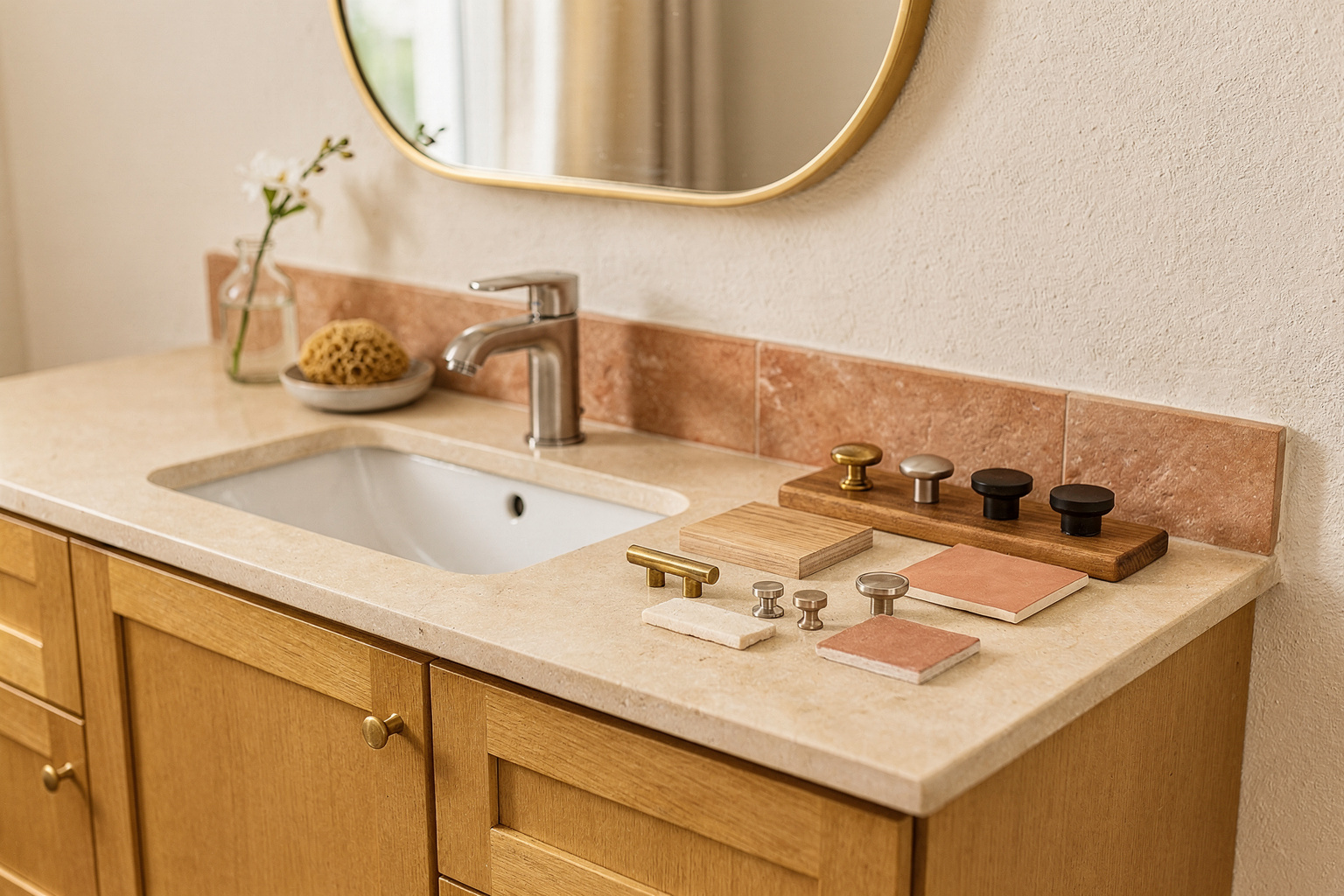
With solid standards and broader options sketched out, refine your decisions through a focused buying framework. First, list your priorities—durability, storage capacity, stylistic coherence—and cross-check potential furniture pieces against these needs.
Ask practical questions: Does this wood finish stand up to moisture without extra treatment? Is the scale suitable for daily use without feeling cramped? Do metal accents enhance the composition without over-contrasting? Equivalent attention to craftsmanship details—joinery quality and finish consistency—ensures investment pieces will endure both functionally and style-wise.
Within budgets, lighter woods and mixed-material furniture often prove versatile, enabling layered coastal looks without major outlay. Trust furniture vendors with transparent material sourcing and moisture-resilient guarantees. Additionally, personalizing with accessories—handwoven baskets, linen textiles, and light fixtures—can subtly adjust your room’s personality beyond the built furniture frame.
Resolve to see your furniture as part of a composed whole: each piece serving a dual role as visual anchor and everyday utility suited to your coastal bathroom’s unique mood and constraints.
FAQ
What wood types are best for coastal bathroom furniture?
Hardwoods like teak, cedar, and oak offer natural moisture resistance and age beautifully over time, preserving the coastal look while enduring humidity.
Can metal furniture be used in humid coastal bathrooms?
Yes, provided it is powder-coated or finished in corrosion-resistant materials like matte black or aged brass, which withstand moisture far better than polished metals.
How can I maximize storage without cluttering a small coastal bathroom?
Opt for furniture with open storage bases, vertical shelving, or wall-mounted units that maintain floor visibility and airiness while providing practical storage.
Should coastal bathroom furniture always be wood?
Not necessarily. Mixing wood with metal or rattan elements increases textural interest and durability, especially when paired thoughtfully with the room’s color and lighting.
What furniture scale works best in typical coastal bathrooms?
Choose streamlined, scaled furniture with clean lines and avoid bulky profiles. Floating vanities or narrow cabinets keep the volume light, especially important in smaller bathrooms.
Choosing the best furniture for a coastal bathroom is about layering function, material quality, and visual balance. Start by defining durability and scale standards rooted in how you use the space day to day. Then explore wood vanities as grounding pieces paired with metal accents for sharpness and contrast. Relate furniture size thoughtfully to your room’s footprint, aiming to keep the space open but organized.
This approach keeps the coastal bathroom authentic, comfortable, and composed—a true lived-in space that feels quietly curated. The first step is to identify the qualities that matter most for your room and build your furniture plan around these clear principles, not just trending looks.