
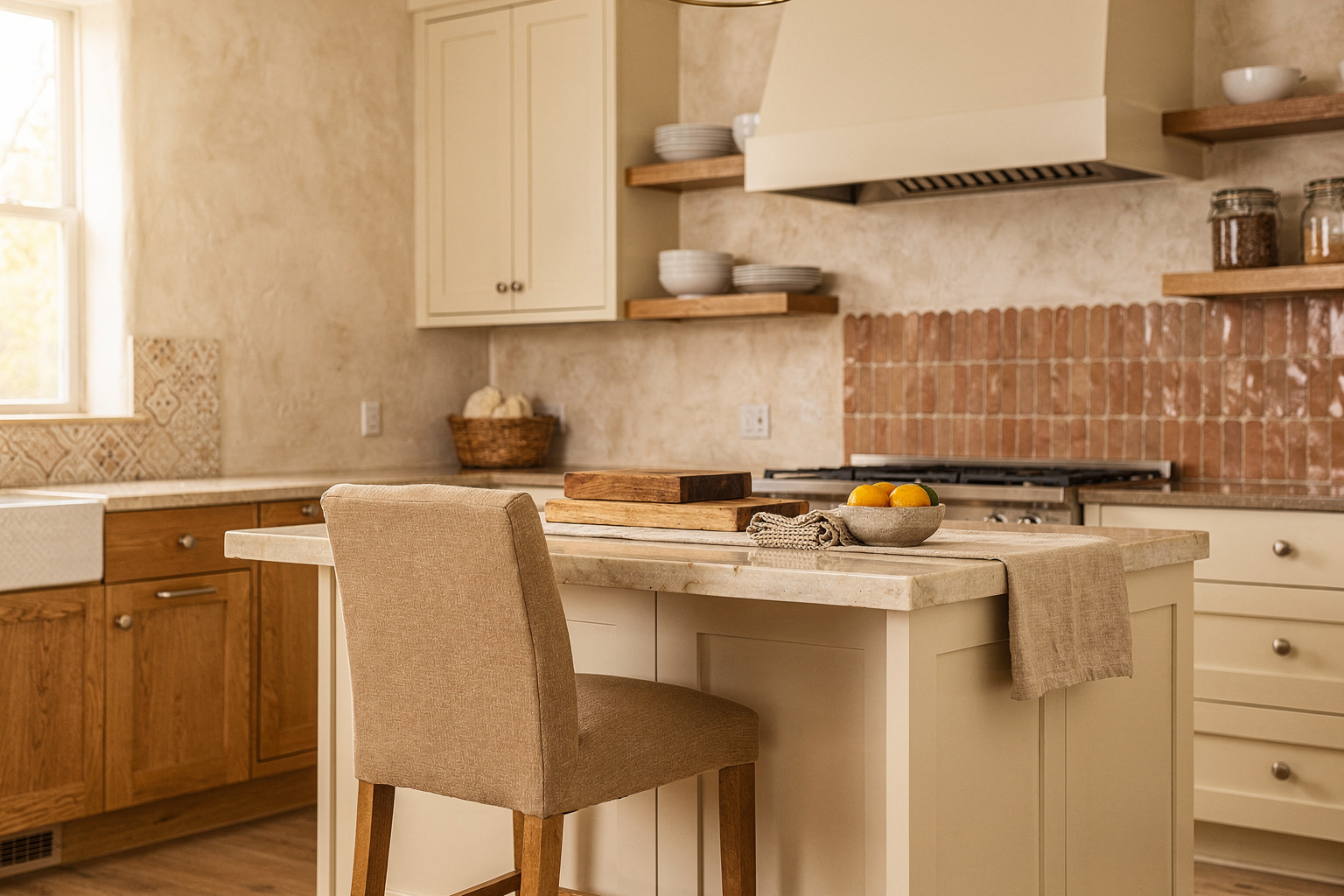
The transitional kitchen embodies a timeless crossover between traditional warmth and modern simplicity. But this balance can easily slip when textures clash or flatten the space. This is a room where materials—not just color or cabinetry style—tell the design story. Texture mistakes here aren’t small; they skew the entire mood, making a transitional kitchen feel either too cold and sterile or overly busy and disjointed.
Recognizing the most common texture pitfalls is the first step toward a kitchen that truly delivers on its promise: layered depth with clean, architectural calm. This article tackles five texture missteps frequently seen in transitional kitchens and offers practical corrections to restore visual harmony and day-to-day usability.
Glossy Surfaces Overpower Matte Foundations
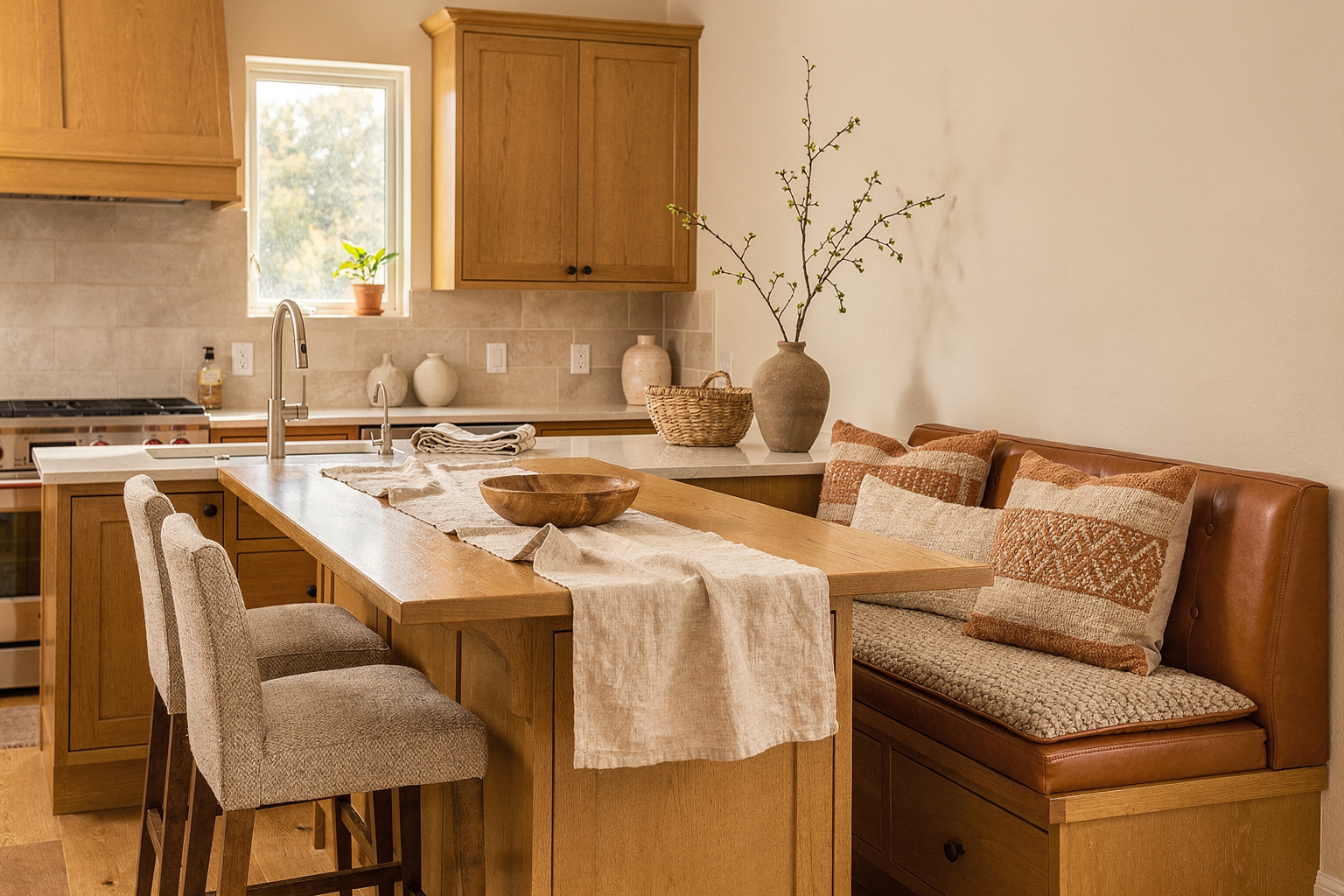
One key mistake is leaning too heavily on glossy finishes without enough matte grounding. Glossy cabinetry, backsplash tiles, or countertops can reflect light unpredictably and dominate texture layers, shrinking visual space despite their brightness. Conversely, matte surfaces provide tactile softness and visual calm.
Fix this by balancing glossy elements with wood or plaster finishes that absorb light. For instance, pair satin or matte wood cabinetry in warm honey or soft taupe with a high-gloss ceramic backsplash kept to a restrained area. This contrast creates focal points without overpowering the room.
In a transitional kitchen, a matte plaster wall or wood grain with visible texture adds quiet warmth, offsetting glassy surfaces and enhancing material depth. The balance ensures your kitchen feels tactile and collected rather than harsh.
Missing Textural Contrast Creates a Flat Palette
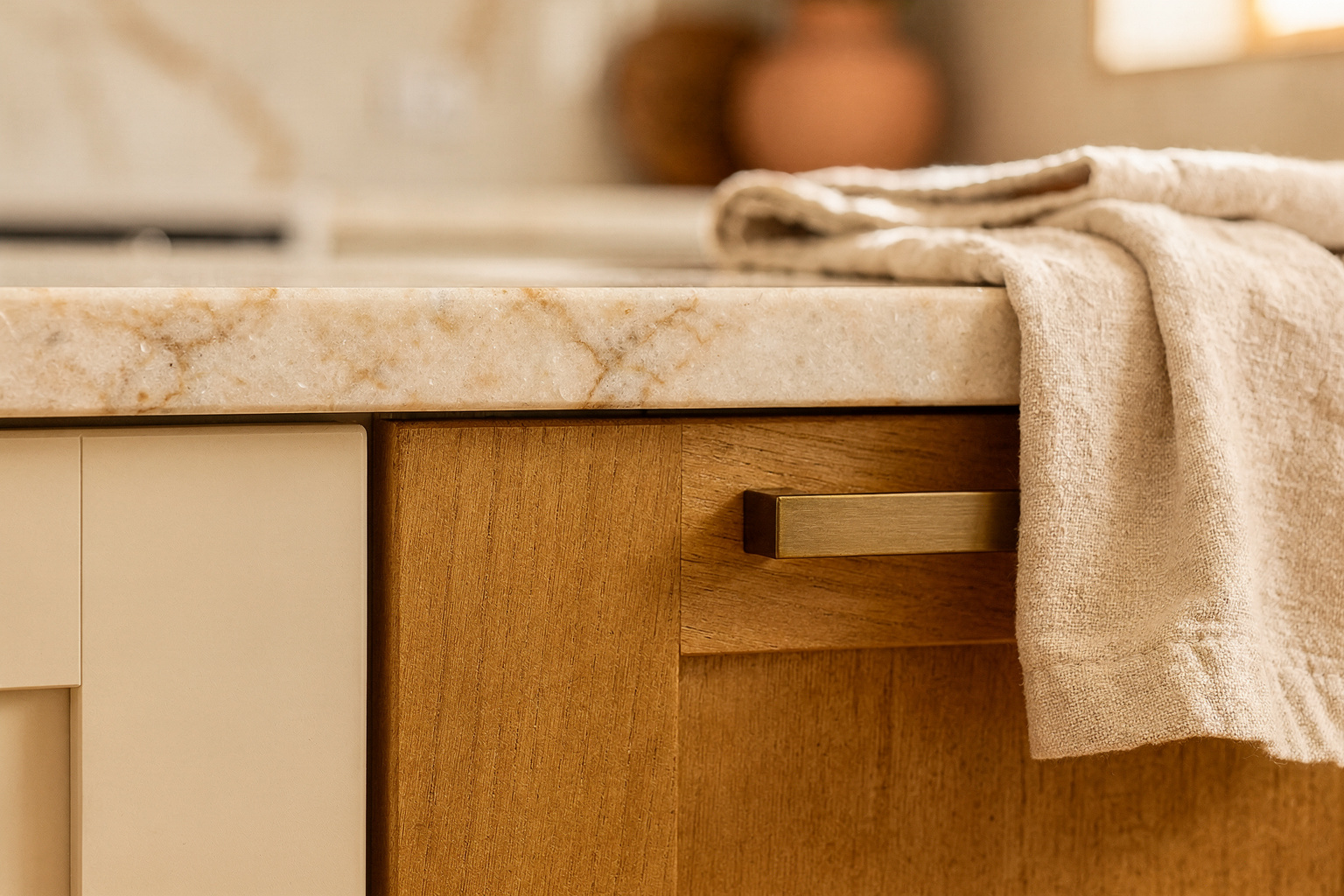
A transitional kitchen should feel layered yet unified. A frequent error is choosing textures that are uniformly smooth and similar in sheen—like several surfaces all relying on polished quartz or uniform painted wood. The result is a flat space lacking sensory interest.
Introduce subtle texture variation to enliven the space while keeping the overall look cohesive. A practical approach is to mix a honed natural stone countertop with wood cabinetry featuring visible grain and soft brushing. Add a textured plaster or beadboard on walls to engage the eye without noise.
The key is scale and subtle finish changes: avoid sharp contrasts but don’t settle for surfaces that blend too easily into one another. Tactile difference invites touch and creates visual flow.
Over-Scaled Material Choices Distort Proportion
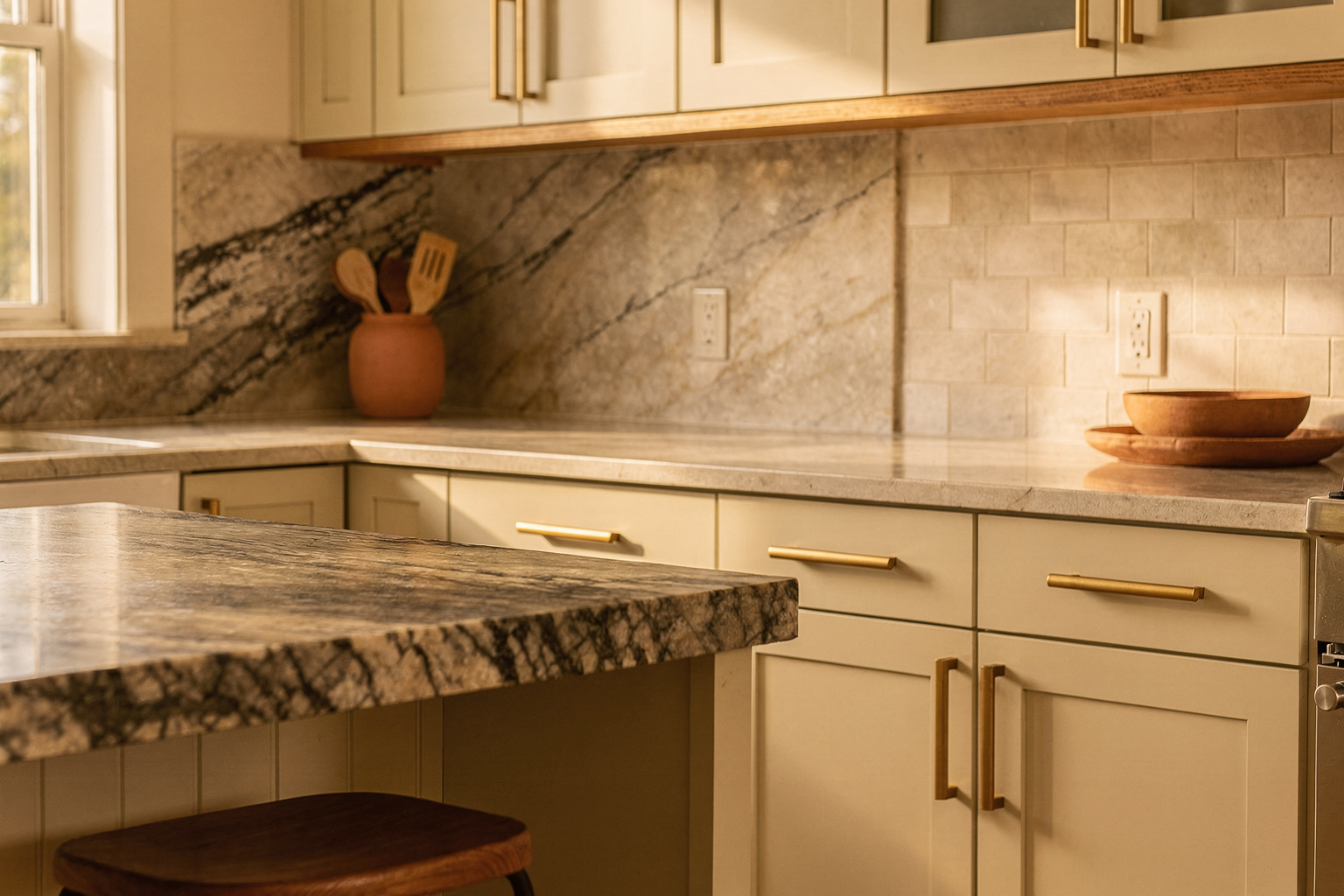
In transitional kitchens, proportional scale between textures matters as much as the textures themselves. One common misstep is overscaling heavy materials in confined spaces—like large slabs of dark granite on a small island or thick, carved moldings paired with slender, minimalist hardware.
This imbalance throws the architectural harmony off, making the space feel cluttered or out of context. To fix this, choose smaller-scale texture elements that respect the kitchen’s volume. Opt for thinner stone slabs with honed finishes or streamlined molding profiles.
Pair these with medium-grain wood surfaces and restrained metal details in brushed nickel or matte black. The contrast between scale and texture creates rhythm, maintaining a clear focal point and a balanced layout.
Insufficient Natural Light Dulls Texture Layers
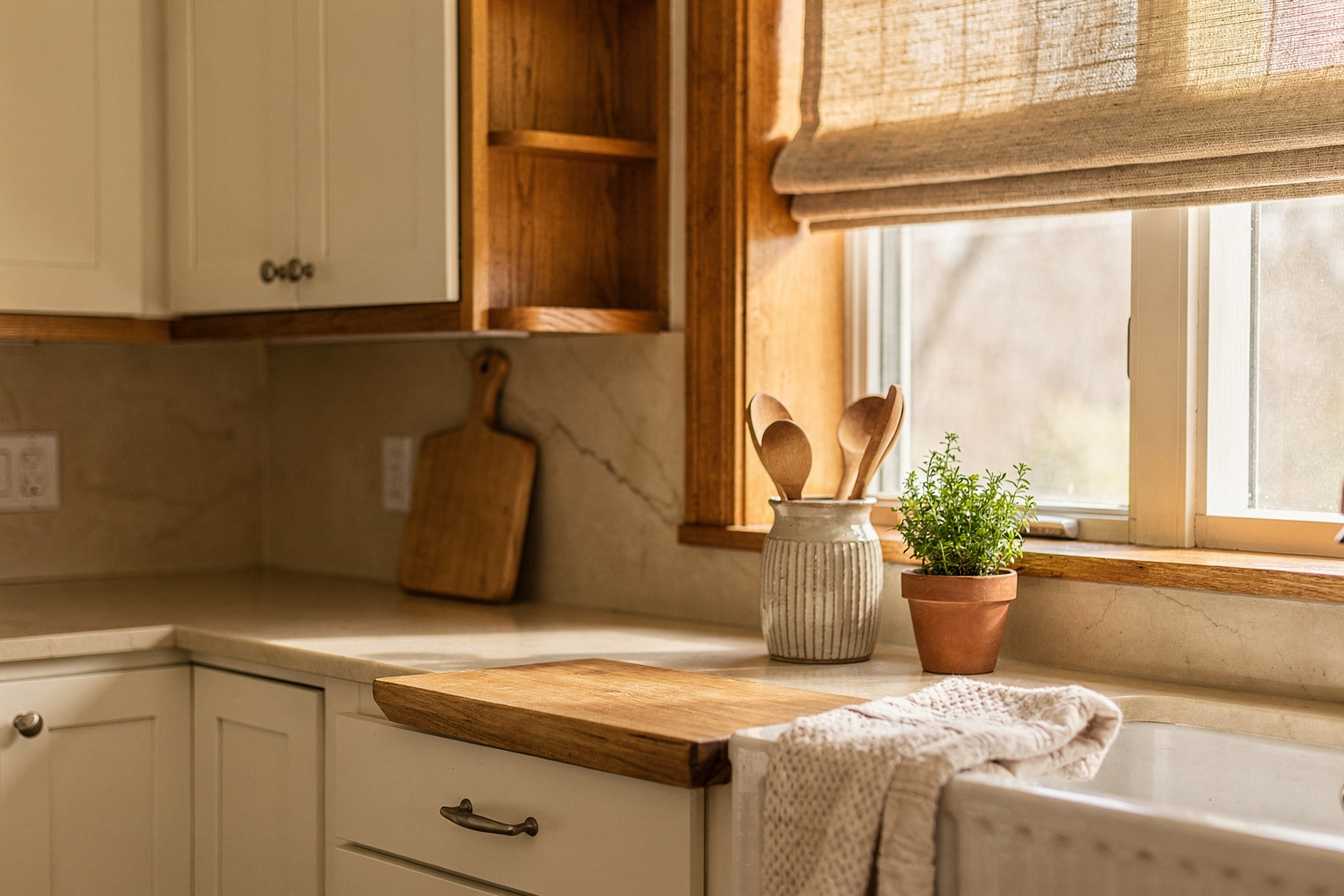
Texture and light are inseparable in transitional kitchens. A frequent, often overlooked mistake is neglecting the role of natural light, resulting in surfaces that appear flattened. Matte finishes and textured walls, if not adequately lit, can lose their dimensionality and visual warmth.
To counteract this, maximize natural daylight through window placement or skylights and choose light-toned textures that reflect daylight softly—white plaster, light oak, or soft stone. If natural light is limited, incorporate layered lighting with under-cabinet fixtures and pendants that accentuate material surfaces.
Light placement also matters: avoid harsh overhead lighting that washes textures out. Instead, favor subtle directional lights that enhance architectural lines and surface finishes, reinforcing spatial depth.
Excessive Material Mixing Overwhelms the Transitional Balance
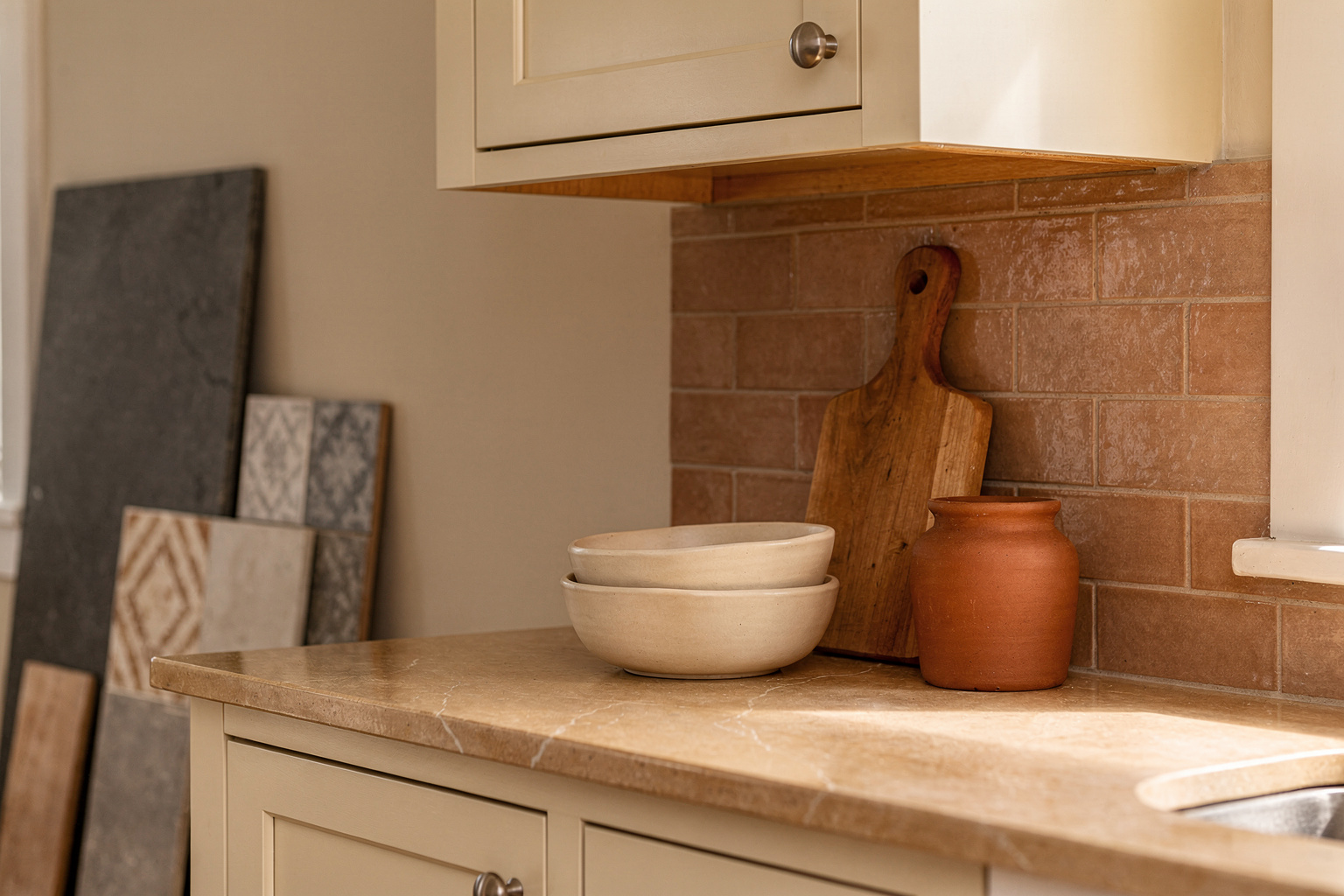
The appeal of transitional kitchen decor lies in a curated mix of traditional and modern elements, but introducing too many disparate textures can ruin that balance. Randomly pairing multiple stones, woods, metals, and tile styles leads to sensory confusion and a fractured look.
Simplify by selecting a restrained material palette focused on two or three complementary textures. For example, combine soft-grain wood cabinetry, smooth quartz counters, and brushed metal hardware in warm nickel. Use texture gradation rather than multiplication: if your stone or tile is highly varied, keep wood and metal finishes simple.
A well-edited material story respects the room’s architecture and enhances usability. It ensures that texture is a support mechanism for design rather than a competing visual noise.
Frequently Asked Questions
What material finishes best suit a transitional kitchen?
Matte and satin finishes on wood and plaster surfaces work well to create a grounded, tactile environment, balanced with selective glossy or metallic accents.
How can I introduce texture without overwhelming the space?
Layer textures by varying scale and finish subtly. Use natural materials like wood and stone with different surface feels, and avoid mixing more than three major textures.
Is natural light necessary for showcasing textures?
Yes. Natural light reveals texture depth and warmth. If limited, supplement with well-placed, soft, directional lighting to highlight surface qualities.
How do texture choices impact kitchen usability?
Textures influence surface durability and comfort. Matte finishes resist fingerprints, natural woods add warmth underfoot, and smooth surfaces simplify cleaning.
Can dark textures work in a small transitional kitchen?
They can, if balanced with ample light and lighter surfaces elsewhere. Dark textures add depth but should be used thoughtfully to avoid shrinking the visual space.
Every transitional kitchen needs a clear textural strategy to avoid the common traps of gloss overload, flattened surfaces, disproportionate materials, poor lighting, and cluttered finishes. Start by assessing your kitchen’s light and scale, then refine your surface palette with an editorial eye for balance and material integrity. This mindful approach will keep the kitchen feeling layered, composed, and welcoming for years to come.