
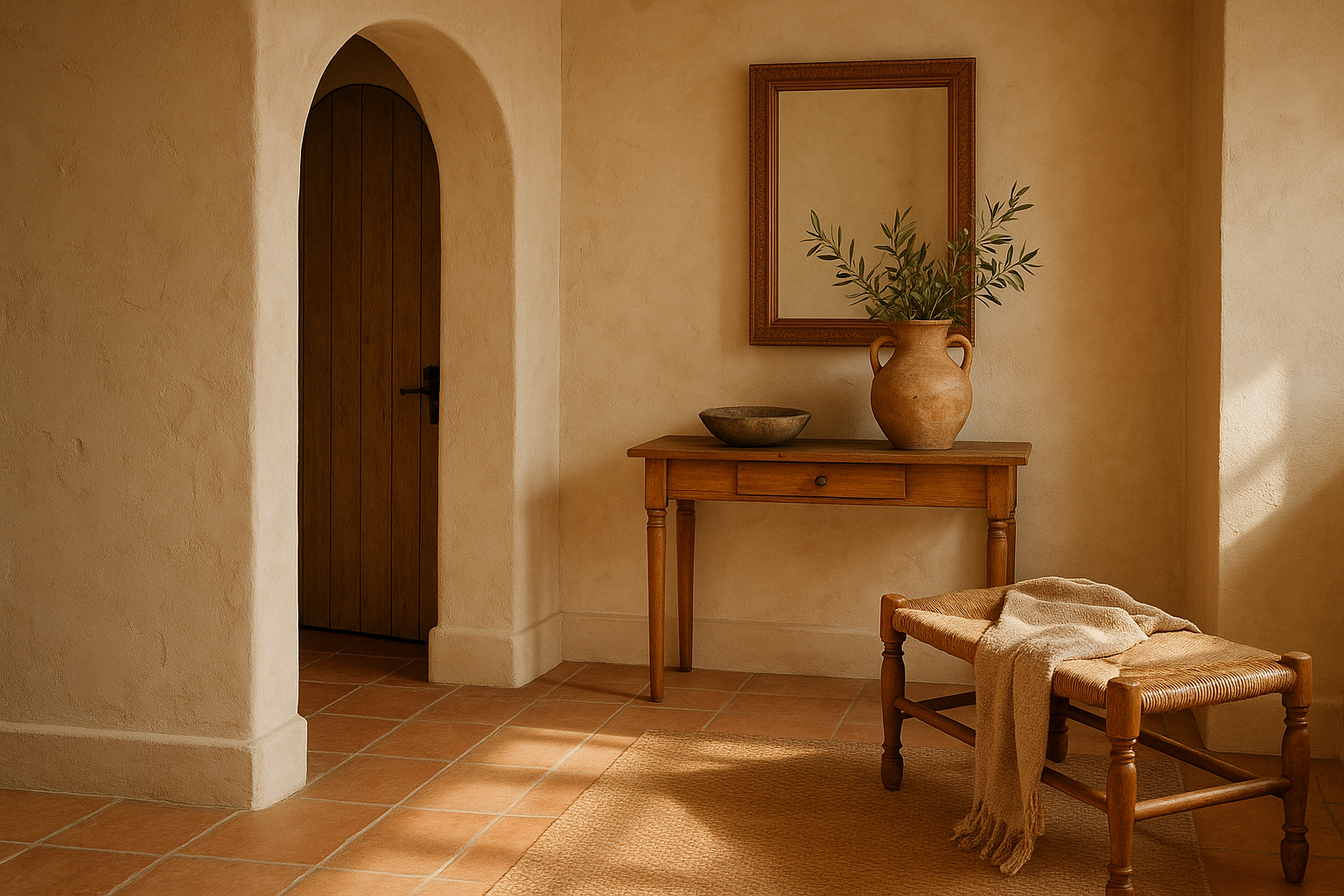
Mediterranean entryways evoke a timeless charm rooted in nature: soft stone, weathered wood, linen textiles, and earth-toned plaster walls combine to create inviting, layered spaces. Yet, this approachable look often falters without careful attention to texture and proportion. Too much roughness or competing surfaces can feel heavy instead of welcoming; too little layering risks a flat, disconnected entry. When planning or refreshing your Mediterranean entryway, understanding the delicate balance of textures is crucial.
This guide tackles the most common texture mistakes seen in Mediterranean-style entries and offers practical fixes to help you craft a composed, tactile space that feels both grounded and softly natural. With an emphasis on natural materials like oak, stone, and linen, we’ll explore how to layer textures thoughtfully and avoid pitfalls that disrupt light flow and visual harmony.
Mistake 1: Overwhelming Texture Clutter That Competes Rather than Layers
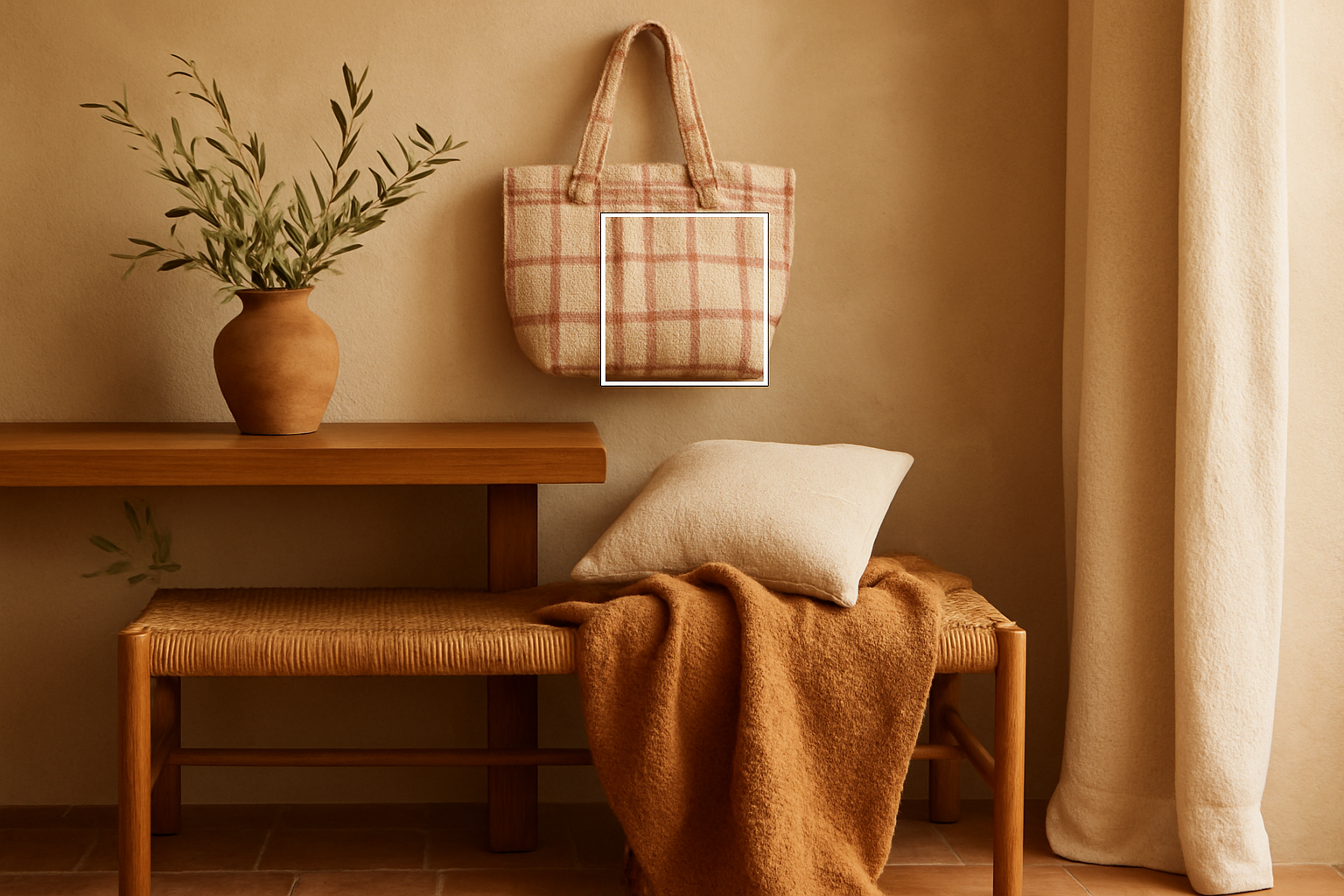
A frequent misstep in Mediterranean entryways is piling on textures without intention, leading to a cluttered feel. Stone walls, terracotta floors, woven rugs, rattan baskets, and rough linen cushions can all be beautiful alone, but together they risk competing for attention.
The fix is to cultivate a restrained layering approach. Choose one or two dominant textural elements — for example, the natural stone wall and a smooth oak bench — then introduce a couple of softer accents in linen or a natural fiber basket. This focused layering allows each texture room to breathe and interact instead of competing. Avoid adding busy patterned rugs or multiple tactile accents that create noise at the entry, especially in compact spaces.
Practically, lay a simple neutral rug with a low pile, select baskets or cushions that echo the earthy color palette, and keep metal or glossy finishes minimal. This curated mix maintains Mediterranean warmth without overwhelming the eye.
Mistake 2: Ignoring Visual Weight and Material Scale
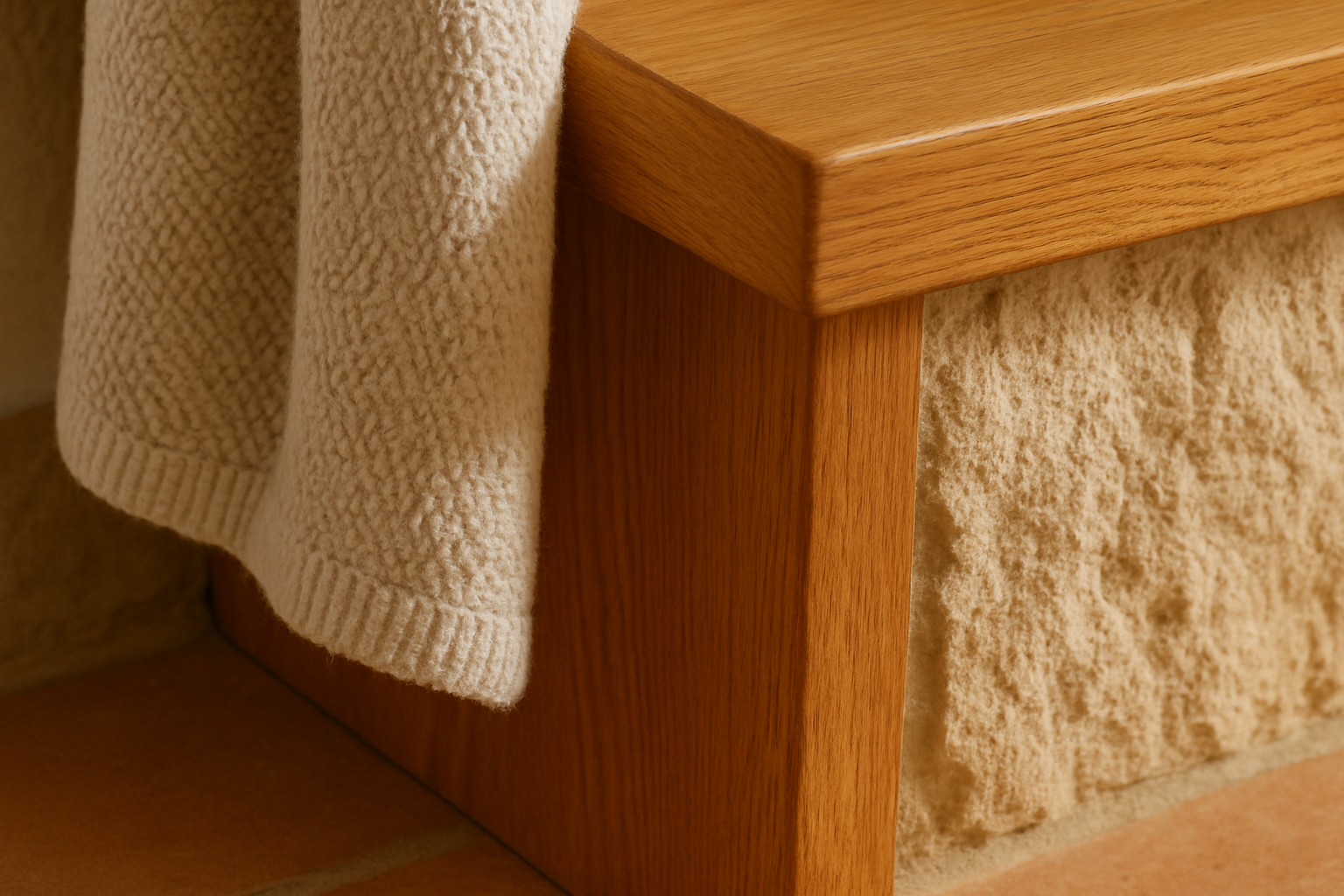
Texture doesn’t exist in a vacuum; scale and weight matter equally. A rough-hewn stone bench can feel imposing if it’s too large for a narrow entry, while delicate woven baskets may vanish in a large, open space.
Correct this by balancing material heft with the entryway’s volume and furniture size. For smaller entries, lighter finishes and slimmer-profile pieces in oak, combined with softly textured linens, create a sense of openness and flow. Larger entryways can accommodate chunkier natural stone or layered rugs woven from jute or sisal, which add tactile depth without feeling out of place.
Visually, aim for anchor points of texture that feel grounded but not heavy. For example, a matte stone floor or a plaster wall with subtle texture can support lighter wood furniture to preserve airiness. By considering proportion alongside texture, you build a composition that feels intentional and balanced.
Mistake 3: Overlooking Color and Texture Harmony Across Materials
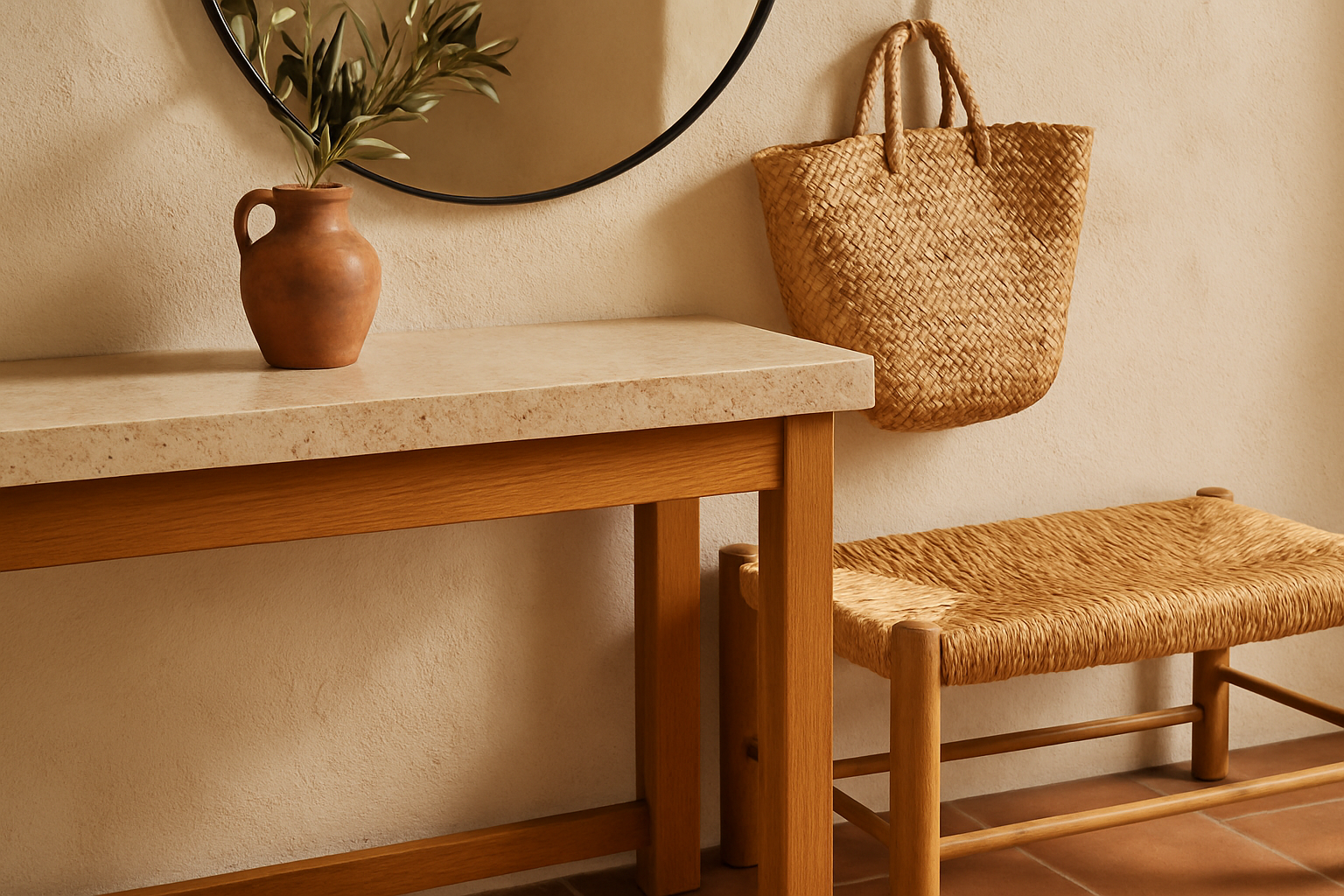
Mediterranean entries often bring together diverse natural materials, but mismatched undertones or finishes can jar the overall look. For instance, a warm golden oak bench clashes with cool gray stone flooring, or a glossy ceramic vase stands out awkwardly against matte plaster walls.
The solution lies in choosing textures with harmonious undertones and matte or softly brushed finishes. Warm beiges, soft taupes, and muted ochres in textiles and furniture complement sunbaked stone and warm terracotta effortlessly. Keeping surfaces matte rather than polished lets textures invite touch and view without shiny distractions.
Start by sampling materials side by side if possible and avoid blending cool and warm tones unless you introduce a measured transition, like a neutral woven throw. The goal is a seamless conversation between textures rather than a fragmented collage.
Mistake 4: Letting Materials and Textures Obscure Natural Light and Flow
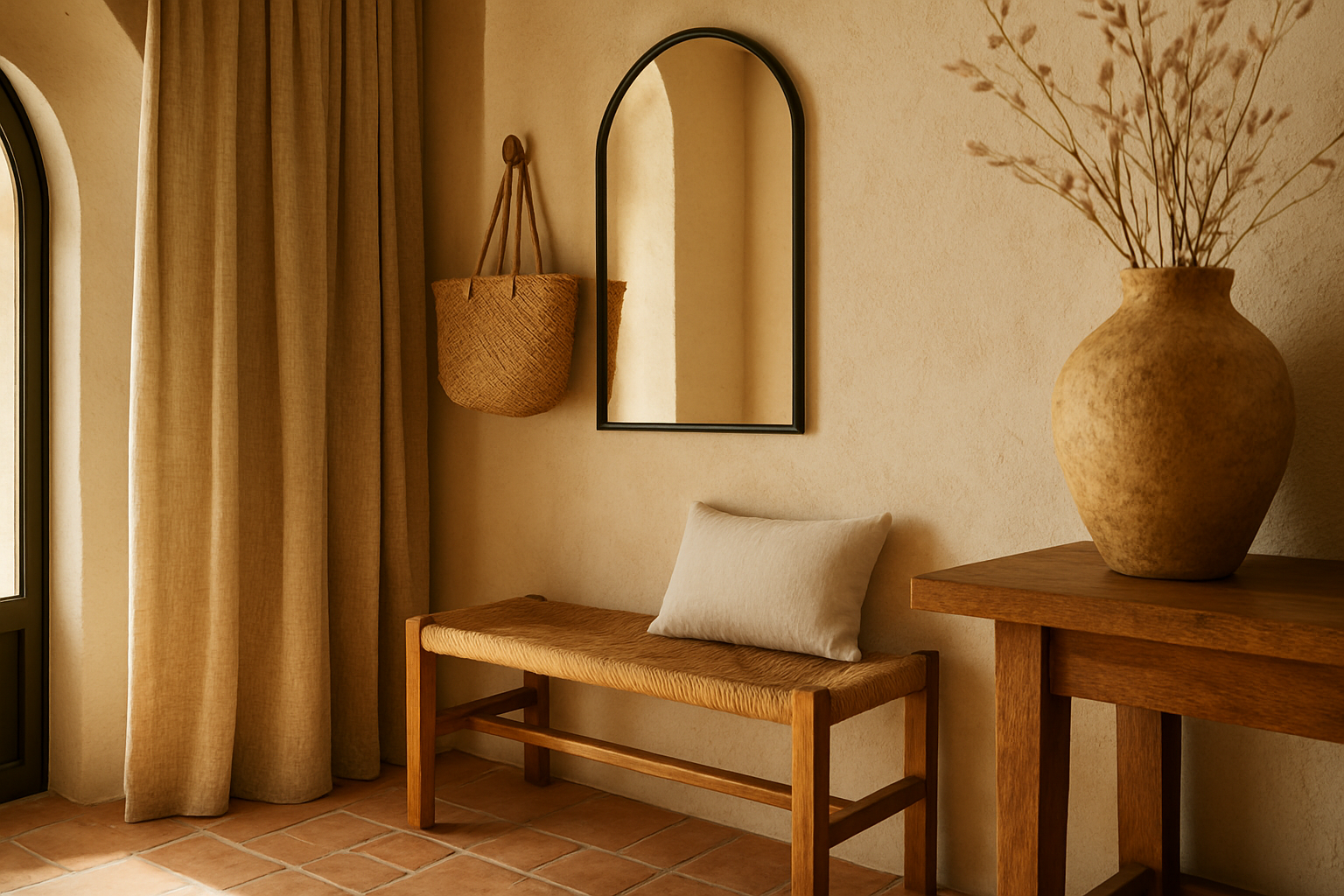
Mediterranean interiors treasure natural light, which enhances texture and brings warmth. However, thick drapes, dense rugs, or heavy wall treatments in entryways can block or absorb light, dulling the overall effect.
To fix this, prioritize scale and placement of textiles to preserve light flow. Lightweight linen curtains or simple shutters let air and sun filter through. Rugs should be sized just right, not covering too much floor and interrupting the natural material beneath.
Consider positioning furniture to maximize daylight, using low-profile benches or open wood shelving rather than bulky chests. Even in urban or small halls, allowing light to play on textured surfaces keeps the Mediterranean spirit alive and the space visually airy rather than cramped.
Mistake 5: Losing the Quiet Warmth Through Over-Styling or Under-Layering
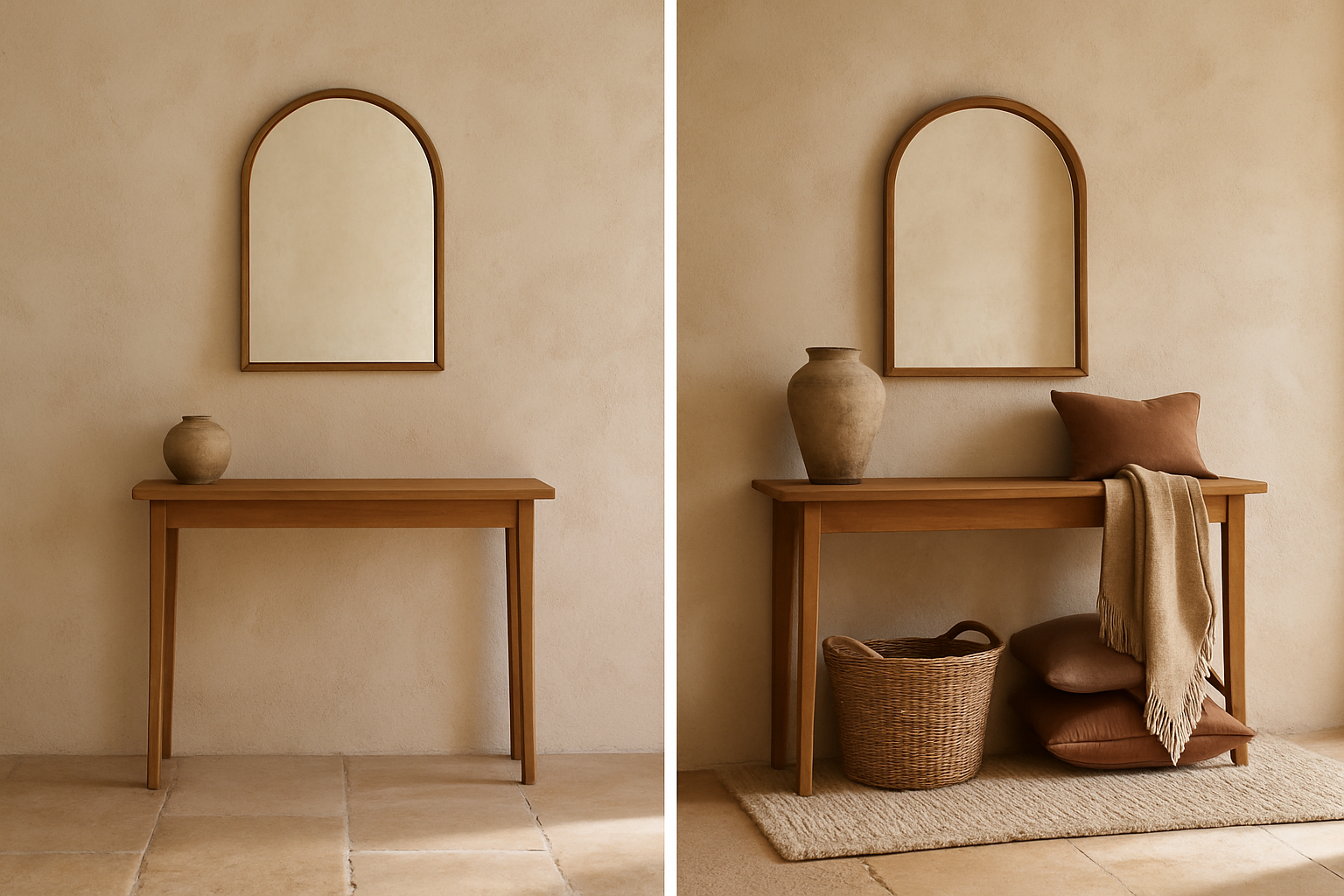
The final and most subtle misstep is either over-styling — which risks a staged feeling — or under-layering that leaves the space cold and disconnected. Both reduce the Mediterranean entry’s inherent casual elegance.
To correct this, focus on layered yet collected texture rather than volume. A well-chosen woven basket, tactile linen pillows, a simple ceramic vase, and a textured rug combine to create a lived-in look, but just enough to feel curated. Use a limited palette anchored in soft earth tones and natural finishes for cohesion.
Start small: test textured accents one at a time, ensuring they enhance without overpowering. Each piece should invite touch and complement natural architectural features. This subtle layering creates a calm, inviting feel that embodies Mediterranean warmth without excess.
Frequently Asked Questions
What are the best natural materials to use in a Mediterranean entryway?
Oak, stone, linen, terracotta, and natural fibers like jute or rattan are ideal. They bring authentic texture and warmth while staying grounded in the style’s earthy palette.
How can I keep my Mediterranean entryway feeling light if I want lots of texture?
Employ a restrained layering approach, balancing rough and smooth surfaces. Use lighter-weight furniture and soft textiles in neutral shades, and ensure window treatments allow natural light to filter freely.
Can I mix different stone types and textures in my Mediterranean entry?
Yes, but coordinate undertones and finishes carefully. Stick to matte or honed textures and warm or neutral hues to maintain harmony and avoid visual conflict.
How do I choose rug textures and colors for my entryway?
Select rugs woven from natural fibers in neutral or earthy shades with a low to medium pile. The rug should complement surrounding materials and not compete with the stone or wood flooring.
What is the biggest texture mistake in Mediterranean entryways?
Overloading the space with competing textures and finishes, which leads to visual clutter and heaviness, rather than a composed, layered look with room to breathe.
Crafting a Mediterranean entryway that feels effortlessly textured yet balanced requires attention to material relationships, scale, and light interaction. By avoiding common texture mistakes — from cluttering with competing surfaces to ignoring scale and color harmony — you create a warm, inviting threshold true to Mediterranean style. Start by editing materials thoughtfully and layering with intention, focusing on quiet warmth and understated contrast. This approach ensures your entryway becomes a calm welcome reflecting natural beauty and lived-in charm.