
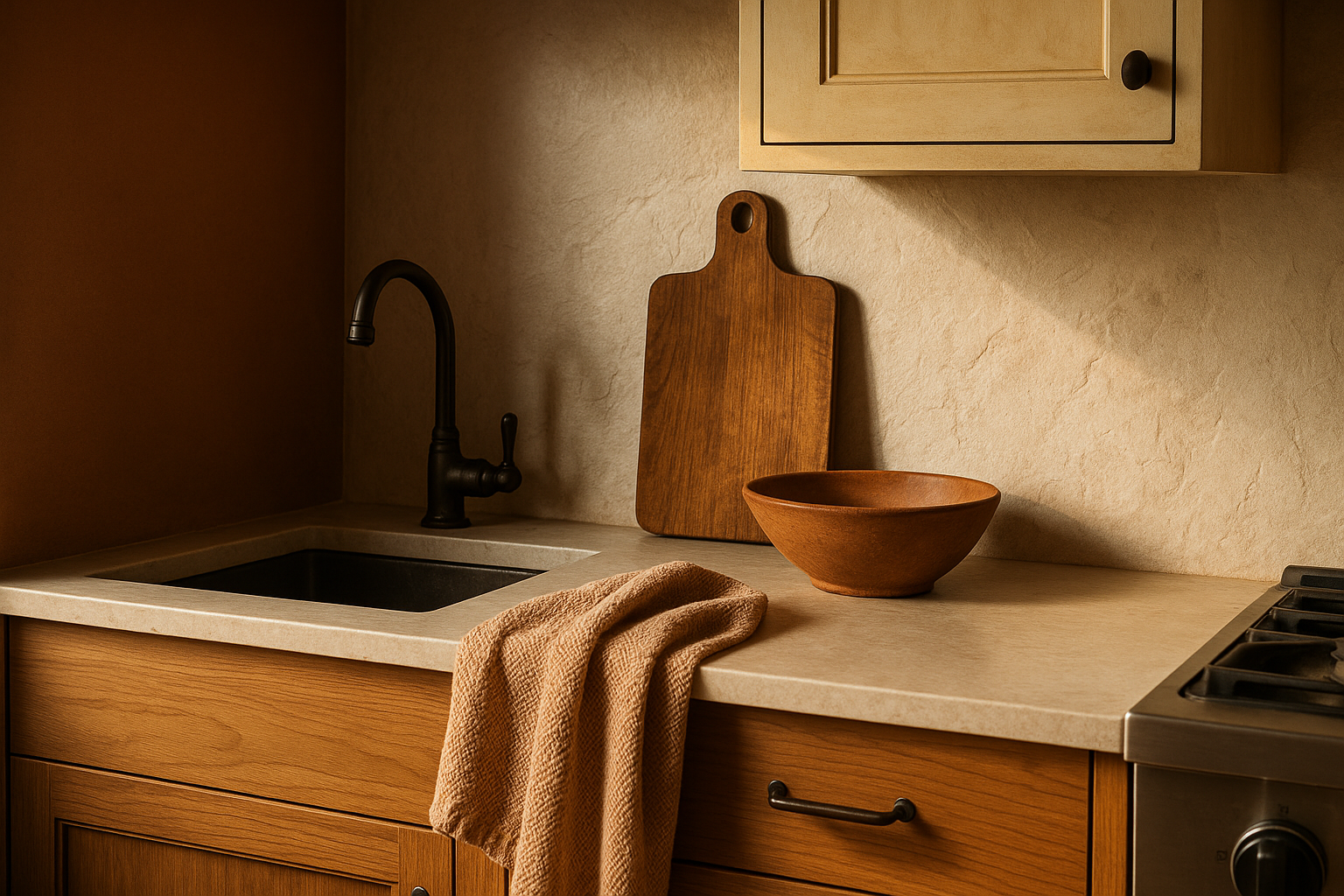
Moody kitchens have a powerful visual appeal: dark, rich tones create a dramatic backdrop that feels intimate and refined. But achieving that layered, textural warmth that makes these spaces feel inviting — rather than cold or heavy — often trips homeowners up. Texture mistakes can flatten the mood, disrupt flow, or make the kitchen feel visually disjointed. With the right understanding of material interactions and scale, a moody kitchen can be a tactile, composed retreat rather than a visually confusing or overwhelming one.
This article breaks down key texture missteps common in moody kitchens and offers clear corrections. Each point will give you practical tools to refine the material palette, balance finishes, and manage scale for a more cohesive and inviting kitchen. You’ll come away knowing exactly how to style a moody kitchen that feels layered, tactile, and expertly edited.
Skipping Material Variation Leaves Your Kitchen Feeling Flat and Uninviting
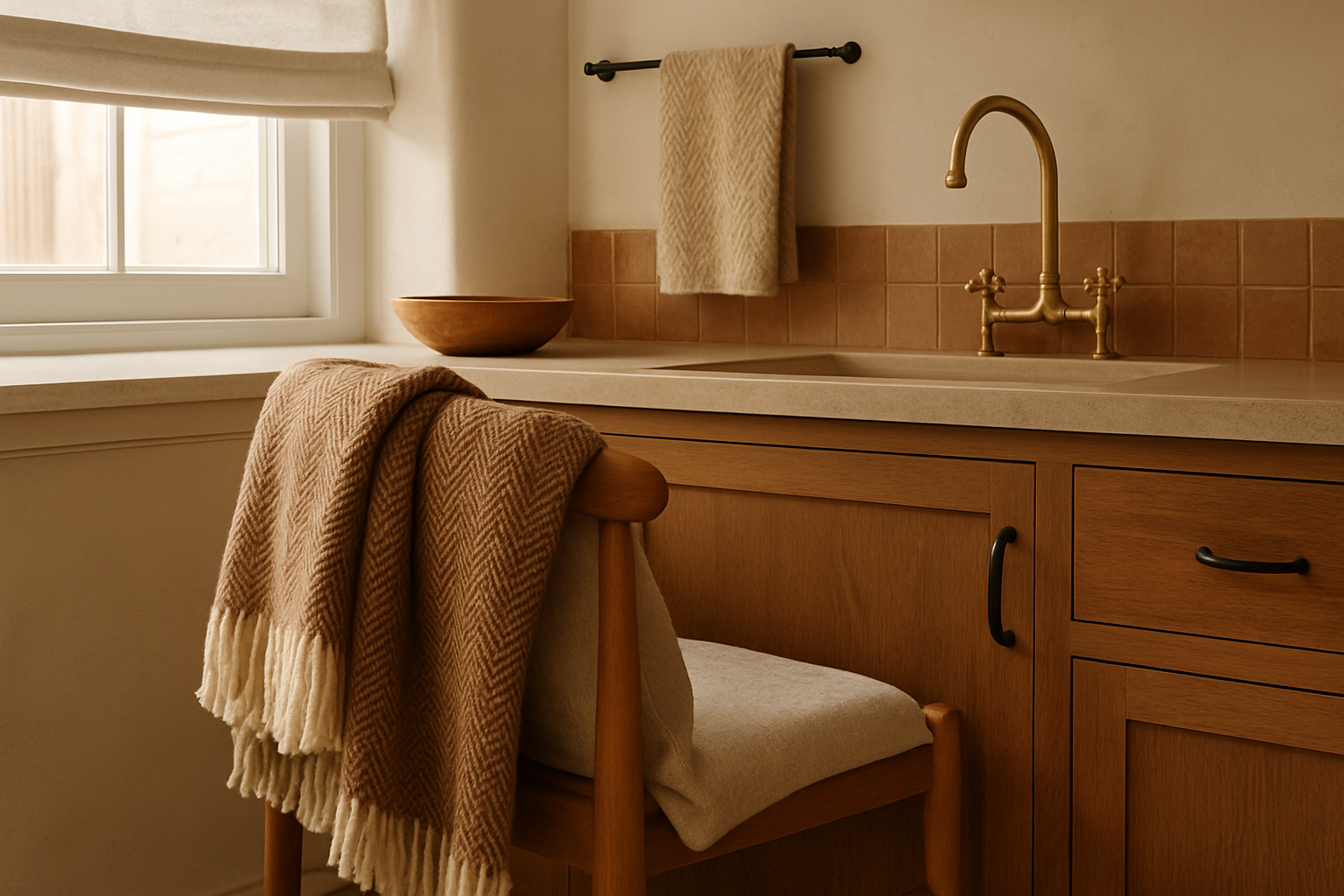
A classic pitfall in moody kitchens is relying too much on flat, single-texture surfaces—like all-matte or all-glossy cabinetry—without layering texture. Without subtle contrasts in finish or tactile surfaces, the kitchen reads as one-dimensional and sterile rather than warm and dynamic.
To fix this, deliberately incorporate varied materials that contrast yet complement. Pair matte lacquered cabinetry with raw or lightly textured wood open shelving, or introduce plaster walls with a soft, uneven finish alongside smooth metal hardware. Even small textile elements like linen window treatments or a woven rug break up hardness and add subtle texture. These layered surfaces reflect light differently and give depth, making the moody palette feel more natural and tactile.
Visually, this variation keeps the eye moving and prevents dark colors from shutting down light or detail. In practice, layering materials creates a kitchen that’s both visually and physically engaging.
Overusing Cool Metals Creates a Sterile Atmosphere
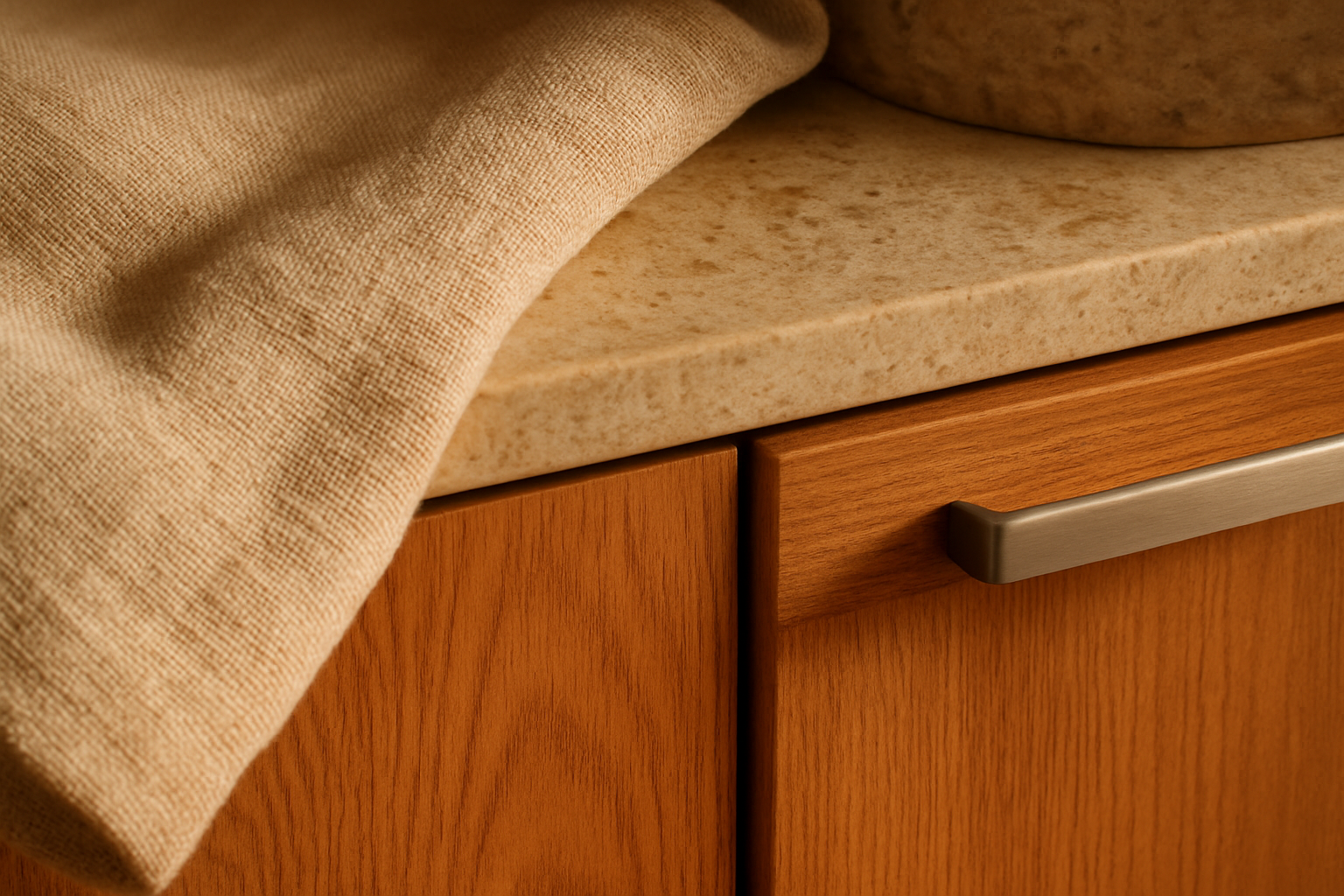
Moody kitchens often lean on blackened steel or brushed nickel for fixtures and accents. But overloading the space with cold metal finishes can backfire, creating an uninviting, industrial coldness that clashes with the warmth moody kitchens seek.
Balance metal accents by pairing them with warmer textures: think bronze or brass elements mixed with warm plaster or raw oak cabinetry. Matte black taps and lighting fixtures become more grounded when adjacent to natural timbers or textured walls rather than cold stone or tile alone.
This contrast between cool and warm materials tempers the severity of the dark palette while elevating the overall material story. It’s a simple way to incorporate striking hardware without tipping the mood toward harshness, allowing your moody kitchen decor to feel quiet and considered rather than cold.
Ignoring Color Temperature in Layered Textures Disrupts the Palette
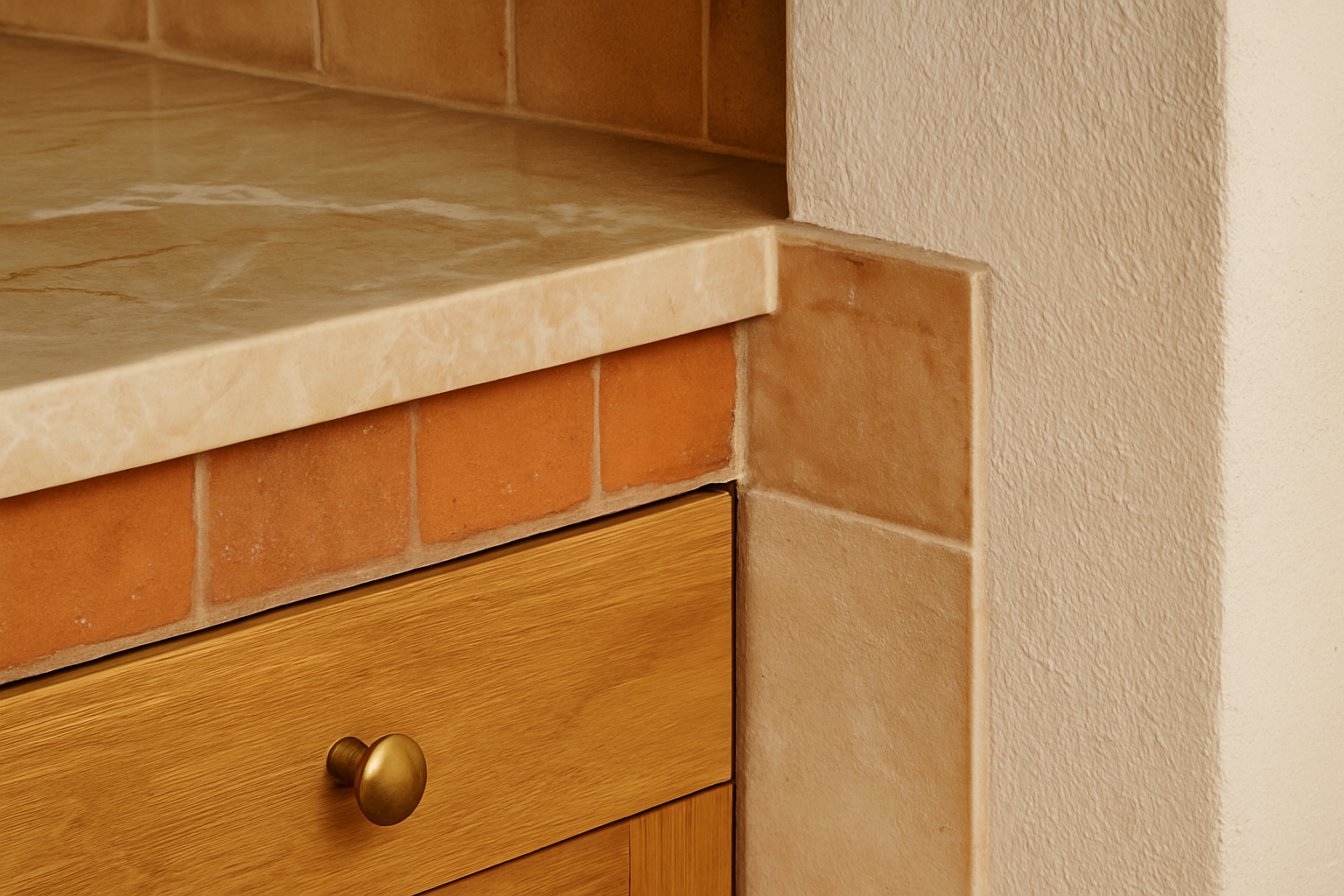
A subtle but crucial error is mixing dark finishes and textures with inconsistent undertones—like too many cool-grays in cabinetry combined with warm woods and clay tones. This mismatch fractures the visual flow, making the room feel confused and unfinished.
Stick to a clearly defined color temperature for your palette and let texture choices build on that framework. For example, if you select a charcoal cabinet with blue undertones, complement it with cool plaster or concrete counters, muted steel hardware, and deeper cool hardwoods or dark stone.
Conversely, if leaning into warm black or espresso cabinetry, bring in warm plaster walls, bronze accents, and warm-toned wood. This intentional consistency creates a cohesive layered texture story that reads as curated and effortless rather than accidental.
Overloading Heavy Textures in Small or Low-Light Kitchens Undermines Space
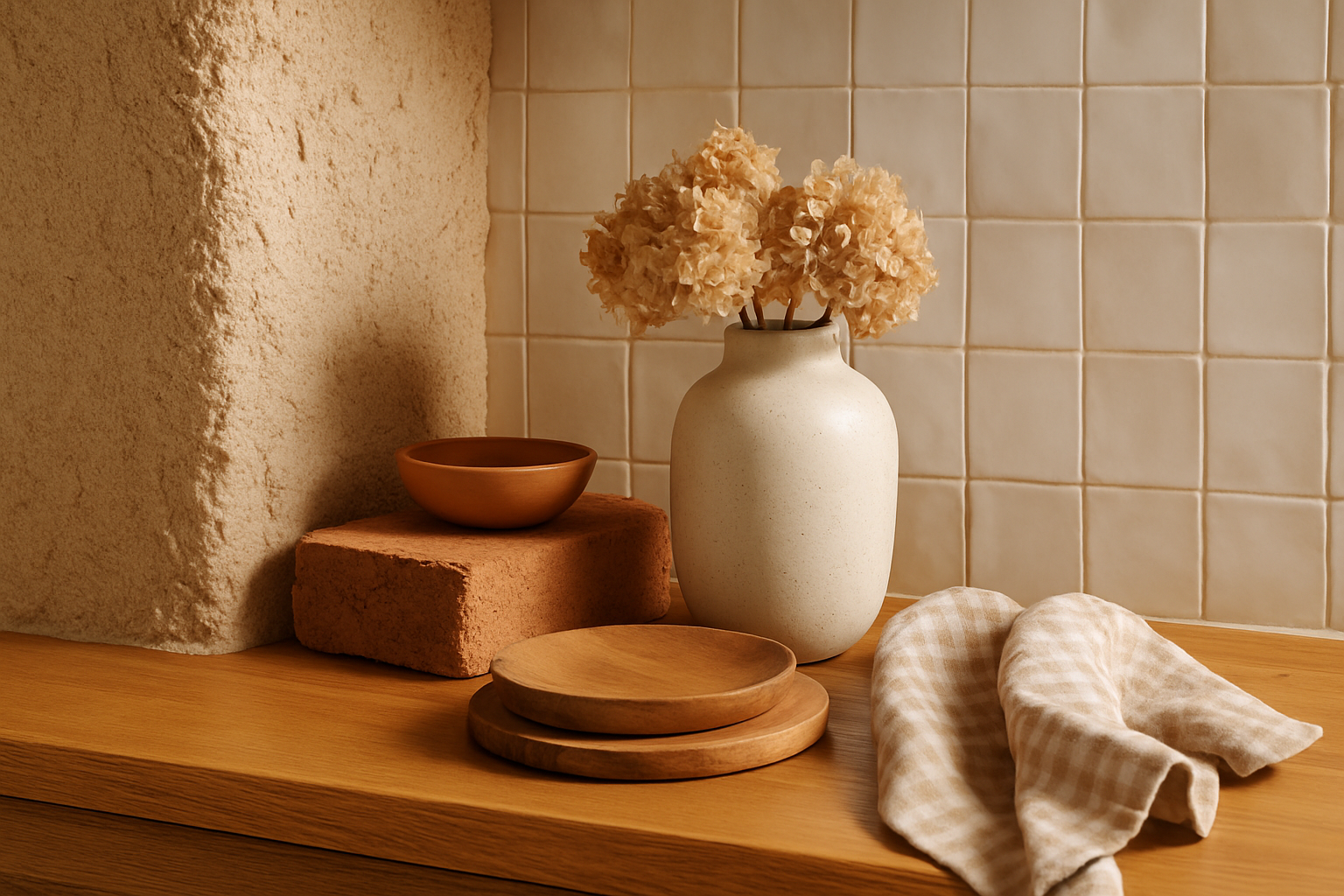
Another common mistake is combining dense, tactile materials in compact or poorly lit kitchens, causing a claustrophobic feel. Rough plaster walls, honed stone counters, and dark hardwood floors are powerful textures but together can close in the space.
To correct this, balance heavier textures with lighter-scaled, softer elements. Introduce open shelving or glass-front cabinetry to break masses of dark wood. Use plaster selectively, perhaps on a backsplash or feature wall, rather than full enclosure. Incorporate matte finishes that reflect soft light, such as subtle linen curtains or pale wood accents, to ease heaviness.
Maintaining light flow and scale control ensures texture layering feels spacious rather than overpowering. This approach enables moody kitchen layout ideas to work in smaller or challenging rooms without sacrificing material richness.
Mistaking Texture Quantity for Quality Throws Off the Final Mood
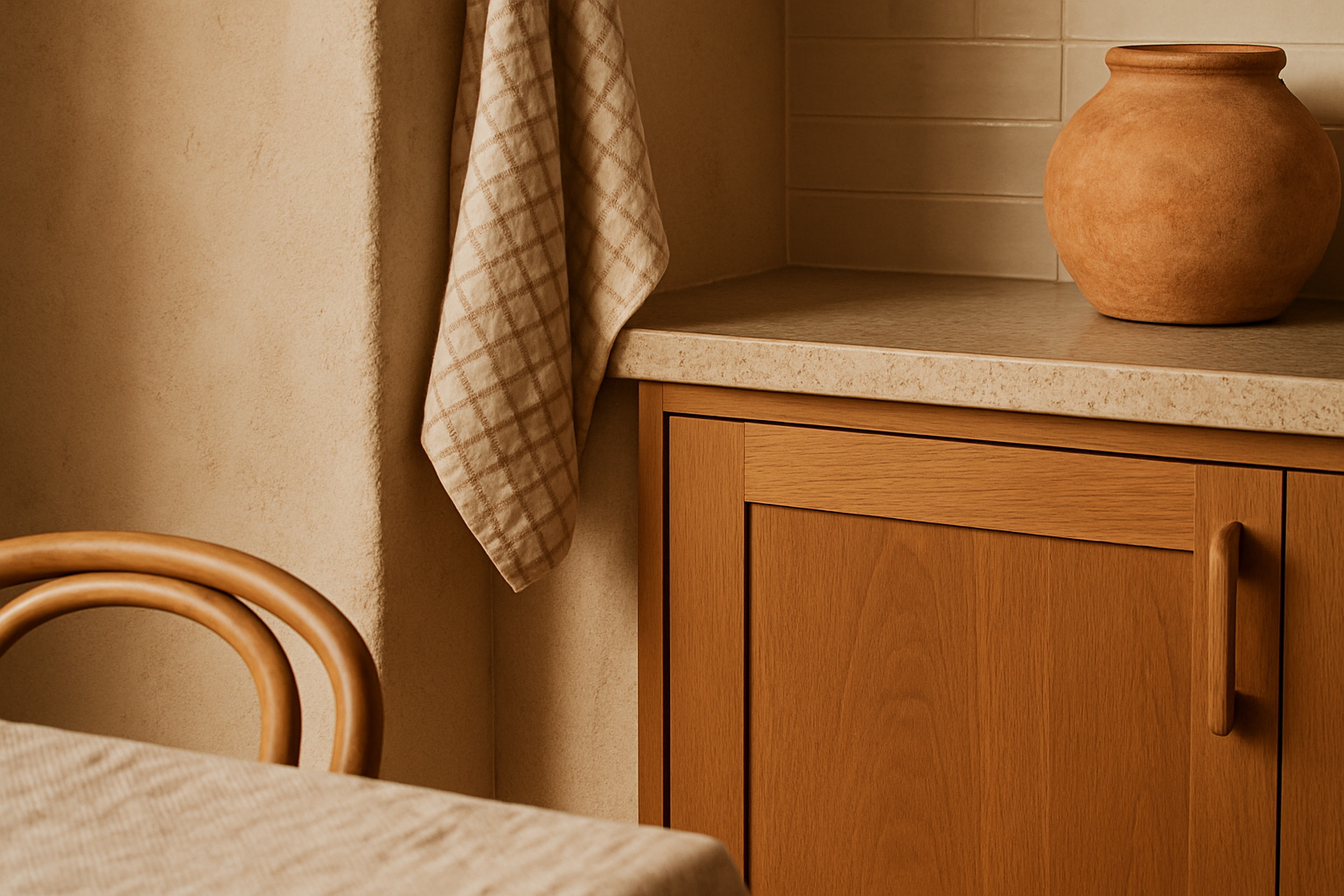
A final—and often overlooked—mistake is adding too many competing textures without a clear composition strategy. Loading a kitchen with numerous heavy wood grains, stone textures, metal styles, and textile patterns scatters focus and leaves the space feeling busy rather than restful.
Instead, be deliberate about focal points and textural hierarchy. Choose one or two dominant textures—like a matte plaster wall or textured wood cabinetry—and use contrasting textures as subtle supporting accents, not equal participants.
Maintain visual balance by limiting the number of finishes and ensuring each has a reason to be present in relation to the room’s scale and lighting. This editorial restraint creates a moody kitchen that feels intentional and layered, not cluttered or overly complex.
Frequently Asked Questions
What textures work best for a cozy moody kitchen?
Soft plaster walls, matte cabinetry, warm wood grains, and subtle textile accents offer a well-rounded tactile experience that feels inviting.
How can I add texture without making the kitchen feel cluttered?
Limit the number of textures to two or three and focus on thoughtful pairing and contrast. Use scale and finish to create visual anchor points.
Should I use glossy surfaces in a moody kitchen?
Glossy finishes can work but use them sparingly to add subtle reflections or highlight features without overwhelming the matte, textured mood.
What’s the best way to balance metal and wood in dark kitchens?
Introduce warmer metals like bronze alongside natural wood to keep the space feeling grounded and avoid an overly cold atmosphere.
How important is lighting when layering textures in a moody kitchen?
Crucial—natural and layered artificial light brings out textures and creates depth, preventing dark kitchens from feeling flat or oppressive.
Moody kitchens shine brightest when textures are carefully composed to create softness, depth, and a quiet warmth. Avoid flat matte overload, cold metal excess, and tonal mismatches by layering with intention. Pay close attention to scale and light in smaller spaces to keep depth without oppression. And remember, layering textures is about quality and balance, not quantity.
Taking these texture mistakes off your checklist will help you craft a moody kitchen that feels composed, tactile, and truly lived-in—a space you want to cook, gather, and relax in every day.